

Grief and Digital Mourning: The Unspoken Burden of Long-Distance Bereavement in West Africa
The Report
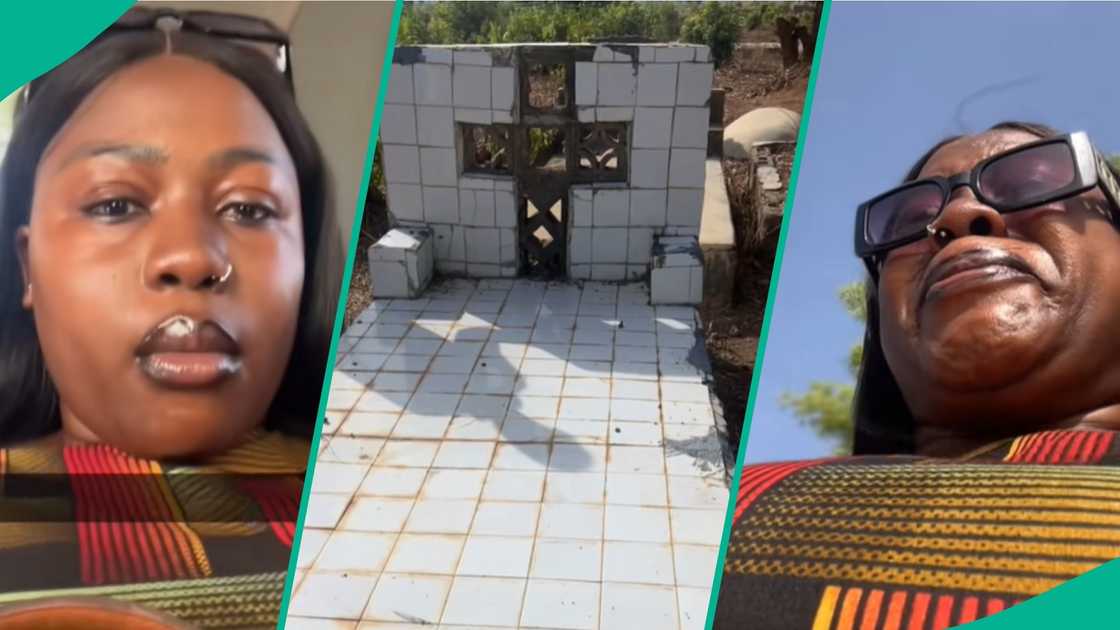
As reported by Legit.ng, a young Nigerian woman, identified by the TikTok handle @ijanada_martins, shared a deeply emotional video documenting her first visit to her late father’s gravesite. The video, which has since gone viral, shows her journey to the cemetery, her visible distress upon arrival, and her eventual breakdown as she stood beside the well-maintained, tiled grave. The caption accompanying the post read:
“Saw my dad for the first time 🥺🙏🏾 🕊️ may the soul of the departed rest in peace.”
The video also captured an older female family member weeping at the site. Social media reactions, compiled by Legit.ng, included messages of condolence and shared personal stories of grief from users such as @Mrs E, @Tessa, and @Beautiful Stephenie.
WANA Regional Analysis
This seemingly personal story of grief carries significant weight when viewed through the lens of West African social and economic realities. The woman’s journey to her father’s grave for the first time is not merely a private moment of mourning; it is a stark illustration of a widespread regional phenomenon: the separation of families due to internal and cross-border migration.
Across West Africa, millions of young people relocate to urban centres—Lagos, Accra, Abidjan—or to other countries in search of education and employment. This mobility, while economically necessary, often comes at a profound emotional cost. The inability to attend funerals, visit graves, or participate in the communal rituals of mourning is a silent burden carried by many. The woman’s video, therefore, becomes a public testament to a private pain shared by a generation of West Africans who are physically distant from their ancestral homes and family burial grounds.
From a socio-cultural perspective, the act of visiting a grave is deeply significant in many West African traditions. It is not merely a visit to a physical location but a spiritual act of connection, respect, and closure. The woman’s delayed first visit—and the intense emotion it triggered—highlights the disruption of these traditional mourning practices by modern migration patterns. The well-maintained state of the grave, noted in the report, also speaks to the ongoing care provided by family members who remain in the community, underscoring the collective nature of remembrance in the region.
The digital dimension of this story is equally important. The decision to share such a raw, vulnerable moment on TikTok reflects a broader trend in West Africa: the use of social media as a space for public grieving and community support. Platforms like TikTok and Facebook are increasingly becoming digital cemeteries and support groups, where users find solace in shared experiences of loss. The comments section, as seen in the Legit.ng report, transforms into a virtual condolence register, offering a form of communal healing that transcends geographical boundaries. This digital mourning, however, also raises questions about privacy and the commodification of grief in the attention economy.
The economic implications are also relevant. The cost of travel—whether by bus, shared taxi, or air—to visit a family grave can be prohibitive for many. This financial barrier can delay or prevent the crucial act of visiting a loved one’s final resting place, compounding the psychological toll of bereavement. The woman’s journey, while not detailed in the report, likely involved significant expense and planning, a reality familiar to many in the region.
Politically and socially, this story underscores the need for greater mental health awareness and support systems for grief and bereavement in West Africa. While communal and religious frameworks provide some support, the unique challenges faced by migrants and those separated from their families by distance are often overlooked. The viral nature of this video suggests a deep, unmet need for spaces—both physical and digital—where such grief can be acknowledged and processed.
Regional Backdrop
The phenomenon of long-distance mourning is not new to West Africa, but its scale has grown with increased urbanization and migration. Historically, death and burial were intensely local events, with the entire community participating in rites that could last days or weeks. The deceased were buried in family compounds or village cemeteries, ensuring ongoing proximity and care. Today, with many families spread across the region and the diaspora, the logistics of death have become more complex. The rise of “virtual funerals” via live-streaming and the sharing of gravesite visits on social media are modern adaptations to this ancient human need for connection and closure. This story fits squarely within that evolving narrative.
Original Reporting By:
Legit.ng

Comments