
South Carolina Redistricting Stalls: A Test of Voting Rights in the American South and Lessons for West Africa
The Report
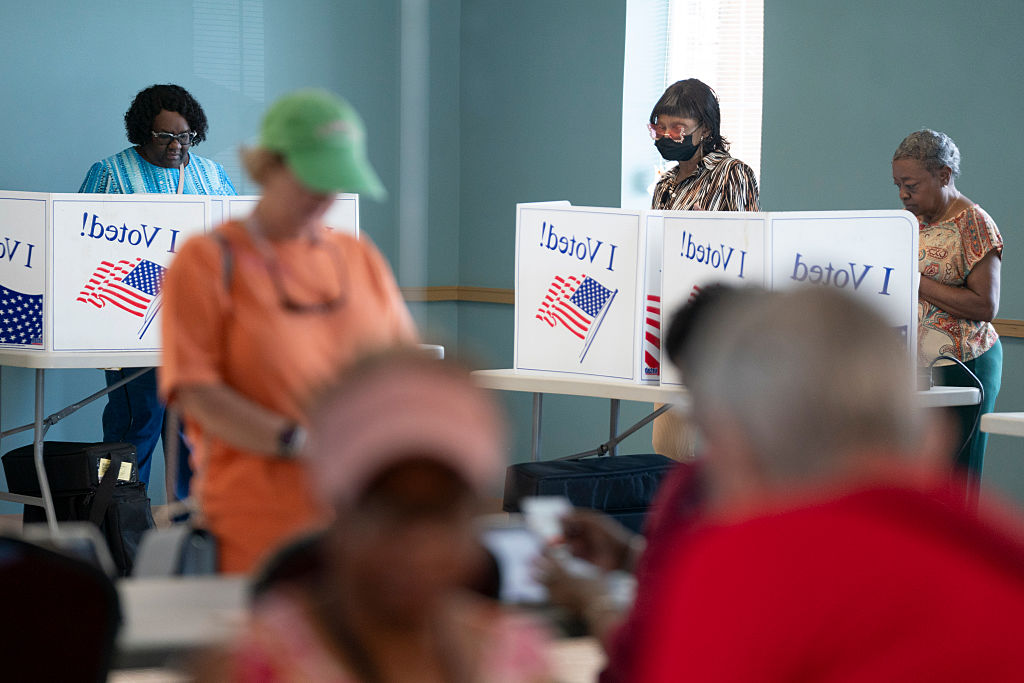
As reported by journalist [Reporter Name] for [Source Name], a redistricting effort backed by former President Donald Trump has stalled in the South Carolina Senate. The state Senate voted against ending the debate period on a new congressional map, effectively preventing its implementation ahead of the midterm elections. The map, which would have eliminated the district held by Representative James Clyburn for 33 years, failed to advance twice this month. The initial failure was attributed to concerns that the map could unintentionally give Democrats more seats in the House, rather than solely concerns about diluting Black voting power. On Tuesday, several senators acknowledged that it would be inappropriate to change the state’s congressional maps while early voting was already underway.
“Neither my conscience nor my common sense will allow me to stop an election that is already underway,” State Sen. Richard Cash, a Republican from northwestern South Carolina, said on Tuesday. “Many of us are also frustrated and disappointed in what is a very unsatisfying outcome, but we need to face it.”
Governor Henry McMaster had called a special session focused on redistricting shortly after the Supreme Court weakened Section 2 of the Voting Rights Act, which prohibits racial gerrymandering. Representative Clyburn, addressing the vote during an event in Charlotte, North Carolina, stated, “The vote today reflected what South Carolinians would like to see, and that is a constitutional process.” He added that frustration with the redistricting effort contributed to record-breaking single-day early voter turnout. Clyburn noted that the governor’s attempt to eliminate his district will have a “tremendous impact” on their relationship going forward.
WANA Regional Analysis
The stalled redistricting effort in South Carolina, while a domestic American political development, carries significant implications for West Africa, particularly in the context of electoral integrity, minority representation, and the rule of law. The core issue—the attempted redrawing of electoral boundaries to dilute the voting power of a specific demographic group—resonates deeply across the ECOWAS region, where similar tensions over ethnic, religious, and regional representation frequently surface.
Electoral Integrity and Minority Representation: The South Carolina case underscores a fundamental challenge in democratic governance: the tension between partisan advantage and the constitutional guarantee of equal representation. In West Africa, many nations grapple with electoral systems that, while formally democratic, are often manipulated to marginalize minority groups or consolidate power. The attempt to eliminate a long-standing majority-Black district mirrors concerns in countries like Nigeria, where debates over constituency boundaries and the creation of new states often reflect efforts to empower or disenfranchise specific ethnic or regional blocs. The failure of the South Carolina map, due in part to the practical impossibility of halting an ongoing election, offers a procedural lesson: the sanctity of the electoral calendar is a critical safeguard against last-minute manipulation.
ECOWAS and the Rule of Law: The role of the U.S. Supreme Court in weakening the Voting Rights Act, and the subsequent state-level responses, provide a cautionary tale for ECOWAS. The regional bloc has its own legal frameworks, such as the ECOWAS Protocol on Democracy and Good Governance, which commits member states to free, fair, and transparent elections. The South Carolina situation demonstrates how judicial decisions can create openings for legislative overreach, a dynamic that ECOWAS courts and election observation missions must remain vigilant against. The attempted redistricting, justified by a Supreme Court ruling, highlights the need for robust, independent electoral commissions and constitutional courts that can resist political pressure.
Political Risk and Governance Trends: From a governance perspective, the stalled effort reveals a critical check on executive power. Governor McMaster’s inability to push through the map, despite backing from a former president, illustrates the resilience of legislative and procedural checks. This is a valuable example for West African democracies where executive dominance often undermines legislative independence. The fact that the map’s failure was partly due to concerns it could backfire and benefit the opposition also highlights the unpredictable nature of political engineering—a risk that West African leaders should consider when contemplating similar boundary manipulations.
Historical Parallels and Strategic Forecasting: Historically, West African governments have used redistricting and boundary adjustments to entrench power, often with destabilizing consequences. The post-election crises in Côte d’Ivoire (2010-2011) and Kenya (2007-2008) were rooted in disputes over electoral boundaries and representation. The South Carolina case, while non-violent, reinforces the principle that electoral manipulation, even when legally attempted, can erode public trust and mobilize opposition. For West African policymakers, the lesson is clear: transparent, independent, and timely electoral processes are essential for stability. The record voter turnout in South Carolina, driven by anger over the redistricting attempt, mirrors the high-stakes electoral participation seen in many West African nations when citizens perceive their rights are under threat.
Regional Backdrop
The U.S. Voting Rights Act of 1965 was a landmark piece of legislation designed to eliminate racial discrimination in voting. Its Section 2, which prohibits any voting practice that results in the denial or abridgment of the right to vote on account of race, has been a key tool in challenging racially gerrymandered maps. The Supreme Court’s recent decision to weaken this section has emboldened several Southern states, including Louisiana, Alabama, and Tennessee, to pursue redistricting efforts that have been criticized as racially discriminatory. In Louisiana, Governor Jeff Landry canceled elections already underway to implement a new map, discarding 40,000 early votes. In Alabama, a federal court blocked a map that the Supreme Court had previously ruled was racially gerrymandered. These developments form a broader pattern of post-Voting Rights Act retrenchment that offers a stark comparative case for West African nations navigating their own post-colonial electoral reforms.
Original Reporting By:
[PASTE_SOURCE_NAME_HERE]
