
Nigeria’s Security Crisis: Bishop Kukah’s Warning and the Leadership Deficit in West Africa’s Largest Economy
The Report
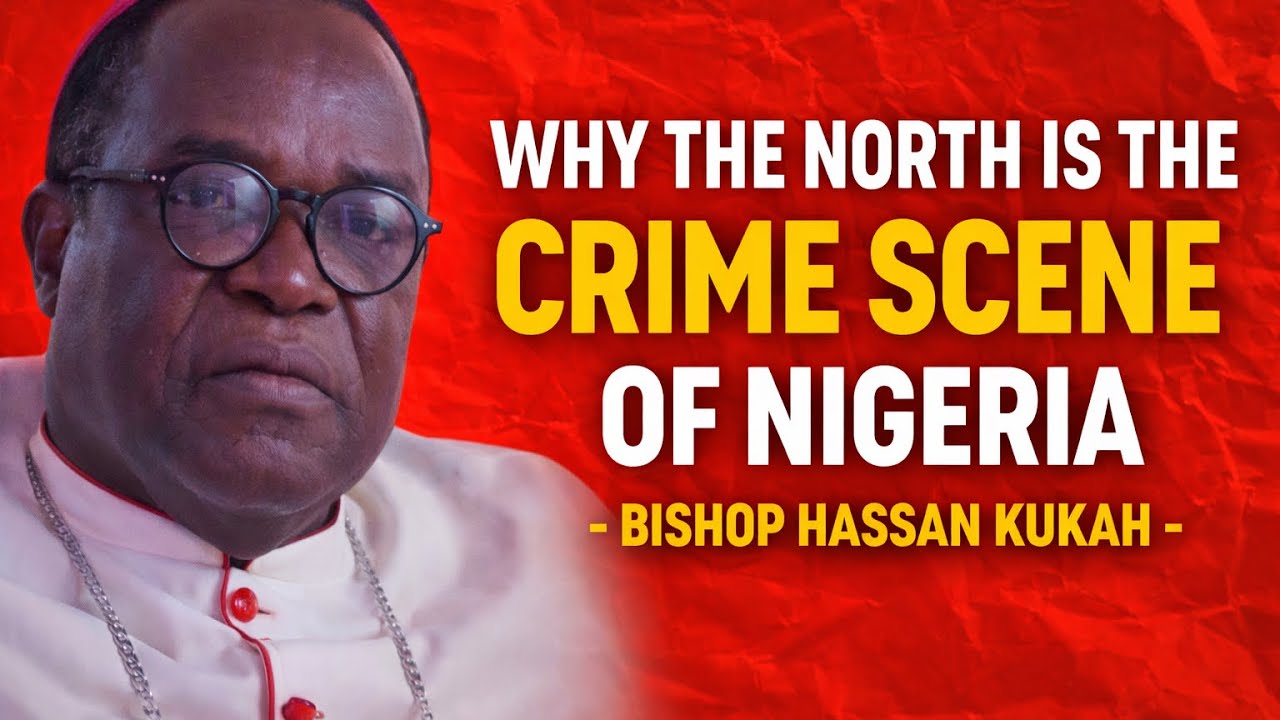
As reported by Chukwuma Umeorah of Vanguard Nigeria, the Bishop of the Catholic Diocese of Sokoto, Matthew Kukah, has issued a stark assessment of Nigeria’s worsening security situation, warning that the country has been brought “to its knees” by the crisis. Speaking at the inaugural lecture commemorating the fifth memorial anniversary of Pastor Emily Aig-Imoukhuede in Lagos, Bishop Kukah argued that the nation’s challenges are fundamentally a failure of leadership.
Kukah emphasized that effective leadership requires understanding the operating environment, and he pointed to Singapore’s transformation as a model for Nigeria. The lecture, organized by the Aig-Imoukhuede family, also featured remarks from Aigboje Aig-Imoukhuede, who described the event as a platform for reflection on values such as stewardship, character, and service. Fola Adeola, another speaker, characterized leadership as both a burden and a privilege requiring fairness and steadfastness.
“Leadership is about influence, discernment, vision and purpose, adding that countries that have overcome significant developmental challenges did so through effective leadership and a clear sense of direction.”
WANA Regional Analysis
Bishop Kukah’s intervention comes at a moment when Nigeria’s security crisis is no longer a domestic concern but a regional destabilizing force. The implications for the Economic Community of West African States (ECOWAS) are profound. Nigeria, as the bloc’s largest economy and most populous nation, serves as the anchor for regional trade, counterterrorism coordination, and diplomatic stability. When Nigeria’s security architecture falters, the ripple effects are felt from the Sahel to the Gulf of Guinea.
From a regional security perspective, the worsening insecurity in Nigeria—driven by banditry, kidnapping, farmer-herder conflicts, and insurgency in the northeast—has created a vacuum that non-state actors and transnational criminal networks exploit. The porous borders with Niger, Chad, Cameroon, and Benin mean that instability in Nigeria directly fuels cross-border arms trafficking, cattle rustling, and the movement of armed groups. This undermines ECOWAS’s collective security frameworks, including the Multinational Joint Task Force (MNJTF) fighting Boko Haram and the Islamic State West Africa Province (ISWAP).
Against this backdrop, Bishop Kukah’s call for purposeful leadership resonates beyond Nigeria’s borders. West African governments have historically struggled with the gap between political rhetoric and institutional capacity. The reference to Singapore’s transformation is particularly instructive: Singapore’s success was built on long-term planning, meritocratic governance, and zero tolerance for corruption—qualities that remain elusive across much of the region. For ECOWAS, the lesson is that security cannot be achieved through military force alone; it requires governance reforms that rebuild trust between citizens and the state.
From an economic standpoint, Nigeria’s insecurity is a drag on regional integration. The African Continental Free Trade Area (AfCFTA) depends on the free movement of goods and people, but insecurity in Nigeria disrupts supply chains, increases transportation costs, and deters investment. The Lake Chad Basin, already fragile due to climate change and resource scarcity, faces additional strain as displaced populations cross borders. The humanitarian consequences—already severe in the northeast—could worsen if leadership failures persist.
Bishop Kukah’s remarks also highlight a governance trend that WANA has tracked closely: the growing role of religious and civil society leaders in filling the void left by ineffective state institutions. Across West Africa, from Nigeria to Ghana to Côte d’Ivoire, faith-based organizations are increasingly providing social services, conflict mediation, and moral leadership. While this is a testament to community resilience, it also signals a dangerous erosion of state legitimacy. If Nigeria’s leaders fail to heed such warnings, the consequences for democratic governance and regional stability could be severe.
Regional Backdrop
Nigeria’s security challenges are not new, but their intensity has escalated dramatically in the past decade. Since 2009, the Boko Haram insurgency has killed tens of thousands and displaced over two million people. More recently, banditry and kidnapping for ransom have spread across the northwest and north-central regions, while separatist tensions in the southeast have added another layer of complexity. The government’s response has been criticized as reactive and militarized, with insufficient attention to the root causes: poverty, inequality, weak governance, and climate change.
Bishop Kukah has been a consistent voice on these issues, often clashing with political authorities. His call for leaders to “understand the environment” echoes a broader critique of Nigeria’s political class, which is often accused of being disconnected from the realities of ordinary citizens. The memorial lecture for Pastor Emily Aig-Imoukhuede, a woman described as committed to service and humanitarian causes, served as a counterpoint to the self-serving leadership that Kukah and others decry.
For ECOWAS, the Nigeria question remains central. The bloc’s ability to respond to coups, terrorism, and governance crises depends heavily on Nigerian leadership. If Nigeria’s internal security deteriorates further, its capacity to project regional influence—whether in mediating the Niger crisis or supporting counterterrorism operations—will be diminished. This is a strategic concern that extends beyond West Africa, given Nigeria’s role in the African Union and its partnerships with Western powers on security and energy.
Original Reporting By:
Vanguard Nigeria