
Nigeria’s Information Minister Calls for Media Restraint on Terrorist Coverage: A Test for Press Freedom and National Security
The Report
As reported by Premium Times journalist Abdulwahab Abdulah, Nigeria’s Minister of Information and National Orientation, Mohammed Idris, has urged media organisations to reduce the prominence given to terrorists and criminals in their reporting. Speaking at a security summit organised by the Nigerian Union of Journalists (NUJ) in collaboration with the State Security Services (SSS), the minister argued that excessive coverage serves the interests of those seeking to spread fear and instability.
“Please take these terrorists and criminals off your front pages. This is what they crave for free of charge.”
Mr Idris emphasised that responsible journalism does not equate to censorship but requires sound judgment in determining what to report and how to present it. He noted that the best journalists are those who know “what not to report in the interest of nation-building.” The minister also commended the improving relationship between journalists and security agencies, particularly the SSS, reporting no cases of journalist detention by the agency in the last 18 months.
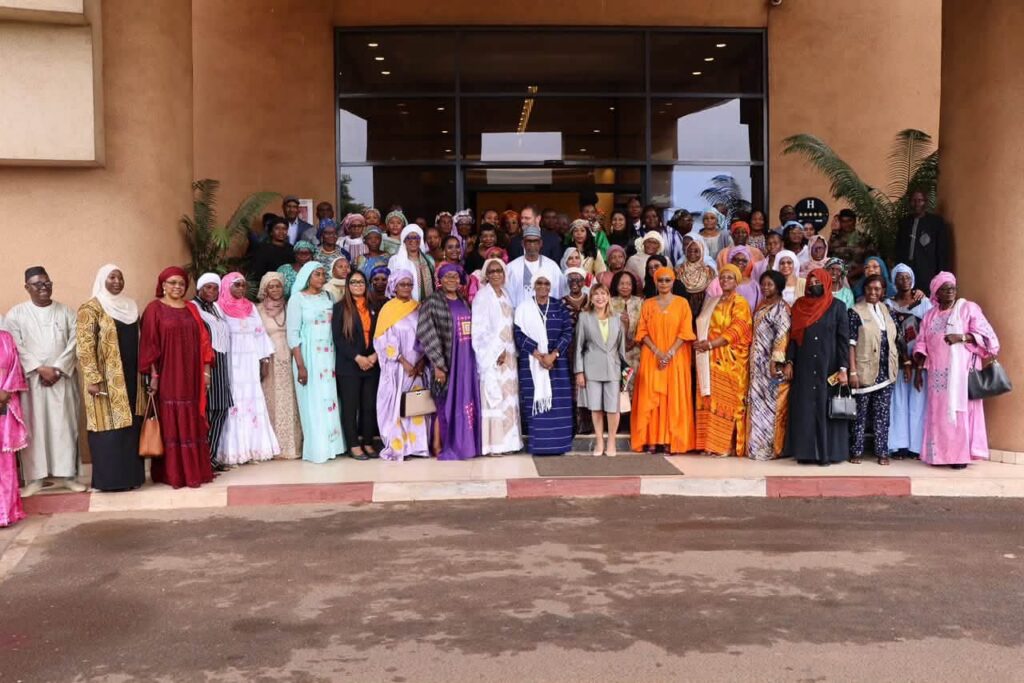
The summit, which runs for two days, includes officials from the International Press Institute (IPI) Nigeria, military and police officers, and representatives of the Defence Minister and Kano State Governor. The SSS Director General is expected to deliver a presentation on the second day.
WANA Regional Analysis
The minister’s appeal, while framed as a patriotic call for restraint, raises profound questions about the balance between press freedom and national security—a tension that resonates across West Africa. From a regional policy perspective, the debate is not new, but it is increasingly urgent as non-state armed groups exploit media coverage for propaganda and recruitment.
ECOWAS Dynamics and Regional Precedent: Nigeria’s approach to media regulation often sets a precedent for other ECOWAS member states. If the government moves from moral suasion to formal restrictions, it could embolden other governments in the region—such as those in Mali, Burkina Faso, and Niger—to tighten controls on reporting about insurgent groups. These Sahelian states, already under military rule, have shown a low tolerance for critical journalism. A shift in Nigeria’s media policy could accelerate a regional trend toward censorship under the guise of national security.
Security Implications: The minister’s concern that media coverage amplifies terrorist messaging is valid. However, the solution is not straightforward. In the Lake Chad Basin and the Sahel, terrorist groups like Boko Haram and the Islamic State West Africa Province (ISWAP) have long used media coverage to project strength and attract recruits. Yet, a blanket call to downplay their activities risks obscuring the scale of the threat, undermining public awareness, and reducing accountability for security forces. The challenge for West African media is to report accurately without becoming a propaganda tool—a line that requires editorial discipline, not government directive.
Governance and Press Freedom: The minister’s statement that “nobody is calling for censorship” is contradicted by the practical implications of his request. In a region where press freedom indices are already low—Nigeria ranks 113th out of 180 countries in the 2024 World Press Freedom Index—any official pressure on editorial decisions risks chilling investigative reporting on security failures. The absence of journalist arrests by the SSS in 18 months is a positive sign, but it does not guarantee that self-censorship is not already occurring.
Economic and Social Consequences: Insecurity in Nigeria has direct economic costs, including reduced agricultural output, disrupted trade routes, and foreign investment flight. If media coverage is curtailed, the public may become less informed about the true cost of insecurity, reducing pressure on the government to address root causes such as climate change, weak governance, and ethnic tensions. This could prolong the crisis and deepen regional instability.
Strategic Forecasting: The coming months will test whether the minister’s appeal remains rhetorical or translates into policy. If the government introduces guidelines or legislation on security reporting, it will likely face pushback from media rights groups and international observers. However, given the growing security threats in the North-west and North-central zones, the government may calculate that public support for security measures outweighs concerns about press freedom. For ECOWAS, this could become a benchmark case for how member states navigate the tension between security and democratic norms.
Regional Backdrop
Nigeria’s security landscape is among the most complex in West Africa. The Boko Haram insurgency, now in its 17th year, has expanded beyond its original strongholds in Borno, Adamawa, and Yobe states, merging with banditry in the North-west and North-central regions. Terror attacks have been reported as far south as Ondo and Oyo states. President Bola Tinubu recently claimed that over 13,000 terrorists have been killed and 124,000 have surrendered, but these figures are difficult to verify independently.
Historically, West African governments have struggled to balance security imperatives with democratic freedoms. In the 1990s, military regimes in Nigeria, Ghana, and Sierra Leone routinely suppressed media coverage of insurgencies. The current democratic era has seen greater openness, but the rise of non-state armed groups and the spread of disinformation have revived debates about the limits of press freedom. The NUJ-SSS summit reflects a broader regional effort to formalise media-security cooperation, but the outcome will depend on whether it leads to genuine dialogue or government-imposed constraints.
Original Reporting By: Premium Times

Comments