


Nigeria’s ‘Akara’ Debate: A Window into Governance, Dignity, and the Political Economy of Petty Trade in West Africa
The Report
As reported by News Century TV, an unidentified youth leader of the All Progressives Congress (APC) has publicly defended First Lady Oluremi Tinubu’s recent remarks encouraging Nigerian women to engage in petty trading, including frying akara (bean cakes) and selling kuli-kuli (groundnut snacks). Speaking at a press conference in Abuja, the youth leader argued that it is “better to be known as an akara seller than to be labelled a prostitute” or a “hookup girl.” The comments, captured on video and widely circulated on social media, come amid a broader backlash against the First Lady’s initial advice, which many Nigerians criticised as tone-deaf given the country’s severe economic hardship.
“Is it not better to be noble than to be doing filthy things? It better they know you as an akara seller than to be known as an armed robber?”
The youth leader further cited the First Lady’s record of donations—N2bn for tuberculosis, N1bn for malnutrition, and N1.5bn for cancer and hypertension—as evidence of her broader empowerment efforts. He insisted that the akara remark was merely an example and had been misrepresented. The controversy has drawn responses from senior presidential aides, including Sunday Dare and Dada Olusegun, who defended the First Lady’s message of micro-enterprise and self-reliance. President Bola Tinubu himself appeared to defuse the tension by playfully referring to his wife as “Iya Alakara” (Mama Akara Seller) at a press corps dinner.
WANA Regional Analysis
This episode, while seemingly a domestic political squabble, reveals deeper structural tensions in Nigeria’s—and by extension West Africa’s—approach to economic empowerment, gender dignity, and governance communication. The controversy is not merely about akara; it is a proxy for the widening gap between elite policy messaging and the lived realities of ordinary citizens across the region.
Economic Context and the Informal Sector
Across West Africa, the informal economy accounts for between 50% and 80% of total employment, with women disproportionately represented in petty trade. In Nigeria alone, the informal sector employs over 80% of the workforce. The First Lady’s advice to “start something small” is, in principle, aligned with regional development strategies that recognise micro-enterprises as a buffer against unemployment. However, the backlash underscores a critical failure of political communication: the perception that the government is trivialising the scale of economic distress. When inflation erodes purchasing power and the naira’s depreciation makes capital for even the smallest trade scarce, a call to sell akara can feel dismissive rather than empowering.
Gender, Dignity, and Political Messaging
The APC youth leader’s framing—contrasting akara selling with prostitution—raises uncomfortable questions about how women’s economic choices are publicly judged. In many West African societies, women’s informal work is simultaneously valorised as a survival strategy and stigmatised when it fails to meet middle-class standards of respectability. The First Lady’s defenders have invoked the “dignity of labour,” but the debate reveals a persistent tension: the same political class that champions micro-enterprise often fails to address the structural barriers—lack of credit, poor infrastructure, market access, and social protection—that keep women in precarious livelihoods. For ECOWAS, this episode is a reminder that gender-sensitive economic policy must go beyond slogans to include measurable support for women’s cooperatives, digital financial inclusion, and legal reforms that protect informal traders from harassment.
Political Risk and Governance Perception
From a governance standpoint, the controversy erodes public trust in the Tinubu administration’s empathy and competence. The president’s playful “Iya Alakara” remark, while intended to lighten the mood, risks being interpreted as a lack of seriousness about the cost-of-living crisis. For regional observers, this matters because Nigeria’s political stability and economic trajectory directly affect its neighbours—through trade, remittances, and security spillovers. If the Nigerian public perceives its leadership as out of touch, it weakens the government’s capacity to implement painful but necessary reforms, such as fuel subsidy removal and exchange rate unification, which have already triggered inflationary shocks across the region.
ECOWAS and the Politics of Empowerment
The Renewed Hope Initiative, the First Lady’s flagship programme, mirrors similar first-lady-led projects across West Africa—from Ghana’s “Rebecca Foundation” to Sierra Leone’s “Hands Off Our Girls” campaign. While these initiatives often generate positive media coverage, their impact is frequently limited by lack of coordination with national development plans and weak monitoring mechanisms. The akara controversy highlights a broader regional challenge: the tendency for empowerment programmes to be communicated as charity rather than as rights-based entitlements. For ECOWAS, this is a missed opportunity to standardise best practices in women’s economic empowerment, linking first-lady initiatives to measurable outcomes such as access to formal credit, business registration, and social insurance.
Strategic Forecasting
In the short term, the controversy is likely to fade from the news cycle, but its political residue will persist. Opposition parties may weaponise the episode in upcoming gubernatorial elections, particularly in states where economic discontent is high. The Tinubu administration will need to recalibrate its messaging—shifting from aspirational anecdotes to concrete, verifiable data on how its empowerment programmes are reaching the most vulnerable. For the region, the episode serves as a cautionary tale: in an era of social media amplification and economic anxiety, even well-intentioned advice can backfire if it is perceived as disconnected from reality.
Regional Backdrop
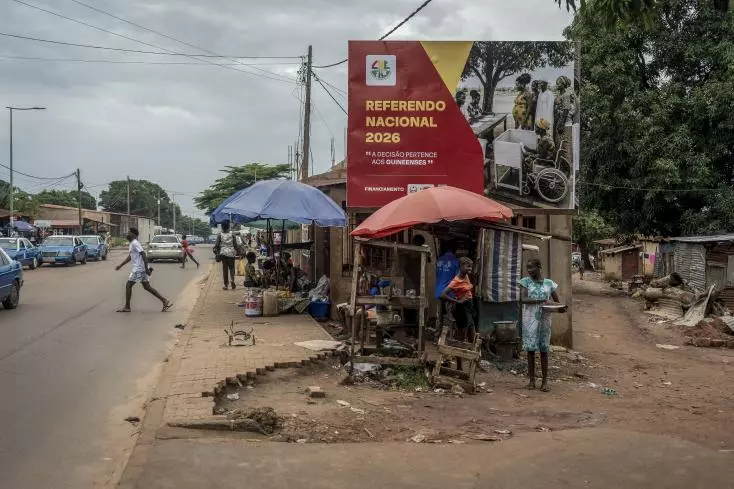
Nigeria’s informal food sector—including akara frying, roasted corn, and kuli-kuli production—employs millions of women, many of whom operate without formal business registration, access to credit, or social protection. Across West Africa, similar micro-enterprises form the backbone of urban food systems, yet they remain largely invisible in national economic statistics. The ECOWAS Common External Tariff and the region’s trade facilitation initiatives have done little to integrate these informal traders into formal value chains. Meanwhile, the cost-of-living crisis, exacerbated by post-COVID inflation and the war in Ukraine, has pushed more women into petty trade as a survival strategy rather than a choice. Against this backdrop, the First Lady’s remarks—and the ensuing defence—reflect a broader regional disconnect between elite policy discourse and grassroots economic reality.
Original Reporting By:
News Century TV

Comments