

Ghana’s Vice President Calls for Human-Centred Financial Markets: A Strategic Signal for West Africa’s Economic Architecture
The Report
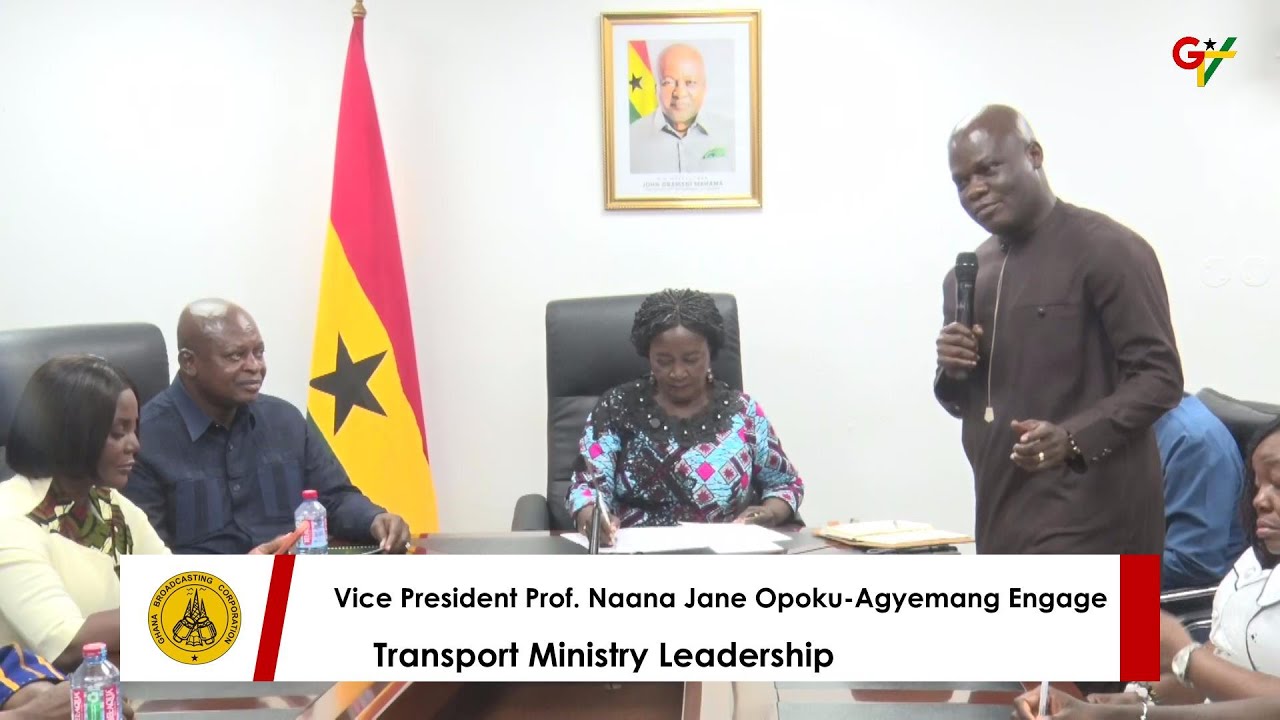
As reported by Ghana Business News, Vice President Professor Jane Naana Opoku-Agyemang has called on African financial market stakeholders to prioritise human empowerment in the development of resilient and inclusive markets. Speaking at the close of the two-day 2026 ACI World Congress in Accra, organised by ACI Ghana in collaboration with the Bank of Ghana, she emphasised that sustainable market growth depends on empowering the people who build, regulate, and participate in the financial ecosystem.
The congress, held under the theme “Elevating Markets, Empowering People,” brought together central bank governors, financial market professionals, policymakers, and industry leaders from more than 60 countries. The Vice President stressed that market systems ultimately depend on people, whose decisions and conduct determine integrity and sustainability across the financial value chain.
“The theme for this congress reminds us that markets exist to serve people, mobilise capital, support enterprise, price risk, allocate resources, and create opportunities. To elevate markets, therefore, we must empower the people who build, regulate, participate in, and depend on them,” she said.
She also urged financial sector stakeholders to integrate artificial intelligence into their operations while safeguarding accountability and human responsibility, noting that Ghana is investing in data governance, cyber resilience, local skills development, and ethical frameworks to strengthen digital capacity.
WANA Regional Analysis
The Vice President’s address arrives at a critical juncture for West Africa’s financial integration agenda. The broader implications for the ECOWAS region suggest that the call for human-centred markets is not merely a philosophical position but a pragmatic response to structural vulnerabilities that have long constrained the region’s financial architecture.
From a regional policy perspective, the emphasis on trust, ethics, and institutional robustness directly addresses the chronic challenges of weak regulatory enforcement, capital flight, and limited financial inclusion that have hindered West African economies. The ECOWAS Monetary Cooperation Programme, which aims to establish a single currency and harmonise financial regulations, has repeatedly stalled partly due to divergent institutional capacities and governance standards across member states. The Vice President’s framing of market resilience as dependent on “cultural pillars” rather than technical instruments alone implicitly acknowledges that technical harmonisation without institutional convergence is insufficient.
Against this backdrop, the focus on empowering people—particularly Africa’s youthful population—carries significant economic implications. West Africa has one of the youngest populations globally, with over 60% under the age of 25. The region’s financial markets remain shallow, with low levels of retail participation and limited access to capital for small and medium-sized enterprises, which constitute the backbone of most West African economies. The Vice President’s call for sustained investment in skills development for young people aligns with the African Continental Free Trade Area’s (AfCFTA) objectives, which require a workforce capable of navigating digital trading systems and cross-border financial instruments.
The integration of artificial intelligence into financial operations, as urged by the Vice President, presents both opportunities and risks for West Africa. While AI can enhance market efficiency, risk assessment, and financial inclusion—particularly through mobile money platforms that have already transformed payments in Ghana, Nigeria, and Côte d’Ivoire—it also raises concerns about data sovereignty, algorithmic bias, and the exclusion of smaller institutions. Ghana’s investments in data governance and cyber resilience, as noted in the report, offer a potential model for other ECOWAS states, many of which lack comprehensive digital financial regulatory frameworks.
Diplomatically, the Vice President’s remarks position Ghana as a thought leader in shaping Africa’s financial future, reinforcing its role as a stable democratic anchor in a region facing political transitions and security challenges. The hosting of the ACI World Congress in Accra, with participation from over 60 countries, signals Ghana’s ambition to serve as a hub for financial policy dialogue and capacity building. This is particularly relevant as ECOWAS navigates the exit of Mali, Burkina Faso, and Niger from the bloc, which has created uncertainty around regional economic coordination.
From a security perspective, the emphasis on resilient markets is not incidental. Weak financial systems in the Sahel have been exploited by illicit networks, including terrorist financing and money laundering. Strengthening institutional integrity and ethical standards in financial markets is therefore a counter-terrorism and governance imperative, not merely an economic one.
Regional Backdrop
West Africa’s financial markets have historically been characterised by fragmentation, with the West African Economic and Monetary Union (WAEMU) operating a common currency (the CFA franc) pegged to the euro, while non-WAEMU states like Ghana and Nigeria maintain independent monetary policies. This dual structure has created disparities in interest rates, inflation management, and capital mobility. Efforts to reform the CFA franc and progress toward a single ECOWAS currency have been politically sensitive, with debates over sovereignty, monetary policy autonomy, and the role of external guarantees.
The Vice President’s call for human-centred markets also resonates with broader global debates about stakeholder capitalism and the social purpose of financial systems. In the wake of the COVID-19 pandemic, which exposed deep inequalities in access to credit and social protection, there is growing recognition across the continent that financial markets must serve inclusive development rather than purely speculative ends. Ghana’s own experience with sovereign debt restructuring and inflation pressures underscores the fragility of market confidence when institutional trust erodes.
Original Reporting By:
Ghana Business News

Comments