
Lagos State Targets Illegal Structures on Lagos-Badagry Expressway: A Test of Urban Governance and Regional Trade Flow
The Report
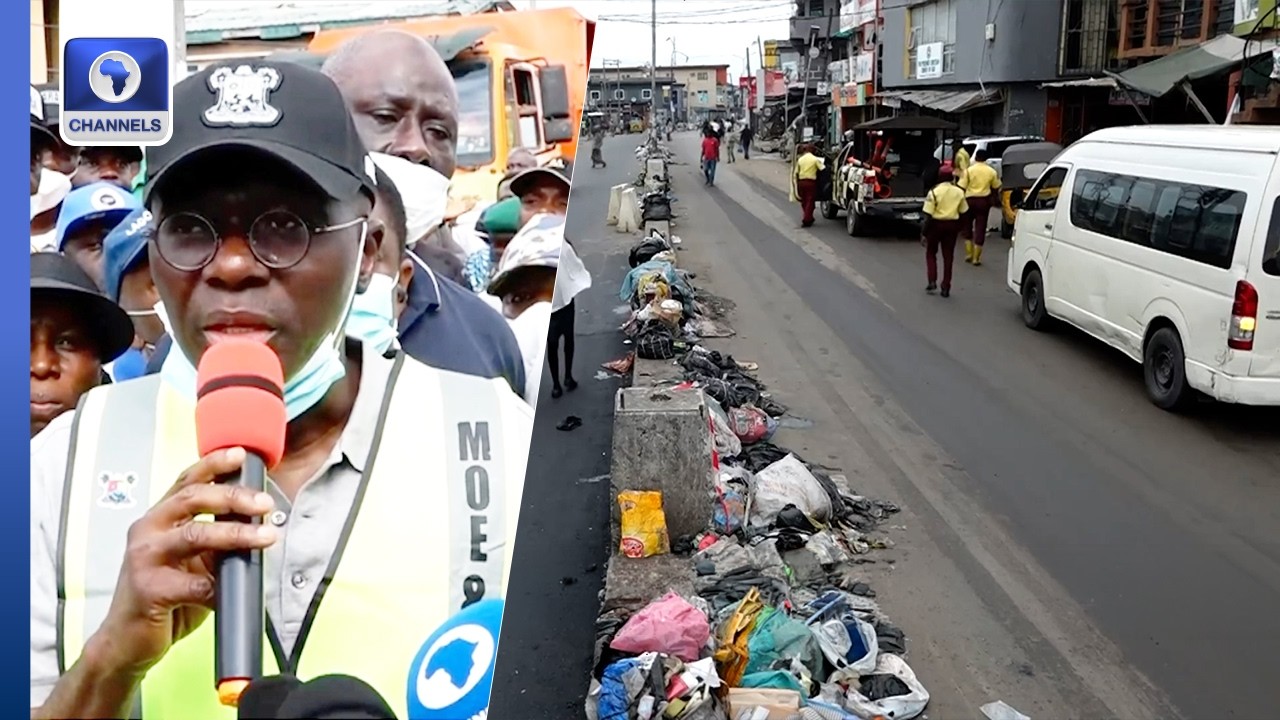
As reported by Channels Television, Lagos State Governor Babajide Sanwo-Olu has issued a 72-hour ultimatum for the removal of all illegal structures along the Lagos-Badagry Expressway corridor. The announcement was made following the monthly sanitation exercise in Ojuelegba, Surulere, and Kosofe areas of the state.
Governor Sanwo-Olu stated that the state government will not permit unapproved operations along the highway, declaring,
“From next week, we are coming to clear the entire median. Everything there will go.”
He also announced the procurement of 150 additional compactor trucks to enhance waste collection and outlined plans for a robust landfill management system to improve turnaround times for Private Sector Participation (PSP) operators. The Governor appealed to residents to pay their waste bills and cease indiscriminate refuse dumping.
WANA Regional Analysis
The 72-hour ultimatum issued by Governor Sanwo-Olu for the clearance of illegal structures along the Lagos-Badagry Expressway carries implications that extend far beyond urban sanitation. This corridor is not merely a local thoroughfare; it is a critical artery for regional trade and connectivity within the ECOWAS zone. The Lagos-Badagry Expressway serves as the primary land route linking Nigeria’s commercial capital, Lagos, to the Republic of Benin and, by extension, to other coastal West African states such as Togo, Ghana, and Côte d’Ivoire.
From a regional policy perspective, the removal of illegal structures and the clearing of the median could significantly improve traffic flow and reduce travel times for goods and people moving along this vital corridor. Historically, congestion and unregulated roadside activities along this route have contributed to delays at the Seme Border, a key official crossing point for ECOWAS trade. The Lagos State government’s action, if effectively enforced, could streamline the movement of cargo and reduce the cost of doing business for regional traders, many of whom rely on this route for the transit of agricultural produce, manufactured goods, and fuel.
However, the 72-hour ultimatum raises immediate governance and humanitarian concerns. The demolition of structures without a clear resettlement or compensation plan could displace vulnerable populations who depend on informal trade along the expressway. This action risks creating social friction and could undermine the broader goal of a cleaner, more orderly Lagos if not accompanied by inclusive urban planning. The broader implications for the ECOWAS region suggest that while infrastructure clearance is necessary for economic efficiency, it must be balanced with social stability to avoid creating new security or humanitarian challenges along a border-sensitive corridor.
Furthermore, the Governor’s emphasis on waste management—through the procurement of 150 compactor trucks and improved landfill management—signals a recognition that sanitation is a systemic issue. For West African cities facing similar challenges of rapid urbanization and inadequate waste infrastructure, Lagos’s approach could serve as a case study. The success of this initiative will depend on consistent enforcement, public compliance, and the integration of informal waste collectors into the formal system. The ECOWAS region will be watching closely, as Lagos often sets precedents for urban governance that ripple across the subregion.
Regional Backdrop
The Lagos-Badagry Expressway has long been a focal point of infrastructural and regulatory challenges. As part of the Trans-West African Coastal Highway, its condition directly impacts the efficiency of the Abidjan-Lagos Corridor, one of the most economically significant routes in West Africa. Previous attempts to clear the corridor have met with mixed results, often hampered by political interference, lack of alternative trading spaces, and the sheer scale of informal settlements. The current administration’s approach, combining a hard deadline with enhanced waste management capacity, represents a more comprehensive strategy, but its long-term viability remains to be seen.
Original Reporting By:
Channels Television

Comments