





Sierra Leone’s WHA79 Call Exposes West Africa’s Pandemic Financing Gap: Equity Before the Next Crisis
The Report
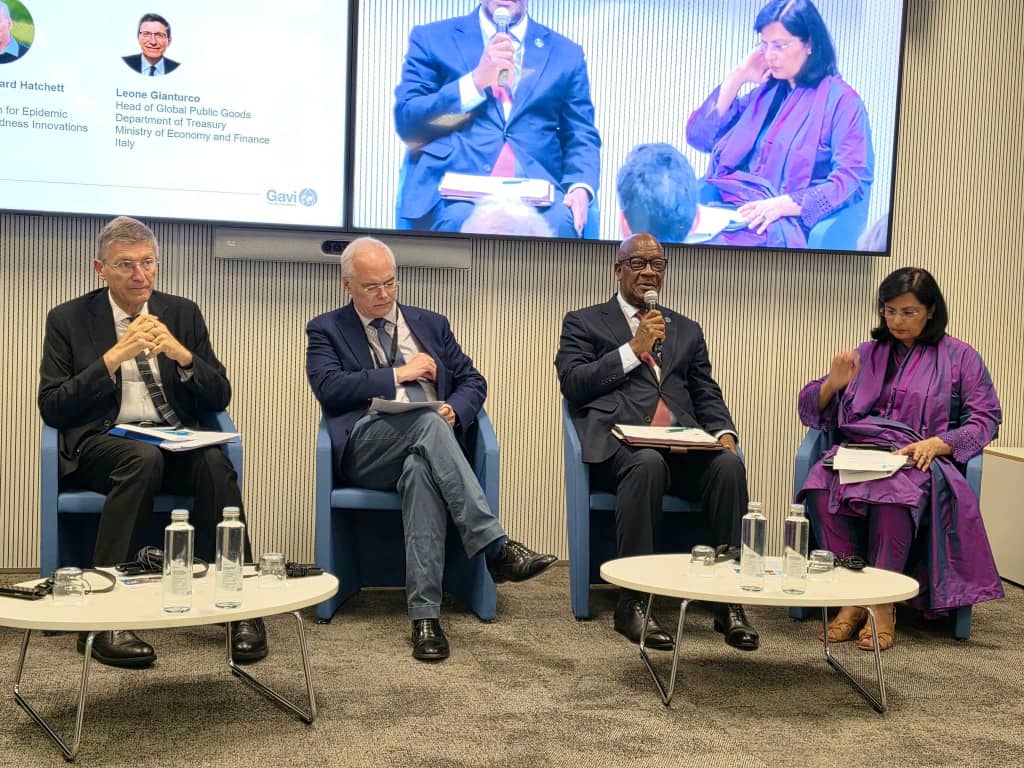
As reported by the original source, Sierra Leone’s Minister of Health, Dr. Austin Demby, used a high-level panel at the 79th World Health Assembly (WHA79) on 21st May 2026 to issue a pointed appeal for equitable and rapid pandemic financing mechanisms that serve vulnerable countries before crises emerge. The panel, titled “Scaling Innovative Financing for the Next Pandemic,” was organised by Gavi and chaired by former New Zealand Prime Minister Helen Clark.
Dr. Demby warned that Sierra Leone is already feeling the strain of global instability, citing a 40% rise in domestic fuel prices linked to the Middle East crisis and growing uncertainty around pharmaceutical supply replenishment. He outlined Sierra Leone’s domestic preparedness architecture, including the Public Health Emergency Trust Fund (2023), the operational Pandemic Fund under the National Public Health Agency (NPHA), and the National Health Compact 2025–2030. Drawing lessons from Ebola, COVID-19, and the recent Mpox response, he stressed that “preparedness cannot be separated from strong everyday health systems.”
“Sierra Leone’s surveillance system is embedded within primary healthcare because outbreaks begin in communities and are ultimately controlled within communities.”
The Minister urged global partners to integrate equity into pandemic financing instruments from the outset, noting that countries most vulnerable to outbreaks are often least able to absorb financing gaps during the critical first 30 days of an emergency.
WANA Regional Analysis
Dr. Demby’s intervention at WHA79 is far more than a routine diplomatic statement. It represents a strategic signal from a West African state that has lived through three major health emergencies in a decade—Ebola (2014–2016), COVID-19 (2020–2023), and Mpox (2024–2025)—and is now demanding structural reform in how global health financing operates. For the ECOWAS region, the implications are profound.
Equity as a Precondition, Not an Afterthought
The core of Dr. Demby’s argument—that equity must be “integrated into pandemic financing instruments from the outset”—directly challenges the prevailing model where vulnerable countries compete for emergency funds only after a crisis has erupted. From a regional governance perspective, this is a critique of the World Bank’s Pandemic Fund and Gavi’s COVAX successor mechanisms, which have been criticised for slow disbursement and complex eligibility criteria. Sierra Leone’s experience mirrors that of Liberia, Guinea, and other Mano River Union states, where the first 30 days of an outbreak are often lost to bureaucratic delays.
The Fuel Price Warning: A Regional Economic Red Flag
The Minister’s reference to a 40% rise in domestic fuel prices linked to the Middle East crisis is a critical data point for West African economic analysts. Across the region, fuel subsidies and import dependencies make countries like Sierra Leone, Ghana, and The Gambia acutely vulnerable to external price shocks. This inflationary pressure directly reduces household spending on health, weakens supply chains for medical logistics, and strains public budgets. The WANA assessment is that this fuel-price-health nexus will become a defining stressor for ECOWAS health systems in 2026–2027, particularly if global energy volatility persists.
Domestic Financing Architecture: A Model for the Region?
Sierra Leone’s layered approach—a trust fund, a dedicated pandemic fund under a national agency, and a multi-year health compact—is noteworthy. Few ECOWAS states have established such a structured domestic financing framework for health emergencies. Nigeria has its Basic Health Care Provision Fund, but it is not emergency-specific. Ghana’s National Health Insurance Scheme does not cover pandemics. Sierra Leone’s model, if proven effective, could serve as a template for regional health security financing under the ECOWAS Health Programme. However, the sustainability of these funds depends on consistent domestic revenue mobilisation, which remains a challenge for most West African states.
The 30-Day Window: A Governance and Security Concern
Dr. Demby’s emphasis on the “critical first 30 days” of an emergency has direct security implications. In West Africa, delayed outbreak response has historically led to cross-border transmission, economic disruption, and, in extreme cases, social unrest. The 2014 Ebola outbreak was exacerbated by a slow international response that allowed the virus to spread from Guinea to Sierra Leone and Liberia. The WANA analysis suggests that the region’s vulnerability is compounded by weak cross-border surveillance coordination and porous borders. A financing mechanism that guarantees rapid disbursement within 30 days would significantly reduce the risk of regional contagion.
Diplomatic Positioning Ahead of the AU and ECOWAS Summits
Sierra Leone’s call at WHA79 also carries diplomatic weight. As a non-permanent member of the UN Security Council (2024–2025) and a vocal advocate for African pandemic preparedness, Freetown is positioning itself as a thought leader on health financing within the African Union and ECOWAS. This aligns with the AU’s Agenda 2063 goal of a self-reliant health architecture. The WANA assessment is that Sierra Leone will likely push for a dedicated ECOWAS pandemic financing facility at the next ECOWAS Authority of Heads of State and Government summit, leveraging its WHA79 platform to build regional consensus.
Regional Backdrop
West Africa remains the most outbreak-prone region in Africa, with recurrent epidemics of cholera, Lassa fever, meningitis, and viral haemorrhagic fevers. The ECOWAS Regional Centre for Surveillance and Disease Control (RCSDC) was established in 2016 to coordinate cross-border response, but its effectiveness has been hampered by chronic underfunding and reliance on external donors. The COVID-19 pandemic exposed the fragility of regional health supply chains, with West African countries competing for vaccines and medical equipment on the global market. Against this backdrop, Sierra Leone’s push for equitable pre-crisis financing is not merely a national interest—it is a regional imperative.
Original Reporting By: Original Source