

Burkina Faso’s Cultural Resilience: The 72 Hours of Communities as a Political and Social Statement
The Report
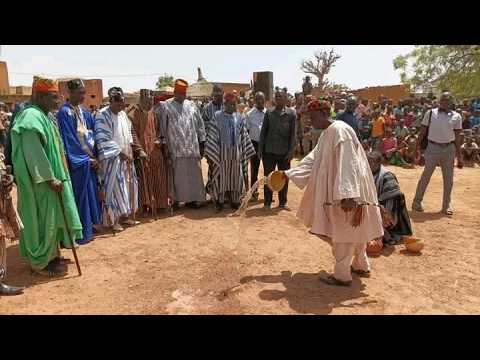
As reported by Sié Frédéric Kambou of Burkina 24, the 3rd edition of the Day of Customs and Traditions, branded as the “72 Hours of Communities,” took place from May 14 to 16, 2026, in Koudougou and Koukouldi, Burkina Faso. Organized by the Yilo Cultural Centre of Koukouldi (C.C.Y.K), the event was officially dedicated to celebrating ancestral values and fostering intercultural dialogue.
The highlight of the commemoration occurred on Friday, May 15, 2026, in Koukouldi. The event was initiated by Bassolma Bazié, President of the National Confederation of the Alliance of Sahel States. In his address, Bazié emphasized the foundational role of cultural roots in sustainable development.
“You know very well that someone who does not know their past, who does not know where they come from, does not know where they are, and cannot know where they are going… also, they say that a tree trunk can stay in water for a long time, but it cannot become a fish. So culture is nothing other than roots, and a tree cannot survive by trying to live off the roots of another tree… but, one does not surrender one’s life to another entity to build the plantation.”
Representing the Prime Minister, the Minister of Security, Mahamadou Sana, hailed the ceremony as a powerful symbol of resilience. He asserted that the event demonstrates Burkina Faso’s enduring capacity to host foreign guests despite ongoing challenges.
“They wanted to make us disappear through slavery, we remained standing. They came with colonialism and neo-colonialism, we remained standing. They came with political reforms, we remained standing. Currently, they have returned with hostile actions, notably terrorism, but Burkina Faso will stand. And Koukouldi is the incarnation of this resilience.”
The theme of this edition was “Communities and social cohesion: What contribution from actors to strengthening social cohesion?”
WANA Regional Analysis
Against the backdrop of persistent security threats and shifting geopolitical alliances in the Sahel, the 3rd edition of the Day of Customs and Traditions in Koukouldi transcends a mere cultural festival. It emerges as a deliberate, state-sanctioned narrative of resilience and sovereignty. The choice of Koukouldi—a locality that has become a symbolic site of resistance—is not incidental. It serves as a physical and rhetorical counterpoint to the narrative of state fragility that often dominates international reporting on Burkina Faso.
The involvement of Bassolma Bazié, a prominent political figure linked to the Alliance of Sahel States (AES), signals a strategic intertwining of cultural revival with the political project of the AES. By framing cultural identity as the “roots” of a nation, Bazié’s rhetoric implicitly critiques external influence and advocates for a self-determined development model. This aligns with the broader AES agenda of reducing dependence on traditional Western partners and asserting regional autonomy.
Minister Sana’s remarks further reinforce this narrative. His litany of historical adversities—slavery, colonialism, neo-colonialism, political reforms, and terrorism—positions the current juncture as another chapter in a long struggle for survival. The assertion that “Burkina Faso will stand” is not merely a statement of fact but a performative act of defiance, aimed at both domestic audiences and international observers. It seeks to project an image of unbroken continuity and collective will, even as the country grapples with internal displacement, economic strain, and security vacuums.
The theme of social cohesion is particularly salient. In a region where communal tensions can be exploited by armed groups, events like the “72 Hours of Communities” serve as a platform for reinforcing inter-communal bonds. However, the analysis must distinguish between the event’s aspirational goals and the on-the-ground realities. While the festival promotes dialogue, the broader context includes forced displacements, the militarization of certain communities, and the erosion of traditional governance structures in conflict zones. The true test of this cultural diplomacy will be its ability to translate symbolic unity into tangible, localized peacebuilding initiatives.
For the ECOWAS region, this event underscores a growing trend: the use of cultural heritage as a tool for political legitimation and social resilience. As member states face similar challenges of terrorism and governance, the Burkinabè model—linking cultural identity to national survival—may offer a template, albeit one that requires careful adaptation to local contexts. The international community should note that such events are not merely folkloric; they are strategic communications that shape public perception and policy direction in the Sahel.
Original Reporting By: Burkina 24

Comments