

Savanes Region Braces for Rainy Season Hazards: A Test of Togo’s Decentralised Disaster Governance
The Report
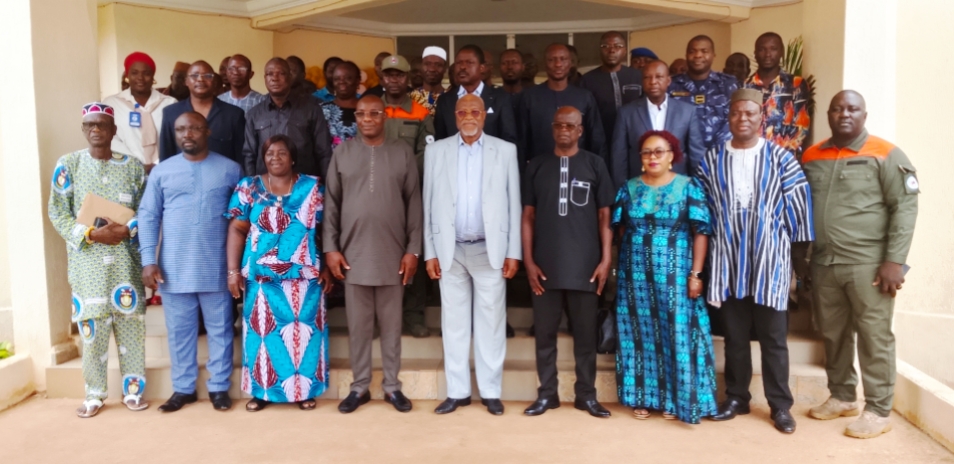
As reported by Savoir News journalist Julien SAMA, the National Civil Protection Agency (ANPC) convened a meeting of regional, prefectural, and municipal disaster risk reduction platforms in Dapaong on June 29, 2026. The gathering aimed to strengthen prevention and preparedness measures for the upcoming rainy season in the Savanes region, located over 660 kilometres north of Lomé.
Participants—including local authorities, traditional chiefs, decentralised state services, civil society leaders, and security forces—reviewed the 2026 seasonal forecasts and discussed flood risks. Presentations covered the roles of local authorities in emergency prevention and the structure of the Regional Disaster Risk Reduction Platform.
According to Affoh Atcha-Dédji, Governor of the Savanes region, “the 2024-2026 Regional Multi-Hazard Contingency Plan shows that the Savanes region faces natural hazards such as floods, violent winds, droughts, and human-induced hazards like fires, inter-community conflicts, not to mention the spillover effects of the Sahel crisis. All these phenomena negatively impact the lives of populations as well as socio-economic and environmental activities.”
Mr. Ouro-Salim, Deputy Director General of the ANPC, noted that “to reduce the risks of natural disasters, the country adopted the Hyogo Framework for Action (which later became the Sendai Framework) in 2007. That same year, the National Disaster Risk Reduction Platform was established as a national framework for reflection and guidance on disaster risk reduction, in line with the recommendations of the Hyogo Framework for Action 2005-2015. This national platform has regional, prefectural, and municipal-level branches.”
WANA Regional Analysis
This meeting in Dapaong is more than a routine administrative exercise. It represents a critical test of Togo’s decentralised disaster governance model, which is being increasingly stressed by the convergence of climate change and regional insecurity. The Savanes region, bordering Burkina Faso and Benin, sits at the frontline of two distinct but overlapping crises: the intensifying Sahel security spillover and the growing frequency of hydro-meteorological hazards.
From a regional policy perspective, Togo’s approach—anchored in the Hyogo and Sendai Frameworks—offers a potential template for other West African states grappling with similar multi-hazard environments. The establishment of platforms at national, regional, prefectural, and municipal levels reflects a deliberate effort to embed disaster risk reduction (DRR) within local governance structures. This is particularly significant given that ECOWAS has long advocated for community-based DRR as a pillar of its Regional Disaster Risk Reduction Strategy.
However, the effectiveness of these platforms hinges on resources, coordination, and political will. The Savanes region’s 2024-2026 Multi-Hazard Contingency Plan explicitly acknowledges threats ranging from floods and violent winds to inter-community conflicts and the Sahel crisis. The latter adds a complex security dimension: displacement, resource competition, and the presence of armed groups can exacerbate vulnerabilities and complicate emergency response. The involvement of law enforcement and security forces in the Dapaong meeting signals an awareness that disaster management in this region cannot be separated from broader stability concerns.
The broader implications for the ECOWAS region suggest that Togo’s experience could inform regional discussions on integrated risk governance. As climate projections indicate more intense and erratic rainfall across the West African Sahel and coastal zones, the ability of states to coordinate across administrative levels and with security actors will be paramount. The Savanes platforms, if adequately resourced, could serve as a laboratory for multi-sectoral, multi-hazard preparedness that other member states might adapt.
Economically, the stakes are high. The Savanes region is a key agricultural zone, and repeated flood or drought events can undermine food security and livelihoods, with ripple effects across cross-border trade networks. The meeting’s focus on seasonal forecasts and flood risk measures is a pragmatic step, but translating these into actionable local plans—especially in remote, underserved communities—remains a persistent challenge.
Regional Backdrop
Togo’s DRR architecture is part of a broader West African trend toward institutionalising disaster preparedness. The Hyogo Framework for Action (2005-2015) and its successor, the Sendai Framework for Disaster Risk Reduction (2015-2030), have provided international benchmarks. Within ECOWAS, the adoption of the Regional Disaster Risk Reduction Strategy and the establishment of the ECOWAS Disaster Risk Reduction and Climate Change Division have created a policy environment conducive to national-level action.
Yet, implementation gaps remain wide. Many West African countries struggle with weak local governance, limited fiscal space, and competing priorities. Togo’s decision to embed DRR platforms within existing administrative structures—from the national ANPC down to municipal councils—is a notable attempt to overcome these barriers. The Savanes region, with its unique exposure to both natural and human-induced hazards, offers a particularly instructive case for regional peers.
Original Reporting By: Savoir News

1 comment