
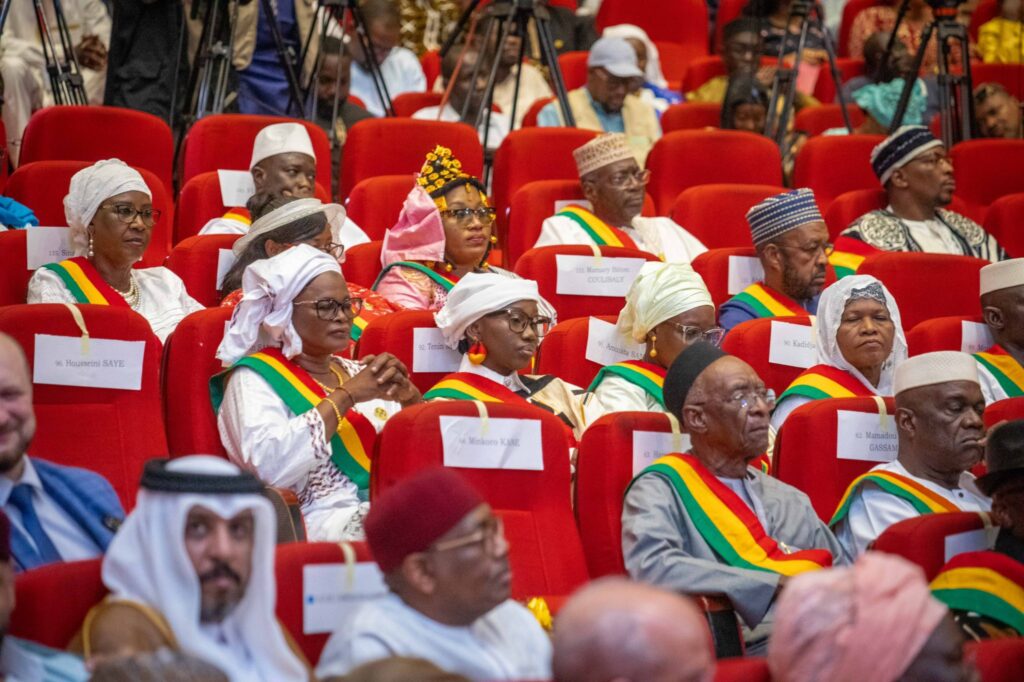
CNT Bureau Reshuffle: Balancing Continuity and New Political Dynamics in Mali’s Transition
The National Transitional Council (CNT) of Mali has undergone a significant reshuffle of its bureau, reflecting a strategic blend of continuity and renewal. This reorganization, driven by deaths, exclusions, and internal adjustments, aims to strengthen the legislative body’s capacity to guide Mali through its ongoing political transition. The changes underscore the delicate balancing act between maintaining experienced leadership and integrating fresh perspectives to address evolving challenges.
Meeting in plenary session on April 23, 2026, the National Transition Council (CNT) proceeded to elect the members of its bureau. While the presidency remains unchanged, several notable adjustments have been made to the other positions, mixing internal promotions and new entries.
Leadership Stability at the Top
At the helm, Army Corps General Malick Diaw remains as President of the CNT, ensuring stability and institutional memory. His continued leadership signals a commitment to the transitional roadmap, as he has been a key figure in steering the council since its inception. General Diaw’s role is critical in maintaining cohesion among diverse political factions and ensuring that the CNT’s legislative agenda aligns with the broader goals of the transition, including security sector reform and constitutional revision.
Key Appointments and Their Implications
First Vice President: Honorable Hamèye Founé Mahalmadane
Honorable Hamèye Founé Mahalmadane, who joined the CNT in 2021 following the revocation of Issa Kaou Nd’jim, has been elected as 1st Vice President. He replaces the late Assarid Ag Imbarcaouane, a respected figure from the northern regions. Mahalmadane’s elevation is significant: it reinforces representation from the Gao region and brings a seasoned politician with experience in local governance. His appointment is expected to strengthen dialogue between the CNT and regional authorities, particularly in addressing the security and humanitarian crises in northern Mali.
Second Vice President: Honorable Racky Talla Diarra
Honorable Racky Talla Diarra, previously the 5th Vice President, moves up to 2nd Vice President, replacing Hatouma Gakou Djikiné, who passed away in April 2025. Diarra’s promotion reflects the CNT’s commitment to gender inclusion and continuity. As a former minister and advocate for women’s rights, her role will be pivotal in advancing legislative initiatives on social protection, education, and economic empowerment for women and youth—key pillars of the transition’s social contract.
Third Vice President: Honorable Hamidou Traoré
Honorable Hamidou Traoré, formerly 6th Vice President, ascends to 3rd Vice President, replacing Mohamed Ag Intalla, who was excluded in 2023 for absenteeism. Traoré’s rise is a testament to his consistent engagement and legislative work. His portfolio will likely focus on economic recovery and infrastructure, areas critical for rebuilding trust in state institutions and stimulating post-conflict development.
New Faces, New Perspectives
Three new members join the bureau, bringing diverse expertise and regional representation:
- Mohamed Ag Ousmane Mohamedoune (4th Vice President): A Tuareg leader from the Kidal region, his inclusion is a strategic move to enhance northern representation and foster reconciliation. His background in civil society and peacebuilding will be invaluable in advancing the Algiers Peace Agreement implementation.
- Me Saran Keïta (5th Vice President): A prominent lawyer and human rights advocate, Keïta’s appointment strengthens the CNT’s legal and oversight capacity. Her expertise will be crucial in reviewing draft laws on justice reform and anti-corruption measures.
- Hadji Barry (6th Vice President): A former diplomat and expert in international relations, Barry brings experience in foreign policy and regional integration. His role will support the CNT’s engagement with ECOWAS and the African Union, which remain key partners in Mali’s transition.
Changes in the Quaestorship
On the financial oversight side, Adama Niaré moves from 2nd Quaestor to 1st Quaestor, reflecting his proven track record in managing the CNT’s budget and resources. Salif Doumbia enters as 2nd Quaestor, bringing experience from the private sector. This duo will be responsible for ensuring transparency and accountability in the council’s financial operations, a critical aspect given the scrutiny of transitional institutions by both domestic and international observers.
Continuity in Parliamentary Secretaries
In contrast to the reshuffled vice presidencies and quaestors, the six parliamentary secretaries remain unchanged. Amadou Albert Maïga, Nouhoum Sarr, Amadou Diallo, Alioune Gueye, Habibatou Nagnouma Traoré, and Oumou Sanogo have all been reappointed to their respective posts (1st through 6th Secretary). This continuity ensures that the administrative and legislative machinery of the CNT operates smoothly, preserving institutional knowledge and procedural efficiency. Their roles are vital for managing legislative agendas, drafting reports, and coordinating committee work.
Strategic Outlook and Challenges Ahead
Presiding over the election in accordance with the transitional texts, General Malick Diaw emphasized that the new composition will be transmitted to the highest authorities of the Transition. He urged bureau members to work collectively for the success of the missions assigned to the legislative body. This reshuffle comes at a critical juncture, as Mali prepares for constitutional referendum and general elections, which are essential for restoring civilian rule.
The new bureau faces several key challenges:
- Security and Stabilization: Continuing efforts to combat jihadist insurgencies and intercommunal violence, particularly in the central and northern regions.
- Constitutional Reform: Finalizing and adopting a new constitution that reflects the aspirations of all Malians and paves the way for democratic elections.
- Economic Recovery: Addressing inflation, unemployment, and food insecurity exacerbated by sanctions and conflict.
- Social Cohesion: Promoting national dialogue and reconciliation among diverse ethnic and political groups.
By blending experienced leaders with new voices, the CNT aims to enhance its legitimacy and effectiveness. The reshuffle signals a pragmatic approach to governance, where continuity provides stability, and renewal injects fresh energy and ideas. As Mali navigates the final phases of its transition, the reconfigured bureau will play a decisive role in shaping the country’s future.
— Mohamed Kenouvi

Comments