
Senate Confirmations Signal Strategic Reshuffle in Tinubu’s Cabinet: Power and Foreign Affairs in Focus
The Report
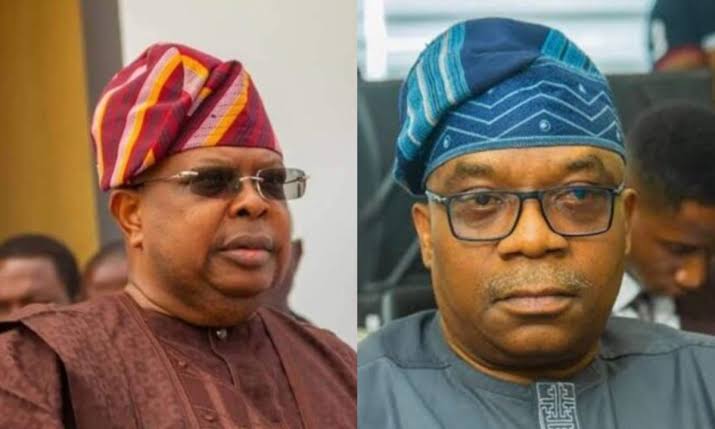
As reported by PEAI Media, the Nigerian Senate has officially confirmed Joseph Tegbe as the Minister of Power and Sola Enikanolaiye as the Minister of State for Foreign Affairs. The confirmation process, which took place just 24 hours after President Bola Tinubu’s formal request was read during plenary by Senate President Godswill Akpabio, moved swiftly. Both nominees underwent a rigorous screening process on the Senate floor before their appointments were finalized.
“The new appointments address key vacancies and leadership shifts within the administration.”
Tegbe steps into the role following the resignation of Adelabu, who vacated the position to pursue elective office in Oyo State. Enikanolaiye’s nomination follows a restructuring in the foreign ministry, triggered by the elevation of Ambassador Odumegwu-Ojukwu to the position of Minister of Foreign Affairs. Before his nomination, Ambassador Enikanolaiye, from Kogi State, served as Senior Special Assistant to the President on Foreign Affairs and International Relations.
WANA Regional Analysis
Against this backdrop, the swift confirmation of these two ministers signals a deliberate recalibration of President Tinubu’s cabinet, particularly in two sectors critical to Nigeria’s domestic stability and international standing. The appointment of Joseph Tegbe as Minister of Power comes at a time when Nigeria’s electricity grid continues to face systemic challenges, including recurrent collapses and inadequate distribution infrastructure. The broader implications for the ECOWAS region suggest that a more stable Nigerian power sector could bolster cross-border energy trade, particularly under the West African Power Pool (WAPP) initiative, which aims to integrate national grids.
Similarly, the restructuring of the foreign ministry—with Enikanolaiye stepping in as Minister of State—reflects a strategic move to deepen Nigeria’s diplomatic engagement. Given the recent political transitions in the Sahel and the ongoing ECOWAS sanctions on Niger, Mali, and Burkina Faso, Nigeria’s foreign policy apparatus must be agile. Enikanolaiye’s prior role as Senior Special Assistant to the President on Foreign Affairs and International Relations positions him as a continuity figure, likely to reinforce the administration’s stance on regional security and economic integration.
It is important to distinguish the reported facts from the broader context. While the Senate’s confirmation process was swift, it does not necessarily indicate a lack of scrutiny; rather, it reflects the urgency of filling these portfolios. The resignation of Adelabu to pursue elective office is a reminder of the fluidity of Nigeria’s political landscape, where cabinet positions often serve as stepping stones to other ambitions. For the West African region, the stability of Nigeria’s executive branch remains a bellwether for democratic governance and policy continuity.


Original Reporting By: PEAI Media

Comments