





Côte d’Ivoire’s Political Transition: Legislative Elections Set for December 27 Amid Presidential Landslide
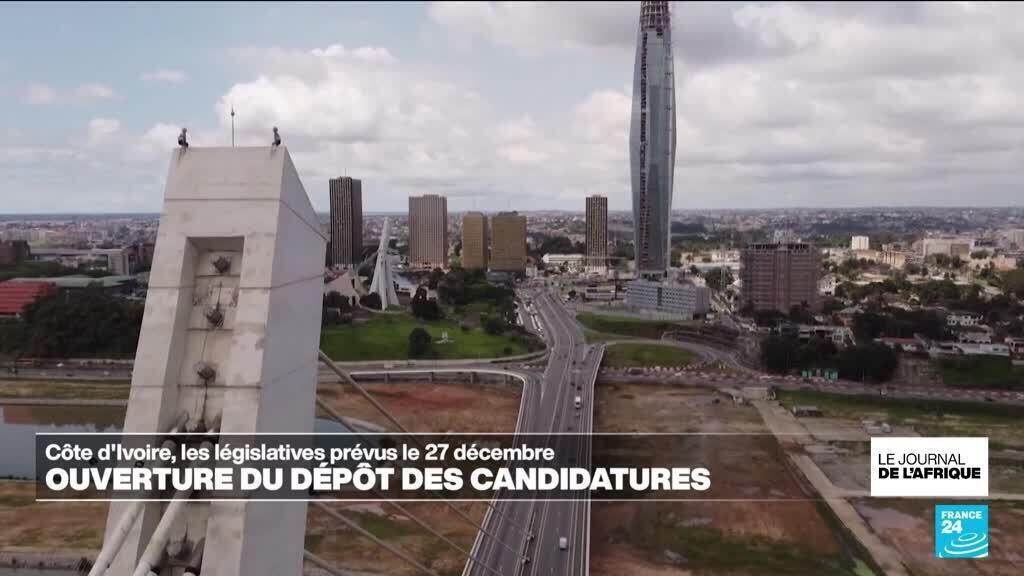
ABIDJAN—The dust has barely settled from Côte d’Ivoire’s presidential election, but the nation’s political machinery is already shifting gears. With Alassane Ouattara’s decisive victory securing him a controversial third term with over 89% of the vote, attention now turns to the legislative elections scheduled for December 27. The Independent Electoral Commission (CEI) has officially opened the candidate registration period, marking the next critical phase in the country’s democratic process.
What happens when a president wins by a landslide but faces a fractured parliament? This is the question looming over Ivorian politics as the nation prepares for legislative elections that could either consolidate President Ouattara’s power or create institutional gridlock. The timing is tight, the stakes are high, and the political landscape remains deeply polarized following an election boycotted by major opposition parties.
The Post-Presidential Political Landscape
The presidential election held earlier this month resulted in what many international observers described as a foregone conclusion. President Alassane Ouattara’s overwhelming margin of victory—securing nearly nine out of every ten votes cast—came amid an opposition boycott that saw turnout plummet to historic lows. The two primary opposition figures, former President Henri Konan Bédié and exiled former Prime Minister Pascal Affi N’Guessan, had called for an active boycott, describing the electoral process as fundamentally flawed.
Now, as the country moves toward legislative elections, the critical question becomes whether the opposition will maintain its boycott strategy or participate in what many see as a last institutional opportunity to check presidential power. The dynamics have shifted significantly since the 2016 legislative elections, which saw Ouattara’s RHDP party secure a commanding majority with 167 of 255 seats.
Political analyst Dr. Ama Kissi, who has studied Ivorian elections for over a decade, observes that “the legislative elections represent a crucial test for both the government and opposition. For Ouattara, it’s about legitimizing his third term with a supportive parliament. For the opposition, it’s about deciding whether to abandon the political arena entirely or use what democratic spaces remain to voice dissent.”
Electoral Commission’s Uphill Battle
The Independent Electoral Commission faces the monumental task of organizing credible legislative elections within an extremely compressed timeframe. With just weeks to prepare, the commission must verify candidate eligibility, distribute voting materials across the country’s 31 regions and 108 departments, and ensure security protocols are in place.
Commission spokesperson Éric Dégué told reporters that “preparations are proceeding according to the constitutional calendar, despite the challenges. We are committed to ensuring these elections meet international standards of transparency and fairness.”
But behind the public assurances lie significant operational hurdles. The commission must recruit and train approximately 80,000 electoral agents, establish over 22,000 polling stations, and verify the voter registry—all while operating under intense political scrutiny and security concerns.
The Opposition’s Dilemma: To Participate or Not?
The opposition finds itself at a critical crossroads. The presidential election boycott succeeded in undermining the legitimacy of Ouattara’s victory but left opposition parties without formal power. Now, they must decide whether to extend their boycott to the legislative elections or participate in hopes of securing at least some representation in the National Assembly.
Historically, legislative elections in Côte d’Ivoire have seen higher opposition participation than presidential votes. In 2016, despite tensions, most major parties fielded candidates, resulting in a parliament that, while dominated by the RHDP, included significant opposition representation.
However, the current political climate is markedly different. The controversy surrounding Ouattara’s third term—opponents argue it violates constitutional term limits—has deepened political divisions. The memory of the 2010-2011 post-election crisis, which claimed over 3,000 lives, remains fresh in the national consciousness, adding urgency to the current electoral process.
An opposition strategist, speaking on condition of anonymity, revealed that “internal debates are raging within opposition camps. Some argue participation legitimizes an illegitimate process. Others counter that complete withdrawal cedes all state institutions to the ruling party. It’s the classic dilemma between principle and pragmatism.”
Regional and Ethnic Dimensions
Côte d’Ivoire’s political divisions often follow regional and ethnic lines, with the north generally supporting Ouattara and the south and center backing Bédié and other opposition figures. These geographic cleavages have profound implications for legislative elections, where local loyalties can sometimes trump national political trends.
In the western regions, particularly those affected by past conflicts, security concerns may influence both candidate participation and voter turnout. Meanwhile, in the economic capital Abidjan, with its diverse population and concentration of parliamentary seats, political messaging tends to focus more on economic issues and governance.
Dr. Kissi notes that “the legislative elections will test whether regional voting patterns established during the presidential election will hold, or whether local considerations will produce different outcomes. In many constituencies, particularly outside traditional strongholds, candidate personality and local reputation may prove more decisive than party affiliation.”
Constitutional and Institutional Implications
The composition of the next National Assembly will significantly impact Côte d’Ivoire’s governance for the remainder of Ouattara’s term. A strong RHDP majority would enable the president to pursue his legislative agenda with minimal opposition, including potentially controversial economic reforms and constitutional changes.
Conversely, a significant opposition presence—should they choose to participate—could create a more robust system of checks and balances. The National Assembly holds powers of oversight, budget approval, and legislation initiation that could be used to moderate executive power.
Constitutional scholar Professor Jean-Luc Aké emphasizes that “the health of any democracy depends not just on presidential elections but on the balance of power between executive and legislative branches. These legislative elections will determine whether Côte d’Ivoire moves toward greater concentration of power or maintains some degree of institutional balance.”
Economic Context and Voter Sentiment
Beyond purely political considerations, the legislative elections occur against a backdrop of significant economic challenges. Côte d’Ivoire remains one of West Africa’s fastest-growing economies, but the benefits of this growth have been unevenly distributed. Youth unemployment, infrastructure deficits, and regional economic disparities continue to fuel discontent.
The COVID-19 pandemic has exacerbated these issues, straining public finances and highlighting weaknesses in the health care system. How these economic concerns translate into voting behavior—or abstention—will be closely watched by both domestic and international observers.
Market vendor Mariam Koné, who didn’t vote in the presidential election, expresses a sentiment common among many Ivorians: “Politicians promise everything during elections, but our lives don’t change. Still, if the opposition participates this time, I might vote. We need someone in parliament who remembers ordinary people.”
International Community’s Watchful Eye
The international community, particularly regional bodies like the African Union and ECOWAS, as well as former colonial power France and other Western partners, is monitoring the electoral process closely. While most international observers characterized the presidential election as technically well-run despite the boycott, concerns about political inclusivity and civil liberties persist.
European Union election observation mission head Maria Müller stated that “credible legislative elections with broad participation would represent an important step toward political normalization in Côte d’Ivoire. We encourage all political actors to engage peacefully in the democratic process.”
The United States Department of State has similarly emphasized the importance of inclusive elections, with a spokesperson noting that “the legislative elections provide an opportunity for all Ivorian voices to be represented in their government. We urge all parties to participate peacefully and condemn any violence or intimidation.”
Security Preparations and Potential Flashpoints
Security remains a paramount concern, particularly given occasional protests and political violence in the lead-up to the presidential election. The government has deployed additional security forces in potential hotspot areas and established a special security command center to coordinate election-related operations.
Interior Minister General Vagondo Diomandé has assured citizens that “comprehensive security measures are being implemented to ensure these elections proceed peacefully nationwide. We have the capability and determination to protect every Ivorian’s right to vote in safety.”
Nevertheless, human rights organizations have expressed concerns about possible excessive use of force by security personnel and restrictions on freedom of assembly. The Ivorian Human Rights League has called for “proportional and professional security deployment that protects both public order and fundamental rights.”
Historical Context and Democratic Evolution
Côte d’Ivoire’s journey toward stable democracy has been long and turbulent. From the single-party rule of founding President Félix Houphouët-Boigny through the military coup of 1999, the contentious presidency of Laurent Gbagbo, the 2010-2011 post-election crisis, and now Ouattara’s controversial third term, the country’s political institutions have been repeatedly tested.
The upcoming legislative elections represent another milestone in this ongoing evolution. A peaceful, credible election with broad participation would strengthen democratic norms, while a contested process or widespread violence could further undermine political stability.
As political historian Dr. Sylvie Toungara reflects, “Each election in Côte d’Ivoire’s recent history has represented both a challenge to and an opportunity for democratic consolidation. The legislative elections are particularly significant because they determine whether dissent can find legitimate expression within state institutions or must seek other avenues.”
The Road Ahead
With candidate registration now open, political parties have limited time to select their standard-bearers and submit documentation to the electoral commission. The campaign period, when it officially begins, will be brief and intense, with candidates crisscrossing their constituencies to rally support.
For ordinary Ivorians, these elections represent both a political choice and a practical decision about daily governance. Members of the National Assembly handle constituency services, influence local development projects, and debate legislation that affects everything from education to infrastructure to business regulation.
As the December 27 date approaches, all eyes will be on candidate lists, campaign rhetoric, security developments, and ultimately, voter turnout. The results will shape not just the balance of power in Abidjan but the trajectory of one of West Africa’s most important nations for years to come.
In the words of civil society leader Bernard Dadié: “Elections come and go, but institutions endure. However these legislative elections unfold, what matters most is whether they strengthen the institutions that guarantee peaceful political competition and protect the rights of all Ivorians, regardless of who holds power.”
Source: France 24