










Sasria’s Resilience: From R24 Billion Civil Unrest Recovery to Climate Risk Frontier
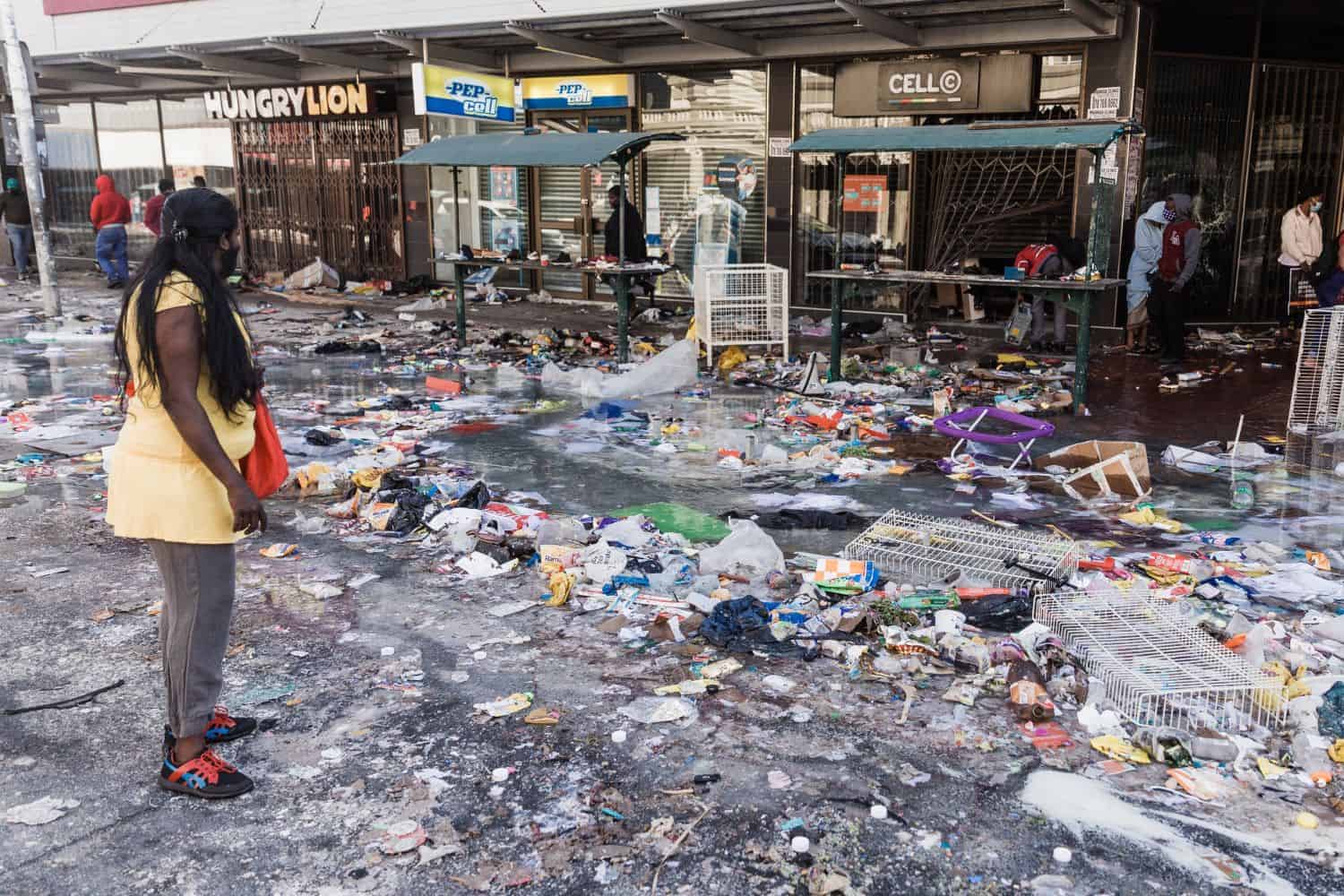
How South Africa’s specialist insurer is rebuilding from catastrophic losses while preparing for the next wave of national emergencies
The Ghost of 2021: A R24 Billion Reckoning
The images remain seared in the national consciousness: smoldering shopping malls, looted storefronts, and the economic devastation that followed the July 2021 civil unrest. For Sasria SOC Ltd, South Africa’s sole provider of special risk insurance, those chaotic days translated into a staggering R24 billion loss that continues to shape its strategic direction four years later.
As the state-owned entity responsible for covering civil commotion, public disorder, strikes, riots and terrorism, Sasria found itself at the epicenter of South Africa’s worst unrest in the post-apartheid era. The organization paid out thousands of claims to businesses and individuals whose properties were damaged or destroyed during the violence that erupted following former president Jacob Zuma’s imprisonment.
“That event revealed our vulnerabilities in the starkest terms,” reflects Sasria CEO Mpumi Tyikwe, in an exclusive analysis of the company’s recent parliamentary presentation. “It highlighted the vital role of specialized risk insurance in maintaining national stability, but it also exposed the precariousness of our financial position when faced with catastrophic events of that magnitude.”
Remarkable Recovery: Financial Resurgence Against the Odds
Despite the shadow of the 2021 catastrophe, Sasria’s latest annual report reveals an organization in the midst of a powerful financial resurgence. With profits surging 34% to R4.5 billion and its capital base strengthening to R18.6 billion, the insurer is demonstrating remarkable operational resilience.
Dirk Kunz, Sasria’s Chief Financial Officer, provides context to these impressive figures. “The importance of these results cannot be overstated,” he explains. “Our strong financial performance positions us firmly on the path toward reaching our target of R30 billion in capital reserves by 2030. The significant increase in Sasria’s equity from R14.1 billion to R18.6 billion demonstrates our unwavering commitment to building financial resilience for future catastrophic events.”
Breaking Down the Financial Turnaround
The numbers tell a compelling story of strategic recovery:
Balance Sheet Strength: Total assets grew by an impressive 27.1% to R20.9 billion, up from R16.5 billion in the previous year. This substantial balance sheet growth provides the foundation for Sasria’s expanded mandate and risk appetite.
Insurance Revenue Growth: The company’s core insurance revenue reached R5.8 billion, representing a healthy 9.7% increase from the previous year’s R5.3 billion. This growth occurred despite a challenging economic environment and indicates both market confidence and effective premium pricing.
Investment Performance: Sasria capitalized on favorable interest rate conditions, generating investment income of R1.3 billion compared to R1.0 billion in the previous year. This 26% growth demonstrates sophisticated treasury management and strategic asset allocation.
Reinsurance Strategy Overhaul: Perhaps most significantly, net reinsurance expenses plummeted to R592.2 million from R1.3 billion—a dramatic 55.4% reduction. This achievement stems from a revised quota share arrangement that lowered the ceding rate to 20% from the previous 42.4%, reflecting both improved risk assessment and strategic negotiation in a hardened reinsurance market.
Kunz elaborates on the operational improvements: “Although the underlying drivers of the various perils we cover—including socio-economic conditions, unemployment and youth unemployment—were not significantly different from previous years, we were encouraged by the low level of claims expense during the period, which contributed to an improvement in net insurance service profitability.”
The Long Road to R30 Billion: Vision 2029
Sasria’s strategic compass is firmly fixed on achieving R30 billion in capital reserves by 2029—a target that represents both financial prudence and national necessity. The 2021 unrest exposed the critical importance of substantial capital buffers for an organization that functions as South Africa’s insurer of last resort for special risks.
Tyikwe outlines the broader strategic context: “This year marked our entry into a new strategic cycle toward Vision 2029. Beyond maximizing capital reserves, we are introducing new profitable products and expanding our mandate to address climate-related catastrophes and emerging risks. Our engagement with government on these critical matters positions us as a forward-thinking institution ready for South Africa’s evolving risk landscape.”
The CEO acknowledges that while the current financial performance is positive, full recovery remains a medium-term project. “We still need another three years to recover the R24 billion loss incurred in the 2021/22 financial year amid a significantly higher risk environment,” she notes, highlighting the delicate balance between rebuilding reserves and maintaining operational capacity.
Beyond Civil Unrest: The Climate Risk Frontier
In a strategic pivot that acknowledges South Africa’s vulnerability to climate change, Sasria is expanding its mandate to include climate-related catastrophes. This evolution represents both a pragmatic response to emerging national threats and a forward-looking business strategy.
“Our solid financial footing is critical for our future mandate,” Tyikwe emphasizes. “Climate-related events represent a growing threat to South Africa’s economic stability, and our specialized expertise in catastrophic risk management positions us uniquely to address this challenge.”
The expansion into climate risks comes as South Africa faces increasing frequency and severity of weather-related disasters, from devastating floods in KwaZulu-Natal to prolonged droughts affecting agricultural production. Sasria’s entry into this space could fill a critical gap in the country’s insurance landscape, where traditional insurers often exclude or limit coverage for climate-related events.
Operational Excellence and Public Trust
Beyond the financial metrics, Sasria’s operational performance reinforces its credibility. The organization achieved an unqualified audit opinion and maintained full compliance with the Public Finance Management Act (PFMA). More impressively, the company’s Net Promoter Score reached 75—an exceptional result in the insurance sector—while claims-processing efficiency achieved a 97% rate of fast-track claims settled within 25 working days.
Finance Minister Enoch Godongwana, who presented the integrated report in parliament, highlighted Sasria’s broader importance to the South African economy. “This report provides evidence of an organization firmly on the path to transformation, safeguarding assets and contributing significantly to socio-economic development,” he stated. “By investing in data intelligence and strategic partnerships, Sasria positions itself as a resilient institution aligned with emerging needs and committed to public value.”
Navigating South Africa’s Risk Landscape
Despite the increase in protests and social unrest in recent years, Sasria has observed a surprising trend: protest activity has not translated into higher claim numbers. Tyikwe attributes this partly to the national campaign urging South Africans not to ‘score own goals’ by damaging their own infrastructure during protests.
This phenomenon raises intriguing questions about the relationship between social unrest, public awareness, and insurance claims. Has South Africa developed greater resilience to protest-related damage? Or are businesses and communities implementing more effective protection measures? The answers likely involve both factors, combined with Sasria’s improved risk assessment capabilities.
The company’s experience with the 2021 unrest has fundamentally reshaped its approach to risk modeling and capital management. The event served as a brutal stress test that revealed weaknesses in previous assumptions about the scale and simultaneity of catastrophic events. In response, Sasria has invested heavily in data analytics, scenario planning, and reinsurance strategy.
The Road Ahead: Challenges and Opportunities
As Sasria navigates its recovery path, several challenges loom on the horizon. The persistent socioeconomic drivers of unrest—including high unemployment, particularly among youth, and economic inequality—continue to create fertile ground for civil commotion. Meanwhile, the expanding mandate into climate risks introduces new complexities in risk assessment and pricing.
Yet opportunities abound. Sasria’s unique position as a state-owned specialist insurer provides advantages in understanding national risk priorities and collaborating with government entities. The organization’s hard-won experience in managing catastrophic claims positions it well to handle climate-related disasters. And its improving financial strength enables more sophisticated risk retention strategies that can reduce dependence on expensive reinsurance.
The coming years will test whether Sasria can balance its dual mandate: maintaining financial stability while providing affordable coverage for risks that the private market cannot or will not insure. The stakes extend far beyond the organization’s balance sheet—they encompass national economic resilience and the protection of livelihoods across South Africa.
As Tyikwe summarizes: “We are not just rebuilding our capital reserves; we are rebuilding South Africa’s capacity to withstand shocks, whether they come from social unrest or climate events. Our success is intrinsically linked to the nation’s resilience.”