









Gauteng High Court Issues Landmark Interdict Against Operation Dudula, Barring Xenophobic Actions at Hospitals and Schools
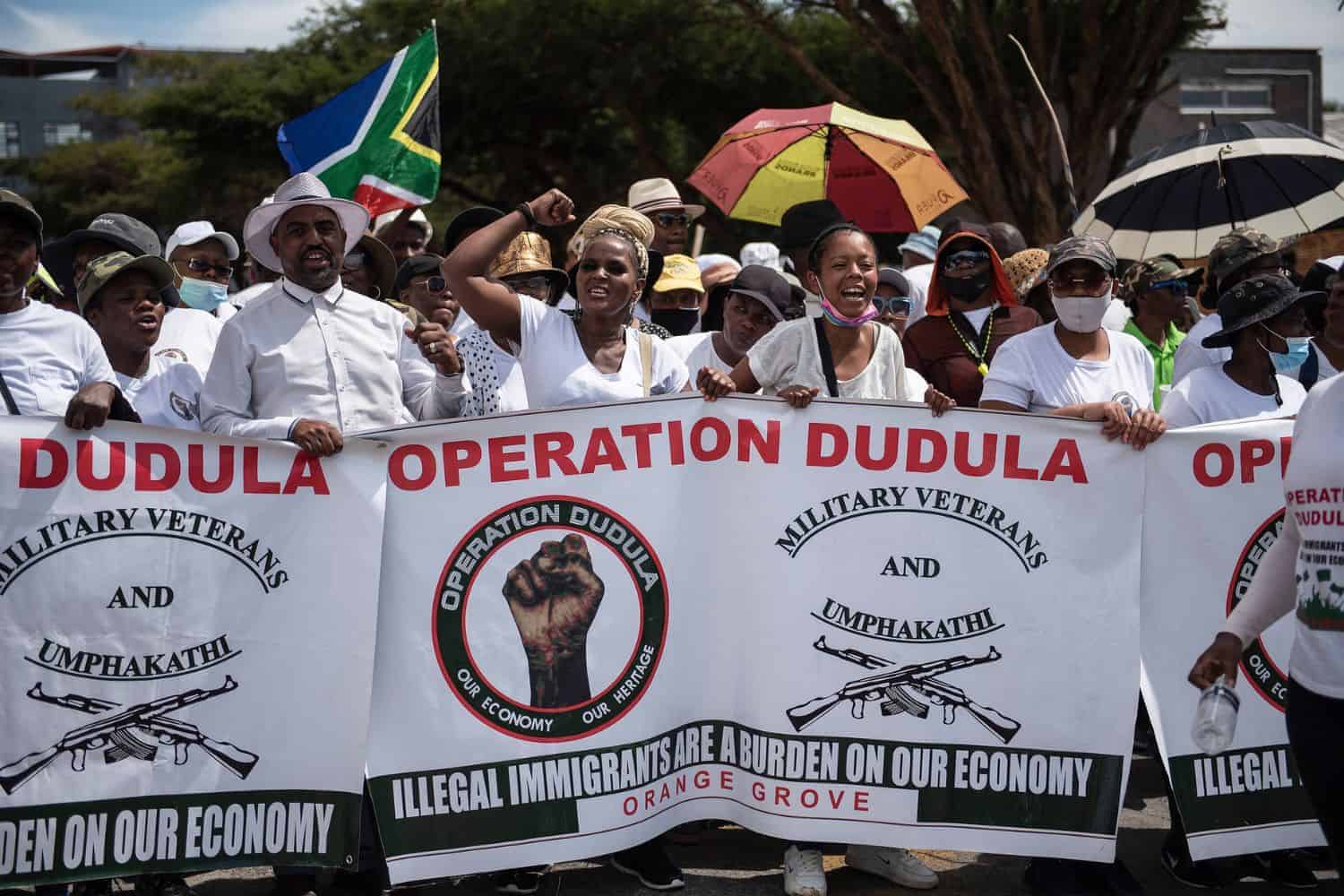
In a decisive legal ruling that reinforces constitutional rights, the Gauteng High Court in Johannesburg has issued a comprehensive interdict against the controversial group Operation Dudula, prohibiting it from blocking foreign nationals’ access to essential services like healthcare and education. This judgment marks a significant victory for civil society and establishes a clear legal boundary against vigilantism.
A Resounding Legal Rebuke
The court’s decision, handed down by Judge Leicester Adams on Tuesday, follows a 2023 application brought by a coalition of civil society organisations. These groups—Kopanang Africa Against Xenophobia (KAAX), the South African Informal Traders Forum (SAITF), the Inner City Federation (ICF), and Abahlali BaseMjondolo—were represented by the Socio-Economic Rights Institute of South Africa (SERI).
The applicants sought to halt Operation Dudula’s campaign of unlawful and discriminatory activities, which they argued had created a climate of fear and intimidation. The main part of the application was heard in June this year, culminating in this week’s powerful judgment.
The Specifics of the Court Order
Judge Adams found that Operation Dudula had acted unlawfully by preventing foreign nationals from receiving treatment at public hospitals and clinics. In his ruling, he delivered a crucial clarification on the limits of private power.
“The authority to request proof of legal status in South Africa rests solely with immigration or police officers,” the judgment states unequivocally. “No private person has the power to do so unless expressly so authorised by law.”
The court issued a broad interdict that restrains Operation Dudula, the police, and other authorities from:
Prohibited Conduct and Hate Speech
The order explicitly forbids the intimidation, harassment, or assault of people perceived to be foreign nationals. Furthermore, it bans the respondents from making or sharing any statements that constitute hate speech based on nationality, social origin, or ethnicity. This prohibition extends to public events, social media platforms, and all other forms of communication.
ALSO READ: Operation Dudula wants to know why organisations prioritise foreign nationals
Protecting Access to Essential Services
A core component of the ruling is the protection of access to essential services. The court ruled that Operation Dudula is prohibited from obstructing foreign nationals’ access to healthcare facilities or interfering with the functioning of schools. This protection includes any form of intimidation or harassment directed at learners, teachers, or parents, ensuring that educational environments remain safe and inclusive.
Unlawful Evictions and Business Interference
In addition, the judgment bars the organisation from unlawfully evicting foreign nationals from their homes or forcing them out of their shops and businesses. This provision directly addresses past actions where traders and residents were reportedly coerced into leaving their livelihoods and homes without due process.
The interdict also prevents Operation Dudula from instigating, promoting, or encouraging anyone to commit any of the prohibited actions, whether online, during gatherings, or through other means.
A Victory for Constitutional Principles
SERI’s litigation director, Nkosinathi Sithole, described the ruling as a significant victory—not only for their clients but for the foundational principles of the South African Constitution.
“It is very important that it has come to this, considering what we have been seeing is dastardly criminal conduct by Operation Dudula of blocking people from facilities,” Sithole told eNCA.
He highlighted that the judgment imposes a clear duty on state authorities. “The judgment makes it clear that the Minister of Police and the Minister of Home Affairs are required to ensure they do not turn a blind eye to Operation Dudula’s unlawful activities. When Operation Dudula does these conduct, they have to arrest them,” Sithole stated.
Reinforcing Due Process and the Rule of Law
Sithole further emphasised that the ruling reinforces the necessity of due process. He stressed that state authorities cannot simply enter people’s homes and carry out raids without following the proper legal channels, which include obtaining search and arrest warrants.
“In public, they need to have a clear, reasonable suspicion that someone is an undocumented foreign national before they can ask for such identity documents,” Sithole added, outlining the legal standard that must now be met.
This landmark judgment serves as a powerful reminder that while concerns about immigration are part of public discourse, the response must always operate within the framework of the law. It affirms that access to healthcare and education are fundamental rights, and that the power to enforce immigration law resides with the state, not with private groups. The ruling is expected to have far-reaching implications for how civil society and government engage with issues of xenophobia and vigilantism in South Africa.