










Maza’s Maiden Strike and Aït-Nouri’s Return: Algerian Talents Shine in German Football
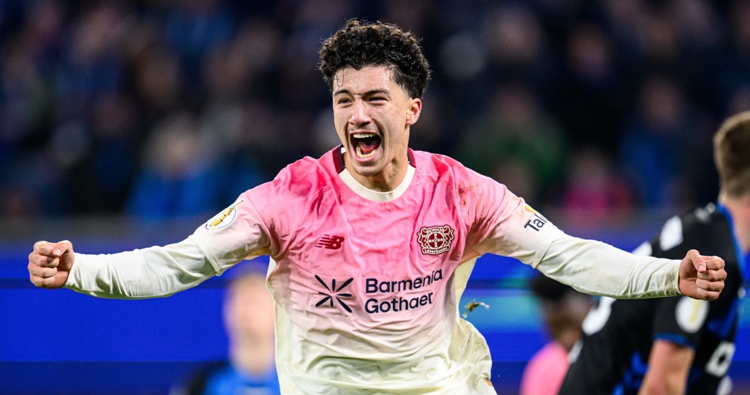
In the world of professional football, moments of breakthrough often arrive when least expected, yet perfectly timed. For two Algerian internationals plying their trade in Germany, Wednesday evening delivered such moments—one marking a long-awaited return to the pitch, the other etching his name into the scoresheet for the first time in his budding career.
A Night of Firsts and Returns
The German football landscape witnessed significant developments for Algerian talent as Bayer Leverkusen’s young prospect Ibrahim Maza scored his first professional goal while Wolverhampton Wanderers’ Rayan Aït-Nouri made his competitive return after a two-month injury absence. These parallel stories of emergence and recovery highlight the growing pipeline of Algerian talent making waves in European football.
Maza’s Moment of Glory
When Ibrahim Maza stepped onto the pitch in the 83rd minute against SC Paderborn in the 2. Bundesliga, few could have predicted the significance of his late cameo. The young Algerian international, who had been gradually integrated into Bayer Leverkusen’s first team setup, found himself in the right place at the right time during second-half stoppage time.
In the 92nd minute of additional time, Maza demonstrated the composure that has marked his rise through the ranks, slotting home Bayer Leverkusen’s third goal against their second-division opponents. The precision of his finish belied his limited experience at the professional level, showcasing the technical proficiency that has made him one of Algeria’s most promising exports.
“For a young player, that first goal is always special,” observed veteran football analyst Markus Schmidt, who has tracked Maza’s development. “But to do it in such pressured circumstances, with the game winding down, speaks volumes about his mental fortitude. This isn’t just another goal—it’s a statement.”
The Making of a Prospect
Ibrahim Maza’s journey to this milestone reflects the increasingly global nature of football development. Born in France to Algerian parents, the 20-year-old attacking midfielder represents the modern football nomad—nurtured in one system but embracing opportunities across borders. His progression through Bayer Leverkusen’s renowned youth academy has been methodical, with club officials carefully managing his exposure to first-team football.
What makes Maza’s breakthrough particularly noteworthy is the context. Bayer Leverkusen, under manager Xabi Alonso, has developed a reputation for nurturing young talent while maintaining competitive excellence. Breaking into such a setup requires more than mere potential—it demands consistent application and the ability to seize limited opportunities.
“The coaching staff has been impressed with Maza’s attitude in training,” revealed a club insider who spoke on condition of anonymity. “He’s shown tremendous work ethic and a willingness to learn. Tonight’s goal is just the visible reward for months of behind-the-scenes development.”
Aït-Nouri’s Road to Recovery
While Maza celebrated his maiden strike, another Algerian international was marking a different kind of milestone. Rayan Aït-Nouri, Wolverhampton Wanderers’ dynamic left-back, made his long-awaited return to competitive action after a two-month absence due to an ankle injury.
The 23-year-old defender’s comeback represents significant news for both club and country. For Wolves, Aït-Nouri’s return bolsters a defensive unit that has missed his attacking impetus and defensive solidity. For Algeria, his availability comes as welcome news ahead of crucial international commitments.
The Injury Journey
Ankle injuries, particularly for full-backs whose game relies heavily on agility and explosive movements, can be particularly challenging. Aït-Nouri’s two-month rehabilitation process involved extensive physiotherapy, strength conditioning, and gradual reintegration into training—a process that tests both physical resilience and mental fortitude.
“Coming back from injury is never straightforward,” explained sports medicine specialist Dr. Amara Konate. “For footballers, the psychological barrier is often as significant as the physical one. The fear of re-injury can inhibit performance initially, which makes a successful return like Aït-Nouri’s all the more impressive.”
Wolves manager Gary O’Neil had been cautiously optimistic about Aït-Nouri’s recovery timeline, emphasizing the importance of not rushing the process. “Rayan is an important player for us, but his long-term fitness is paramount,” O’Neil stated during the defender’s rehabilitation. “We want him back at 100%, not 90%.”
Broader Implications for Algerian Football
The simultaneous positive developments for Maza and Aït-Nouri highlight a broader trend in Algerian football. The North African nation, long known for producing talented footballers, is seeing its latest generation make impressive strides across Europe’s top leagues.
The German Connection
Germany has emerged as a particularly fertile ground for Algerian talent. From the legendary Rabah Madjer to contemporary stars, the Bundesliga has maintained a special relationship with Algerian footballers. Maza’s breakthrough continues this tradition, joining compatriots like Ramy Bensebaini and Farès Chaïbi who have flourished in German football.
“There’s something about the German development system that resonates with Algerian players,” noted football journalist Klaus Fischer, who has covered African talent in Europe for over two decades. “The emphasis on technical proficiency combined with tactical discipline seems to suit their natural attributes. Maza is just the latest example of this productive relationship.”
International Prospects
For the Algerian national team, the emergence of new talents like Maza and the return of established players like Aït-Nouri provides welcome selection headaches for manager Vladimir Petković. The Desert Warriors, as the team is affectionately known, are building toward future AFCON and World Cup campaigns with an increasingly deep and talented pool of European-based players.
“Competition for places is healthy,” Petković remarked in a recent press conference. “When players like Maza are scoring in Germany and Aït-Nouri is returning to fitness in England, it raises the level of the entire squad. Every player knows they must perform consistently at club level to earn international recognition.”
Looking Ahead
For Ibrahim Maza, the challenge now is building on his breakthrough moment. First goals can be transformative for young players, providing both confidence and credibility. How he handles the increased expectations will determine whether this represents a flash in the pan or the beginning of a sustained ascent.
Meanwhile, Rayan Aït-Nouri faces the delicate process of regaining match sharpness and rebuilding his fitness to pre-injury levels. The coming weeks will be crucial as he seeks to reclaim his starting position and return to the form that made him one of the Premier League’s most exciting full-backs.
The Bigger Picture
Beyond the individual stories, Wednesday’s developments underscore football’s enduring capacity for narrative. In the space of a few hours, a young talent announced his arrival while an established star resumed his journey after an unwanted interruption. These are the moments that make football more than just a game—they’re human stories of perseverance, opportunity, and redemption played out on the grand stage.
As the lights dimmed on stadiums across Germany and England, two Algerian internationals could reflect on significant milestones. For Maza, the memory of his first professional goal will forever be etched in his memory. For Aït-Nouri, the simple act of stepping onto the pitch represented a victory in itself. Different journeys, parallel triumphs—such is the beautiful game.
Original reporting and video content available at Echorouk Online.
Source: Echorouk Online