

Guardiola’s Regret: A Lesson in Leadership and the Human Cost of Tactical Certainty
The Report
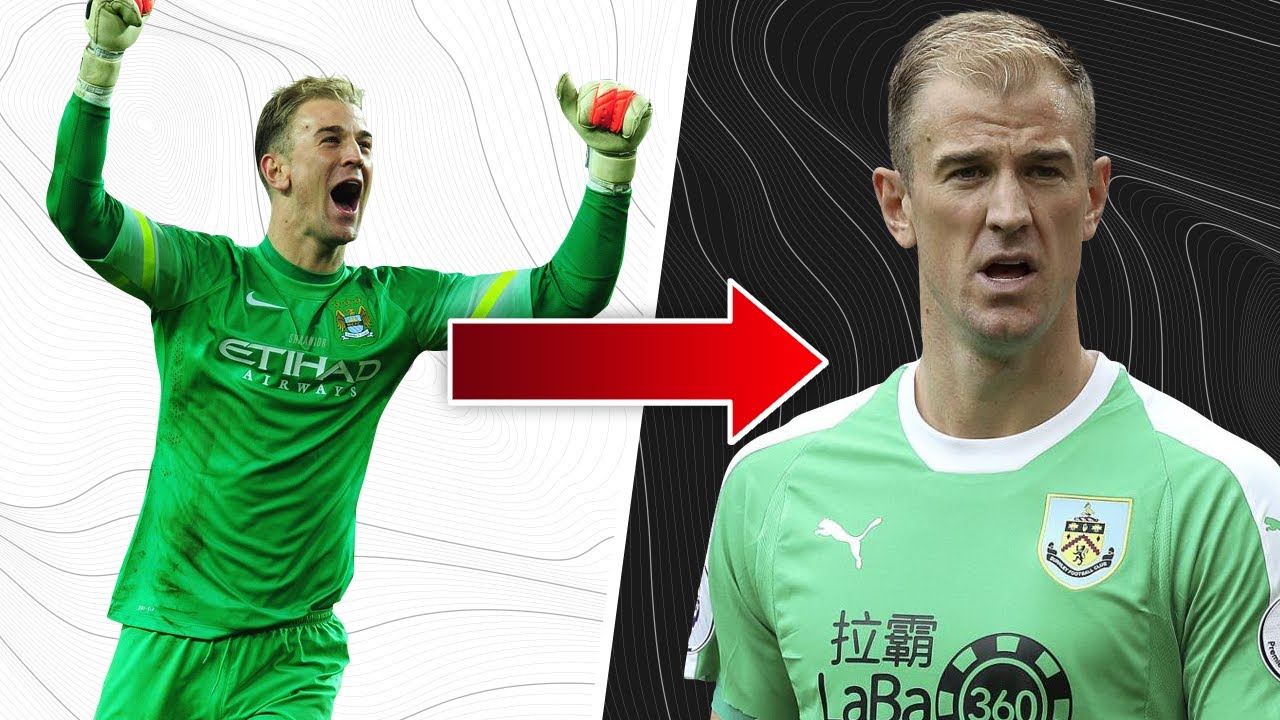
As reported by AFP, Manchester City manager Pep Guardiola has publicly expressed his deepest regret from his decade-long tenure at the club: his decision to sideline former England goalkeeper Joe Hart without giving him a fair opportunity to adapt to the manager’s tactical demands. Guardiola, who will oversee his final match for City against Aston Villa, admitted in an interview with Sky Sports that he should have allowed Hart to prove himself capable of playing out from the back—a style Guardiola famously prioritises. Instead, within weeks of his appointment in 2016, Guardiola sent Hart on loan to Torino and subsequently signed Claudio Bravo and later Ederson. Guardiola stated, “I have regrets… I didn’t give a chance to Joe Hart to be with me to prove himself how good a keeper he was.” He acknowledged that his stubbornness in decision-making, while often a strength, led to a failure in managing human emotions and fairness.
“I want to confess, I have regrets. When you take a lot of decisions, a lot, lot of decisions, you make mistakes. But there is one regret that I have deep inside for many years, that I didn’t give a chance to Joe Hart to be with me to prove himself how good a keeper he was.”
WANA Regional Analysis
While the immediate story concerns a European football manager’s personal reflection, the broader implications for West African governance, leadership, and institutional decision-making are profound. Guardiola’s admission—that his certainty in a tactical system overrode the human element of giving a loyal, proven performer a fair chance—resonates far beyond the pitch. In West Africa, where political and institutional leaders often face similar pressures to implement sweeping reforms or personnel changes upon assuming office, this case offers a cautionary tale about the costs of rigid decision-making.
From a governance perspective, the Guardiola-Hart episode mirrors a recurring pattern in West African public administration and corporate leadership: the tendency to discard experienced personnel in favour of untested outsiders, driven by a desire to imprint a new vision. ECOWAS member states have witnessed numerous instances where incoming administrations—whether in Nigeria, Ghana, or Côte d’Ivoire—have sidelined seasoned civil servants or military commanders without due process, often citing a need for “new thinking” or “efficiency.” The result, as Guardiola now acknowledges, can be a loss of institutional memory, morale, and trust. The human cost—both for the individual and the organisation—is frequently underestimated.
Against this backdrop, Guardiola’s regret underscores a critical leadership lesson for West Africa’s political and business elites: that tactical certainty must be balanced with empathy and a willingness to test assumptions. In a region where political transitions are often fraught with tension, the ability to integrate existing talent with new ideas could reduce friction and enhance stability. The ECOWAS Commission, for instance, could draw from this example when advising member states on succession planning and public sector reform. The principle of “give a chance before discarding” is not merely a footballing sentiment; it is a governance imperative.
Economically, the cost of such abrupt personnel changes can be significant. In West Africa, where skilled professionals are scarce, the abrupt removal of experienced managers—whether in state-owned enterprises, central banks, or regulatory bodies—can disrupt policy continuity and investor confidence. Guardiola’s decision to replace Hart with Bravo initially led to defensive instability at City, a parallel that West African policymakers might recognise in their own sectors. The lesson is clear: change for the sake of tactical purity, without a transition period, carries risks that may outweigh the intended benefits.
From a security perspective, the story also offers a metaphor for military and police leadership transitions. In several West African nations, new defence chiefs have been known to sideline experienced officers in favour of loyalists, sometimes undermining operational effectiveness. Guardiola’s reflection—that he should have said, “Okay Joe, let’s try to do it together”—is a template for inclusive leadership that could strengthen institutional resilience in the region.
Regional Backdrop
Historically, West African governments have often struggled with the tension between continuity and change. The post-independence era saw many leaders purge colonial-era civil servants, sometimes leading to administrative chaos. More recently, the “new broom” syndrome in Nigerian politics has seen successive administrations replace thousands of public officials, often with mixed results. The Guardiola case, though distant in geography and context, provides a contemporary, high-profile illustration of the same dilemma. It reinforces the value of transitional arrangements, performance-based evaluation, and the humility to admit error—qualities that remain in short supply in many regional institutions.
Original Reporting By:
AFP

Comments