Trump’s ‘Obsession’ with Obama: A Window into U.S. Political Dysfunction and Its Echoes for West Africa
The Report
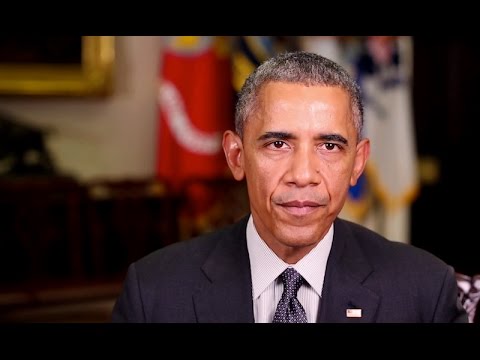
As reported by The New York Times and News.com.au, former U.S. President Barack Obama addressed the persistent attacks from current President Donald Trump during an interview on the All The Smoke podcast with former NBA stars Matt Barnes and Stephen Jackson. Obama described Trump’s fixation as an “obsession,” noting that he occupies “a suite” in Trump’s mind. He stated that when the two meet face-to-face, Trump does not speak in the same manner because “he knows better.” Obama contrasted his own presidential focus—avoiding cable news and social media—with what he characterized as Trump’s preoccupation with predecessors and personal grievances. The last public interaction between the two occurred at former President Jimmy Carter’s funeral, where they exchanged pleasantries.
“If this — whoever you were talking about — was in front of me, which has happened a couple times, he don’t talk like that. Cause he knows better.”
Obama further implied that Trump’s behavior reflects a leader not focused on the American people, stating, “It shows me somebody who’s not focused on the American people and the job they’re supposed to do.”
WANA Regional Analysis
While the personal dynamics between two U.S. presidents may appear distant from West African concerns, the implications of this political spectacle resonate deeply across the region. The United States remains a critical partner for West Africa in security cooperation, development aid, and trade under the African Growth and Opportunity Act (AGOA). A U.S. administration consumed by internal political vendettas risks neglecting foreign policy priorities, including engagement with the Economic Community of West African States (ECOWAS).
From a governance perspective, Obama’s critique of Trump’s focus offers a cautionary tale for West African leaders. The region has witnessed a troubling trend of executives prioritizing personal rivalries and media battles over substantive policy. In several ECOWAS member states, opposition figures and former leaders are frequently targeted by incumbents through state media and social media campaigns, mirroring the very behavior Obama condemns. This pattern undermines democratic consolidation and distracts from pressing issues such as food insecurity, insurgency in the Sahel, and infrastructure deficits.
Diplomatically, the Obama-Trump rift underscores the volatility of U.S. foreign policy. West African nations that built strong ties during the Obama administration—through initiatives like Power Africa and the Young African Leaders Initiative (YALI)—now face uncertainty under a Trump presidency that has shown less interest in multilateral engagement and development assistance. The personal animosity between the two leaders could further complicate bipartisan support for African policy in Washington, as partisan divisions increasingly spill into foreign affairs.
Economically, the distraction of internal political feuds in the U.S. could slow critical trade negotiations. West African exporters, particularly in textiles and agriculture, rely on stable U.S. trade preferences. Any shift in U.S. attention away from AGOA reauthorization or regional economic partnerships could have direct consequences for livelihoods in Ghana, Nigeria, and Côte d’Ivoire.
Security-wise, the U.S. remains a key partner in counterterrorism efforts in the Sahel, providing intelligence, training, and logistical support. A White House focused on personal grievances rather than strategic threats may reduce the bandwidth for addressing the expanding influence of jihadist groups in the region. ECOWAS leaders must therefore prepare for a potential reduction in U.S. engagement and accelerate efforts toward regional self-reliance in security.
Against this backdrop, the Obama-Trump exchange is more than a tabloid headline. It is a signal of the fragility of U.S. institutional focus and a reminder that West Africa must diversify its partnerships—strengthening ties with China, the European Union, and regional blocs—to insulate itself from the whims of American political dysfunction.
Regional Backdrop
Historically, West African governments have closely watched U.S. presidential transitions, as each administration brings shifts in foreign policy priorities. The Obama era (2009–2017) was marked by high-level engagement, including Obama’s 2013 visit to Ghana and his administration’s support for democratic transitions. The Trump administration, by contrast, has been characterized by reduced diplomatic presence and a transactional approach to Africa. The personal feud between Obama and Trump adds a layer of unpredictability, as policy decisions may be influenced by personal animus rather than strategic calculus. For ECOWAS, this reinforces the need for a cohesive, independent foreign policy that prioritizes regional stability over reliance on any single external power.
Original Reporting By: The New York Times / News.com.au

Comments