






Soyinka Condemns Trump’s Military Threat as a ‘Pre-Set Mindset’ Ignoring Nigeria’s Complex Realities
Nobel laureate Professor Wole Soyinka has issued a sharp critique of former U.S. President Donald Trump’s threat of military intervention in Nigeria, framing it as a reckless pronouncement born of a “pre-set mindset” that dangerously oversimplifies the nation’s intricate security landscape.
This analysis is based on a report from Channels Television, which detailed Soyinka’s remarks following a meeting with Benue State Governor Hyacinth Alia in Makurdi.

A Reckless Declaration
The literary icon and social critic took specific issue with the language used by Trump, who had previously threatened to send American forces into Nigeria “guns-a-blazing.” Soyinka characterized this as a declaration made with “poor, almost non-existent analysis.”
“You don’t just open your mouth and say, ‘I’m coming to help you whether you like it or not,'” Soyinka stated, underscoring the fundamental lack of consultation and respect for national sovereignty implicit in the threat.
Contextualizing the Controversy
Soyinka’s comments come in the wake of Trump’s late October designation of Nigeria as a “Country of Particular Concern” over alleged killings of Christians, a move that has significantly escalated diplomatic tensions. The threat of military force, reportedly backed by contingency plans drafted by the U.S. military, represents a further intensification.
While acknowledging the government’s primary duty to protect its citizens, Soyinka emphasized that “victims deserve respect,” adding, “At the very least, respect those who are working to find solutions to this unacceptable situation.” This statement serves as a subtle critique of both the external threat and the internal efforts to address the security crisis.
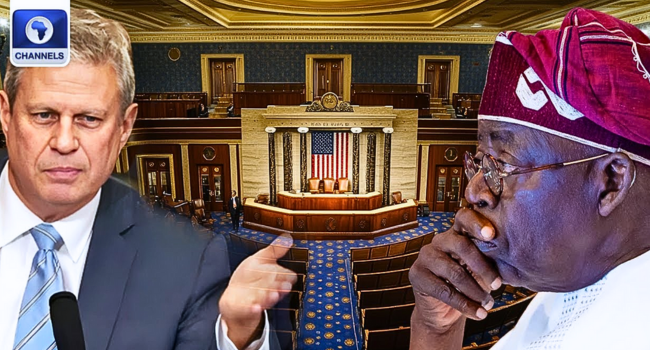
Diverging Narratives and a Diplomatic Rift
The incident has exposed a stark divide in how the security situation in Nigeria is perceived internationally. The Trump administration’s narrative, presented at a recent U.S. House Foreign Affairs Subcommittee hearing, frames the violence as “systematic, ongoing, egregious violations of religious freedom.”
In contrast, President Bola Tinubu’s administration has firmly rejected this characterization, stating it “does not reflect our national reality” and pointing to its ongoing engagement with both Christian and Muslim leaders. This clash of narratives underscores the challenge of addressing a multi-faceted crisis involving banditry, farmer-herder conflicts, and extremist insurgencies, which often defy simplistic religious binaries.
The ‘So What’: Implications for Sovereignty and International Relations
Soyinka’s intervention elevates the discourse beyond a mere diplomatic spat. It highlights a critical tension in international relations: the line between humanitarian concern and neo-colonial imposition. His warning about a “pre-set mindset” suggests that such threats are not formulated in a vacuum but are based on a fixed, and potentially flawed, understanding of a complex region.
For Nigeria, a nation grappling with profound internal challenges, an external military threat from a global power introduces a volatile new variable. It risks destabilizing delicate domestic political balances and could potentially embolden various non-state actors. Soyinka’s stance, therefore, serves as a powerful defense of national agency, arguing that solutions must be rooted in local context and respect, not foreign diktats delivered with “guns blazing.”
Source: This report was developed from the original coverage by Channels Television.