











The National Council for Economic and Social Development has issued a stark warning: Libya is facing an existential water crisis that threatens not just current development but the very future of the nation. This alarming assessment comes as accelerating climate change impacts and intensifying drought waves create a perfect storm of water scarcity across North Africa.
-
National Council Sounds Alarm on Libya’s Escalating Water Crisis
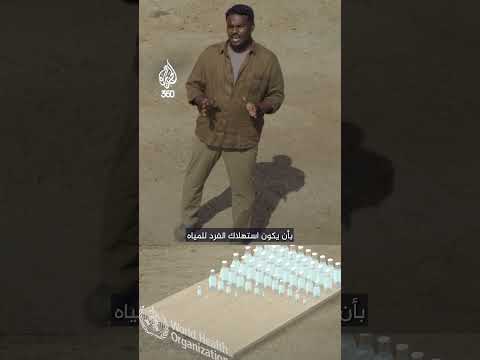
Dr. Bashir Ahmed Nouir, head of the National Water Security Strategy team, provided sobering context: Libya ranks among the world’s most water-scarce nations. The statistics are alarming—approximately 90% of Libya’s vast territory receives a meager 100 mm of rain or less annually. To put this in perspective, the internationally recognized “water poverty line” is 1,000 cubic meters per person per year. Libya’s per capita share of renewable water is a mere 120 cubic meters, placing it far below this critical threshold and in the category of absolute water scarcity.
-
National Council: Libya is Among the Countries Suffering Most from Water Scarcity Globally
Nouir elaborated on the systemic vulnerabilities compounding this natural scarcity. Libya’s water system faces a triple threat: over-reliance on finite resources, infrastructure decay, and inefficient usage. A staggering 97% of Libya’s water comes from non-renewable groundwater—essentially mining ancient aquifers that won’t replenish in human timescales. This unsustainable practice is exacerbated by rapid population growth, migration patterns, and unchecked urban expansion.
The situation is further worsened by crumbling infrastructure. Approximately 30% of water is lost before reaching consumers due to leaky supply networks—a catastrophic waste in a water-starved nation. Meanwhile, the agricultural sector, which uses about 85% of Libya’s water, relies on outdated traditional irrigation systems where more than half the water is lost to evaporation and runoff before reaching plant roots.
-
National Council: Traditional Irrigation Systems in Agricultural Sector Consume About 85% of Water
Climate change acts as a threat multiplier, creating what experts call a “hydro-climatic paradox.” Libya is experiencing both a continuous decline in rainfall and an increase in evaporation rates. Simultaneously, the country faces increasingly frequent extreme weather events—from the catastrophic Derna floods that demonstrated the vulnerability of infrastructure to sudden deluges, to prolonged drought waves devastating the Fezzan regions.
The proposed National Water Security Strategy 2050 represents a comprehensive roadmap built on four critical pillars:
- Source Restructuring: Diversifying away from groundwater dependence by increasing desalination capacity and maximizing treated wastewater reuse
- Financial Reform: Addressing subsidy distortions through revised water tariffs and attracting private sector investment in water infrastructure
- Institutional Strengthening: Enacting laws to regulate well drilling and establishing an independent water authority to manage resources coherently
- Technological Transformation: Adopting smart agriculture techniques and establishing a national water research center to drive innovation
-
Nouir: Necessity of Managing Transboundary Groundwater Basins, Especially in Southern Libya
Nouir highlighted two particularly promising solutions. First, transboundary water management is essential, as many of Libya’s groundwater basins extend across borders into neighboring countries. This necessitates regional cooperation to prevent future water-related tensions. Second, solar energy integration could revolutionize desalination. The math is compelling: allocating just 0.1% of Libya’s desert territory to solar panels could generate enough energy to desalinate sufficient water for the entire population, dramatically reducing operational costs.
-
Drip Irrigation
Despite the daunting challenges, practical solutions exist that could yield significant returns. Implementing drip irrigation on just 20% of agricultural land could save enough water to meet the annual needs of two million people. Similarly, rehabilitating critical infrastructure like the Wadi Ka’am Dam could substantially increase water reserves. The national strategy represents more than a policy document—it’s an intergenerational commitment to building water resilience and securing a sustainable future for Libya.
The urgency cannot be overstated. Libya’s water crisis transcends environmental concerns—it’s a fundamental threat to national stability, economic development, and social cohesion. The time for decisive action is now, before the taps run dry.