
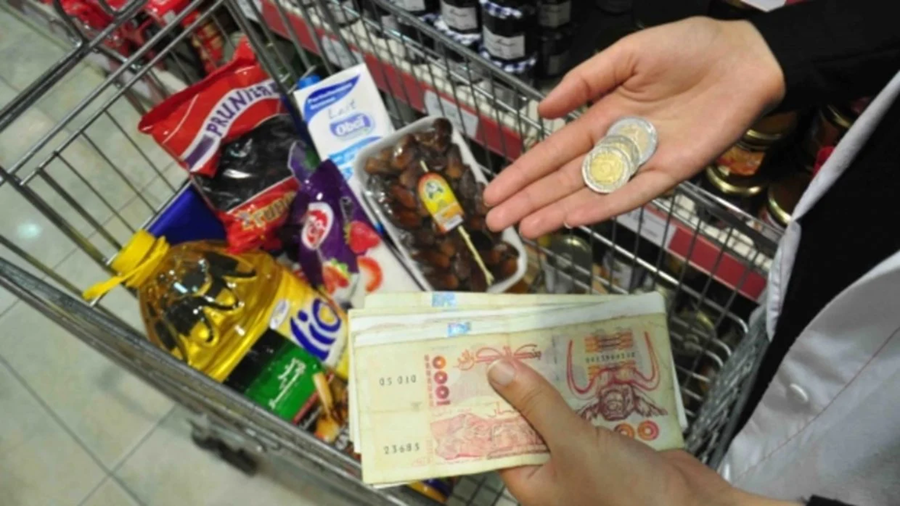
The Finance Law for 2026, promulgated by President Abdelmadjid Tebboune, represents more than a simple annual budget. It is a strategic policy document designed to navigate complex economic pressures by simultaneously shielding household budgets, stimulating key sectors, and laying groundwork for long-term structural reforms. This analysis expands on the announced provisions to explore their underlying economic logic, potential impacts, and the broader vision they signal for Algeria’s socio-economic trajectory.
### 1. Strategic Price Stabilization & Food Security: Beyond Temporary Relief
The law’s core focus is a robust extension of tax and duty exemptions on essential foodstuffs—like meats, dried vegetables, coffee, and crude soybean oil—until the end of 2026. This is a direct intervention to curb inflation and support purchasing power. However, the critical nuance lies in the **conditional exemption for crude soybean oil**. By obliging importers and processors to “produce it locally or source it from the national market before December 31, 2026,” the government is using fiscal policy as a carrot and stick. The goal is not perpetual subsidy but to catalyze domestic agricultural and industrial capacity, reducing long-term import dependency. This move, if supported by parallel investments in agriculture and processing, could transition a consumer subsidy into a catalyst for domestic production and job creation.
### 2. Housing as a Pillar of Social Stability and Economic Activity
The provisions for housing are among the law’s most socially significant elements. The authorization for the Treasury to fully cover interest grace periods and subsidize rates for 300,000 rent-to-own units in 2026 is a massive fiscal commitment. It serves a dual purpose:
* **Social:** It directly addresses a critical citizen need, promoting stability and wealth accumulation for families.
* **Economic:** It acts as a powerful macroeconomic stimulus. A program of this scale injects demand into the construction sector, supporting jobs in cement, steel, and related industries. This multiplier effect can ripple through the economy. Furthermore, extending purchase deadlines for existing social housing occupants provides a pathway to asset ownership for a broader segment of the population, fostering a sense of economic inclusion.
### 3. Modernizing Public Transport: A Case Study in Targeted Industrial Policy
The exemption for 10,000 passenger buses is a clear example of a targeted industrial and social policy. By removing all duties and taxes, the state aims to rapidly renew a dilapidated public transport fleet. The benefits are multifaceted:
* **Immediate Social Impact:** Improved reliability, safety, and comfort for millions of daily commuters.
* **Environmental & Efficiency Gains:** Newer buses are typically more fuel-efficient and less polluting.
* **Sectoral Stimulus:** This creates guaranteed demand, which could be leveraged to attract bus assembly or manufacturing partnerships to Algeria, aligning with broader industrialization goals. The detailed inclusion of exemptions for unassembled kits (CKD) explicitly encourages local assembly, signaling a move beyond mere importation.
### 4. Energy Transition at the Household Level: Incentivizing Green Choices
The reduction of customs duties on domestic solar water heaters from 30% to 15% is a small but symbolic step towards a consumer-led energy transition. By making this renewable technology more affordable, the law encourages households to reduce reliance on subsidized gas or electricity for hot water. This achieves multiple objectives: it lowers household energy bills (freeing up income for other uses), reduces national consumption of fossil fuels for power generation, and helps build a market for green technology installers and maintenance services. It’s a practical, bottom-up approach to complement large-scale renewable energy projects.
### 5. Contextualizing the Measures: A Holistic Economic Vision
Viewed in isolation, these measures appear as a collection of subsidies. However, their collective logic reveals a strategic framework:
1. **Short-Term Social Protection:** Using the state’s fiscal strength (largely from hydrocarbon revenues) to insulate citizens from global inflationary pressures via food and housing support.
2. **Medium-Term Structural Adjustment:** Attaching conditions (like for soybean oil) and promoting local assembly (like for buses) to use this period of protection to build more resilient domestic industries.
3. **Long-Term Sustainability Goals:** Gradually introducing incentives for energy efficiency and renewable adoption.
The success of this law will not be measured solely by price stability in 2026, but by whether the conditional and industrial provisions successfully seed non-hydrocarbon economic activity and reduce vulnerability to future import shocks. Its implementation will be the true test of its transformative potential for the Algerian economy and its citizens’ long-term welfare.

1 comment