







The recent dismantling of a sophisticated forgery network in Annaba is more than a routine police bulletin; it is a case study in systemic vulnerability. The indictment chamber’s referral of the case to the Criminal Court unveils a criminal enterprise that functioned as a shadow administration, exploiting gaps in bureaucratic processes for years. The network’s portfolio was alarmingly comprehensive: it counterfeited seals belonging to the Algerian state, foreign consulates, courts, banks, and every level of national and local administration. This included the specific seals of governors, municipal council presidents across Annaba province, and professional stamps for lawyers, translators, and notaries. The operation did not merely produce fake documents—it impersonated the very authority of the state.
The investigation, launched in October 2024 on strict prosecutorial orders, targeted a web of around thirty individuals. Its composition is telling of how such networks infiltrate systems: it was allegedly led by a fugitive in France, included municipal employees and security agents from within the Annaba administration itself, and utilized unemployed individuals and a taxi driver for logistics. This taxi driver’s vehicle became a mobile distribution hub, ferrying forged documents to clients across multiple provinces. The network’s model was a parasitic one, leveraging insider knowledge and a decentralized, delivery-based service to meet a clandestine market demand for fraudulent administrative solutions.
The “Mobile Administration”: A Forgery Workshop in a Bedroom
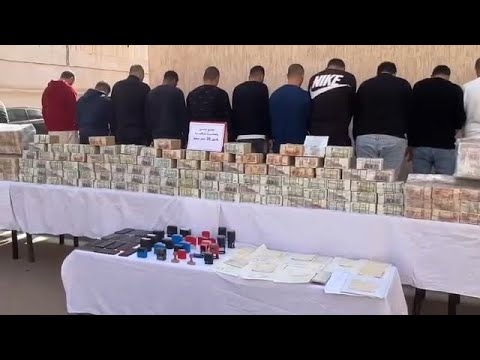
The heart of the operation was shockingly mundane. In the bedroom of the main suspect in Annaba’s March 8th neighborhood, the National Gendarmerie discovered what sources termed a “mobile administration.” Here, the tools of modern crime met old-fashioned fraud. Authorities seized 33 counterfeit seals—a veritable toolkit of fake authority. The haul included the sacred “Republican Seal,” stamps for the Annaba Tax Center, seals for civil status officers, and even a French-language authentication stamp for the Ministry of Foreign Affairs. This physical arsenal was paired with digital prowess: the suspect used a portable computer to forge documents, saving them to magnetic storage devices for clients to print. The process was chillingly efficient: digital forgery, physical stamping with counterfeit seals, and covert delivery.
“Farchita”: The Shadowy Godfather and a Business Model Built on Trust
During interrogation, the operational mastermind revealed the network’s origins and hierarchy. He claimed to have purchased the entire set of counterfeit seals for 20,000 dinars in 2022 from an individual known as “Farchita,” who has since illegally emigrated to France. Their collaboration, he stated, began as early as 2016, initially focusing on forging visa applications for European countries. His role was the technical production; “Farchita” handled distribution and client relations, a division of labor typical of organized crime. In a revealing shift, the suspect claimed his recent work focused exclusively on civil status certificates (birth, marriage, etc.) using local municipal seals, suggesting a pivot to serving a domestic clientele seeking to alter personal legal identities—a far more sensitive and destabilizing form of fraud.
The Network’s Footprint: From Stolen Blanks to Forged Medical Certificates
The investigation exposed the network’s staggering breadth. Searches yielded not just forged seals, but the raw materials and final products of the trade:
- Insider Access: At the main suspect’s home, authorities found unstamped, unsigned birth certificates and marriage contracts—official blanks he admitted extracting directly from the Annaba municipality. This points to a critical breach of internal controls.
- Identity Fabrication: Five copies of biometric national identity cards were discovered, indicating capability at the highest level of document forgery.
- Judicial Forgery: The network possessed official-looking court documents for correcting civil status, complete with (forged) Annaba Court seals, used to legally alter surnames and birth records.
- The Delivery Hub: The taxi driver’s cache was a snapshot of everyday fraud: 39 samples including fake medical certificates, taxi license applications, unemployment declarations, job applications, salary certificates, and even French visa forms. This highlights how the network catered to a wide range of needs, from bypassing bureaucratic hurdles to committing outright welfare and immigration fraud.
- The Municipal Insider: The arrest of a municipal security guard in downtown Annaba was particularly damning. His home served as a secondary arsenal, containing 43 additional seals, including those for the Algerian Consulate in Marseille and for municipalities across Annaba and even neighboring El Tarf province.
Broader Implications: A Symptom of a Larger Crisis?
The Annaba case transcends local crime. It exposes a dangerous intersection of corruption, technological accessibility, and high demand for circumventing complex administrative processes. The network thrived because there was a market: individuals and possibly businesses willing to pay for faster permits, altered identities, or fraudulent qualifications. The involvement of low-level municipal insiders is not coincidental; it reflects a failure of oversight and the potential for exploitation of trusted positions. Furthermore, the international dimension—with a leader in France and forged consular seals—suggests links to migration-related fraud networks. This “delivery service” model reveals a professionalized, customer-oriented approach to crime that is difficult to eradicate because it solves real, if illicit, problems for its clients. The dismantling of this network is a significant victory, but it also serves as a stark warning about the resilience of such enterprises and the systemic weaknesses they exploit.