









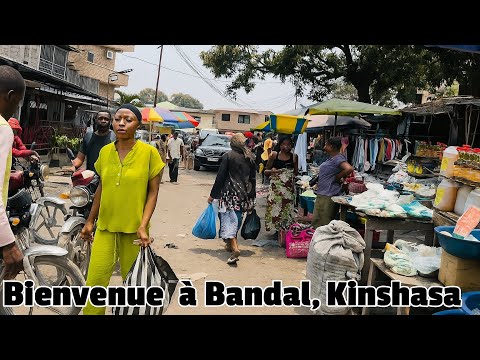
The Municipality of Bandalungwa, one of Kinshasa’s 24 communes, marks a significant milestone this Monday, December 8: its 70th anniversary. While the day will be celebrated with a vibrant popular carnival through its main arteries and a major cultural gathering at the municipal field, this commemoration represents far more than festivities. It is a moment to reflect on a complex history, a distinct urban identity, and the future of a densely populated district in the heart of the Congolese capital.
At the organizational core of this landmark event is Gibecière Event, a structure tasked with curating a celebration that bridges generations. Their vision extends beyond a single day of entertainment. For coordinator Joël Kala, the 70th anniversary is a strategic act of communal unity and redefinition. “The goal is to unite the inhabitants around an event that values youth, culture, and local development,” he explains. This focus is crucial in a city where municipal identities are powerful markers of belonging.
Kala’s commentary reveals the deeper ambition: “It is also to show that Bandalungwa is not only a festive municipality, but a space of opportunities, talents, and initiatives. We want to strengthen the sense of belonging, motivate the youth, and revitalize the image of the municipality on the scale of the entire city.” This statement directly addresses a common narrative, aiming to shift external perceptions from seeing Bandalungwa merely as an entertainment hub to recognizing it as a cradle of innovation and civic potential.
Contextualizing Bandalungwa: A Snapshot in Kinshasa’s Urban Tapestry
To understand Bandalungwa’s place, one must consider its geography and demography. Encompassing 628 hectares (6.28 km²), it is a compact yet pivotal commune. Its borders tell a story of Kinshasa’s expansion:
- North: Bumbu and Selembao – historically working-class communes.
- South: The Kokolo military camp and the more affluent, diplomatically significant communes of Kintambo and Ngaliema.
- East: Kintambo and the Luka camp, placing it near key transport axes.
- West: Ngiri-Ngiri and Kasa-Vubu, central communes known for commerce and administration.
This positioning makes Bandalungwa a connective tissue between diverse socio-economic zones, a transit point and a residential anchor for thousands of Kinois (inhabitants of Kinshasa).
From Commemoration to Catalyst: The Deeper Significance of 70 Years
Anniversaries like this serve as vital inflection points. As Kala notes, “these 70 years are no longer just a commemoration: it is a history, a living identity, and a shared pride.” For municipalities born in the colonial or early post-independence era, their histories are intertwined with the nation’s own journey. Celebrating 70 years is an opportunity for intergenerational dialogue, where elders can share oral histories of the commune’s formation, and youth can project their visions for its digital and economic future.
The planned activities—carnival, concerts, cultural displays—are not just entertainment. They are a form of participatory urbanism. The carnival procession mapping the main arteries is a public reclaiming of space. The gathering at the municipal field transforms a common infrastructure into a stage for communal narrative. These acts reinforce the “sense of belonging” Kala emphasizes, which is foundational for local governance and community-led development initiatives.
Ultimately, the 70th anniversary of Bandalungwa is a case study in how urban communities in megacities like Kinshasa assert their identity. It’s a blend of nostalgic celebration and forward-looking branding, aiming to cement the municipality’s status not just as a place on a map, but as a dynamic actor in the city’s ongoing story. The success of this celebration will be measured not only by the day’s joy but by whether it sparks sustained investment in local talent, infrastructure, and the civic pride of every Ndalois.