










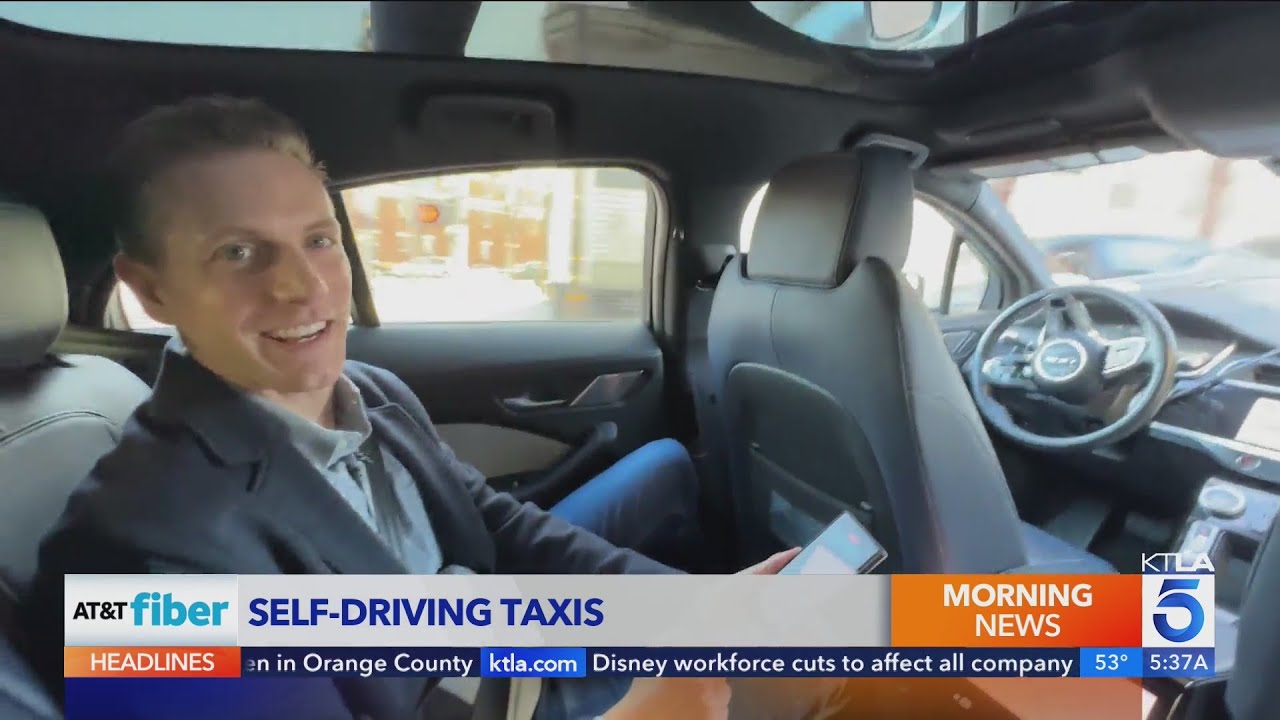
A routine ride-hail in Los Angeles transformed into a parent’s worst nightmare, revealing profound and unsettling questions about the safety protocols of autonomous vehicles. In December, a mother (known online as @luckythurman) ordered a driverless Waymo taxi for her daughter, only to make a chilling discovery: a man was concealed in the vehicle’s trunk, peering over the back seats. This incident, far from a mere viral oddity, serves as a critical case study in the unforeseen vulnerabilities of a technology poised to reshape urban mobility.
The shared by the mother ignited immediate and widespread backlash, with critics highlighting the unique dangers such a failure presents, especially for women and vulnerable passengers. The core horror of the situation lies in its violation of a fundamental expectation: that a hired vehicle is an empty, secure pod. This breach challenges the very premise of trust that companies like Waymo must build to achieve mainstream adoption.
Deconstructing the Failure: A Chain of Security Lapses
Waymo’s subsequent explanation to the Daily Mail outlined a cascade of failures. A previous rider allegedly left the trunk open at their drop-off, allowing the individual to enter of his own accord. This points to a significant gap: the vehicle’s sensor suite, designed to navigate complex city streets, failed to detect a human-sized occupant in a confined compartment before dispatching to a new customer. Furthermore, the in-car communication system seemingly offered the intruder no clear way to alert the company or exit the vehicle safely, leading to his panicked statement, “This s*** won’t let me out.”
The company’s response—offering a ride credit to the affected family—was a standard customer service gesture that felt grossly inadequate given the severity of the safety lapse. While spokesperson Julia Ilina stated they are “actively implementing changes,” the incident starkly illustrates that pre-market testing cannot anticipate every human behavior, particularly malicious or erratic ones.
The Broader Implications: Safety, Law, and Public Perception
This event transcends a single company’s protocols. It exposes a regulatory gray area. As reported by , the Los Angeles Police Department did not arrest the man, determining no crime had been committed. This legal interpretation raises questions about trespassing, unlawful confinement, and how existing laws apply to unoccupied vehicles. The incident creates a paradoxical scenario where a human driver would have immediately prevented access, but an autonomous system, following its programming, became an unwitting accomplice.
For the public, the takeaway is visceral. It reinforces a latent fear of technology that lacks human intuition. A driver might notice a trunk ajar, hear a sound, or sense something amiss. An autonomous vehicle, without robust secondary security screening protocols, currently cannot. This erodes the essential for societal acceptance.
Pathways to Safer Autonomous Mobility
To rebuild trust, the industry must move beyond mapping and collision avoidance to holistic occupant security. Practical improvements could include:
- Pre-Dispatch Interior Scans: Implementing a mandatory, full-cabin sensor sweep (including trunk space) that must return “all clear” before a vehicle is assigned to a new rider.
- Dynamic Emergency Protocols: Clear, accessible in-car instructions and communication channels for anyone trapped or in distress, separate from the rider interface.
- Physical Safety Features: Redesigning trunk release mechanisms to be operable from the inside, a standard safety feature in passenger cars for decades.
- Transparent Incident Reporting: Moving beyond PR statements to publicly sharing the specific “changes” being implemented, allowing for independent assessment of progress.
The “man in the trunk” is not just a bizarre anecdote; it is a canary in the coal mine for the self-driving industry. It demonstrates that achieving true safety requires guarding against not just traffic accidents, but against the full spectrum of human unpredictability. The technology’s future depends on its ability to close these alarming security gaps as diligently as it has worked to master the rules of the road.