








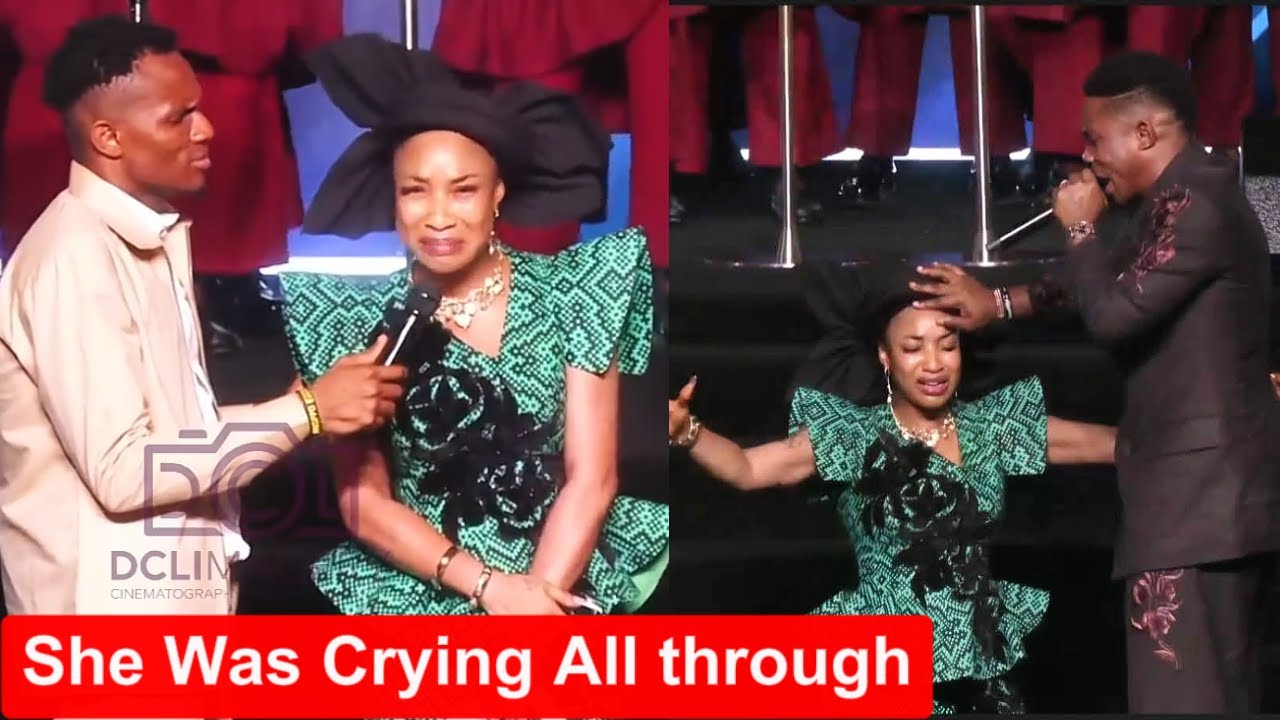

In a moment of profound vulnerability, Nollywood actress and public figure Tonto Dikeh recently stood before the congregation of Streams of Joy International Church. Her testimony, delivered during Pastor Jerry Eze’s New Season Prophetic Prayers and Declarations (NSPPD) service, transcended a simple celebrity news item. It became a raw, unfiltered case study on the complex interplay of addiction, mental health, spiritual belief, and public persona in the modern age.
Dikeh’s narrative is striking not just for its content, but for its scope. She detailed a 27-year struggle with smoking, which began at the age of 13, alongside battles with alcohol, compulsive sexual behavior (specifically masturbation and distressing sexual dreams), and what she described as “demonic anger.” This holistic confession challenges the common tendency to isolate addictions; here, they are presented as interconnected symptoms of a deeper turmoil. Her attribution of these struggles to “spiritual oppression” and a “weak man” in her dreams frames them within a Pentecostal Christian worldview, where personal battles are often interpreted as having a supernatural dimension. This perspective is crucial for understanding the nature of her claimed deliverance.
The actress’s decision to share this publicly is arguably as significant as the testimony itself. She revealed an internal conflict, stating, “The devil tried to tell me that I was supposed to protect my image.” This highlights the immense pressure on public figures, especially women, to maintain a curated, flawless facade. By choosing transparency over image management, Dikeh reframed her “image” from one of perfection to one of redeemed humanity. Her act transforms a personal victory into a public offering, potentially giving others permission to acknowledge their own hidden struggles.
A pivotal point in her journey was the Ghana Prayer Conference, which she credits as the catalyst for change. She described a tangible shift: “I realised that the weak man who held me captive all my years in my dream ran away.” For believers, this signifies a breakthrough in spiritual warfare. From a psychological standpoint, it could represent a moment of profound cognitive and emotional liberation, where the internal narratives of powerlessness were finally broken. The result, as she describes, is a newfound peace: “I am 40 years old, and I can tell you I have never known peace until now.”
Dikeh also provided crucial social commentary by tracing the origin of her smoking habit to her father. “I started smoking because my dad was a smoker. Something as little as that habit can inhabit the lives of your children,” she cautioned. This moves the conversation from individual failing to intergenerational patterning, offering a powerful warning about the unconscious modeling of behavior within the family unit.
Pastor Jerry Eze’s response—praying that “the body of sin is broken” and declaring her “a voice in her generation”—formally situated her experience within a narrative of divine calling. It transitions her from a victim of addiction to a witness with a purpose. This was echoed in Dikeh’s own Instagram caption, which presented her not just as healed, but as “spared, restored, and commissioned.”
Ultimately, Tonto Dikeh’s testimony is a multi-layered event. It is a personal celebration of freedom from addiction and inner torment. It is a theological statement on deliverance and grace within the Pentecostal tradition. It is a psychological exploration of how anger, compulsion, and substance abuse can intertwine. And it is a cultural act that challenges the ethics of celebrity image-making. Her story offers unique value by providing a rare, holistic look at recovery that acknowledges the spiritual, psychological, and social dimensions of human transformation, making it a resonant resource far beyond the confines of a news bulletin.