







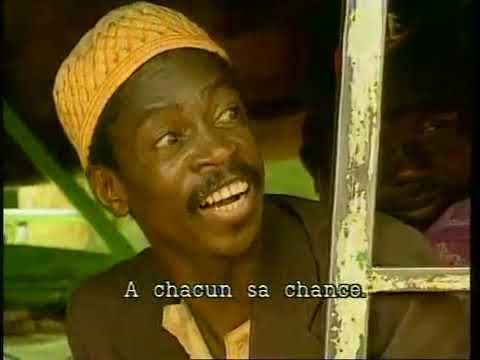
The acclaimed Malian television series “The Adventures of Seko Boire” is poised for a significant return. Following a high-profile launch event on December 16, 2025, at the Bamako International Conference Center (CICB), Season III promises to deepen its exploration of rural life, political ambition, and personal redemption. Presided over by Mr. Salia Mallé, Chief of Staff to the Minister of Culture, the event underscored the series’ evolution from popular drama to a recognized piece of national audiovisual heritage.
This gathering was not merely a promotional activity; it was a cultural convocation. Attendees included former Minister of Culture Cheick Oumar Sissoko, representatives from the National Transition Council’s Cultural Commission, and a broad spectrum of Mali’s cultural community. Their presence signals the series’ entrenched role in the nation’s artistic and social discourse.
The production’s continuation is made possible by crucial funding from the Fund for Support to Change Makers (FAMOC) of the Embassy of the Kingdom of Denmark, channeled through Kora Films. This partnership highlights how international cultural support can empower local storytelling that resonates with universal themes of conflict, dignity, and community.
Similar Articles
Season III: A Narrative and Thematic Evolution
The new season marks a deliberate shift from the personal quest that defined earlier installments to a nuanced political drama. After two decades of searching for his wife, Messitan, Seko Boire is summoned back to the village of Dieguena. Instead of a simple homecoming, he is thrust into the heart of Mali’s grassroots democracy, becoming the campaign manager for his sister-in-law, Baro Dembélé, in the inaugural communal elections for the new commune of Diéguena.
This plot device brilliantly uses the microcosm of village politics to explore macro themes of governance, gender roles in leadership, and the intersection of traditional authority with modern electoral systems. The central conflict is reignited with the introduction of Seko’s formidable adversary, Mamourou Diallo—the man who eloped with Messitan. Their rivalry now plays out on the political stage, transforming a personal vendetta into a public contest for influence and moral authority. This blend of drama, humor, and social commentary, set against an authentically rendered rural backdrop, offers a powerful lens on contemporary Malian society.
Technical and Artistic Ambition
Comprising 12 episodes of 26 minutes each, Season III is described as featuring “deeper and better-structured plots.” Beyond the central question—”Will Seko finally get his hands on Messitan?”—the season ambitiously tackles themes of social cohesion and “living together” (*vivre-ensemble*), concepts of critical importance in Mali’s current social fabric.
The production also represents a technical leap forward. Kora Films promises “a true alchemy of enhanced technical quality,” achieved through the integration of both veteran and emerging Malian talent. The involvement of a new generation of actors, such as Alima Togola and Viviane Sidibé, alongside established figures like Habib “Guimba” Dembélé, ensures the series remains dynamic and bridges generational perspectives within Mali’s cinematic community.
Cultural Significance and Official Recognition
The launch event speeches framed the series as far more than entertainment. Mr. Salia Mallé declared it “a tableau, a painting, a panorama of Malian society in all its dimensions.” This official endorsement recognizes the series’ value as a cultural document that reflects, and potentially influences, national identity.
Habib Dembélé, the series’ patron and star, emotionally acknowledged the project’s precarious journey, crediting the perseverance of former Minister Cheick Oumar Sissoko for its revival. His testimony underscores the fragile ecosystem of cultural production, where individual commitment is often the linchpin for artistic survival.
Kanouté Neissa Coulibaly, Administrative Director of Kora Film, positioned “Seko Boire” as “a true audiovisual heritage for our country and for Francophone Africa.” She pinpointed its unique strength: a narrative “deeply rooted in our social realities” that promotes values of peace and cohesion while showcasing local talent. Her statement, “The success of Seko Boire is everyone’s success,” encapsulates the collaborative spirit driving this cultural enterprise.
Learn More About Mali 24
In a detailed presentation, FAMOC’s Seydina Cissé reinforced the fund’s philosophy that “culture is an engine for change,” positioning the series as a catalyst for social dialogue and artistic innovation. The event culminated in a preview screening, offering a tantalizing glimpse of the season that aims to consolidate Mali’s audiovisual industry while telling a story that is profoundly and uniquely Malian.
Reported by Mohamed Kanouté
Source: Mali24
Subscribe to get the latest posts sent to your email.