






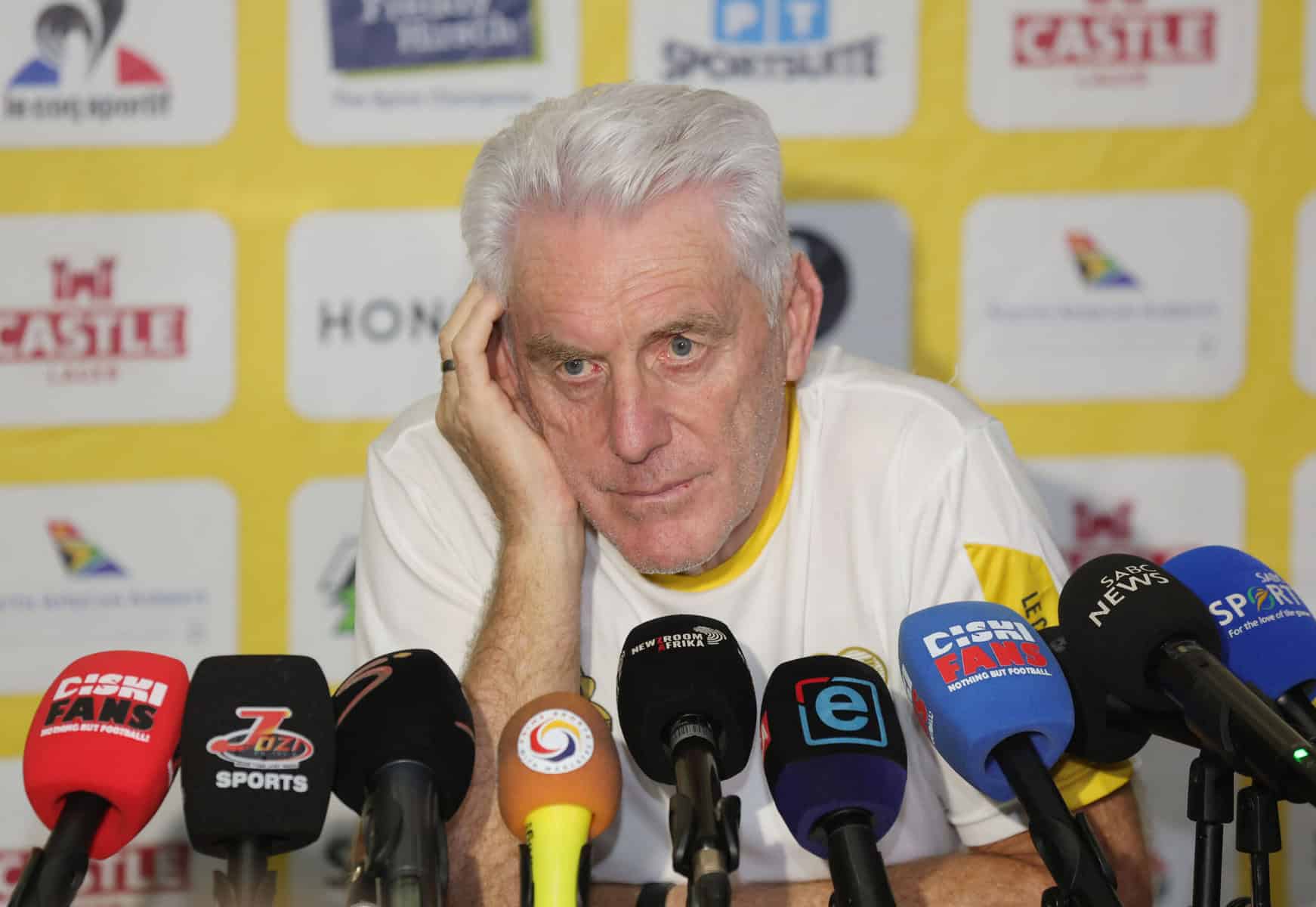
Intention is irrelevant at this point, it was careless of the 73-year-old to conduct himself in that manner.
In the arena of public discourse, a poorly constructed excuse often inflicts more damage than the original transgression, as it compounds the offense with an assumption of public gullibility. Hugo Broos, the 73-year-old coach of Bafana Bafana, may not have anticipated the ferocity of the backlash to his comments, but the ensuing firestorm was a predictable and self-inflicted consequence of a deeply problematic choice of words.
ALSO READ: Bafana’s Broos refutes racism, sexism allegations
Describing Basia Michaels, a respected sports agent with QT Sports, as a “nice little woman” was far more than a mere linguistic slip. It was a textbook example of diminutive language—a rhetorical device that patronises and infantilises, stripping a professional of their authority and reducing them to a harmless, non-threatening stereotype. In the high-stakes, competitive world of football agency, such language is not just dismissive; it is a professional undermining. The debate over “intention” is a red herring; the impact is what matters, and the impact was unequivocally sexist. For a figure in Broos’s position of power, such carelessness is not a minor oversight but a failure of professional and social awareness.
His comments revealed an antiquated mindset that modern sport is struggling to eradicate. The appropriate response was a swift, direct, and unconditional apology to Michaels herself. Instead, the South African Football Association (SAFA) engaged in textbook institutional damage control. Their statement, which attempted to reframe the legitimate public outcry as unfounded “character accusations,” was itself an insult. It presumed a public unable to discern the plain meaning of recorded words, attempting to shield the coach by questioning the critics’ motives rather than addressing the substance of the criticism.
This defensive posture is why the United Democratic Movement’s decision to lodge a complaint with the South African Human Rights Commission (SAHRC) is a significant, albeit drastic, escalation. It moves the issue from the court of public opinion to a formal body tasked with upholding constitutional values. It underscores a vital principle: professional critique must never be delivered through a lens of personal prejudice. While Mbekezeli Mbokazi’s late arrival to camp was a legitimate disciplinary issue for Broos to address, it became a convenient smokescreen. Player misconduct does not license a coach to belittle a third-party professional’s stature or gender.
The claim that Broos’s words were “misrepresented” is disingenuous. While the specific remark about Michaels may not have carried the racial undertones some inferred from the broader interview, it glaringly highlights a critical gap: a lack of cultural and social sensitisation. Coaching in South Africa, a nation with a complex history of both racial and gender oppression, requires an acute awareness of the power of language. Success on the pitch—be it Afcon qualification or World Cup aspirations—does not grant a moral carte blanche. Sporting achievement must not be used as a shield to deflect accountability for regressive behavior; to do so cheapens the victories themselves.
The honourable path remains clear: personal reflection and a direct, unequivocal apology to Basia Michaels. The apology is owed not to the public or the media, but to the individual whose professional standing was publicly diminished. As the national team head coach, Broos is not just a tactician; he is a standard-bearer. His words carry the weight of his office and shape the culture of the sport for millions. If he and SAFA believe the SAHRC will be placated by legalistic, carefully drafted statements, they fundamentally misunderstand the nature of this challenge. They may soon find themselves having to answer not for a clumsy phrase, but for a perceived institutional tolerance of attitudes that the South African constitution and modern ethical standards explicitly reject.