










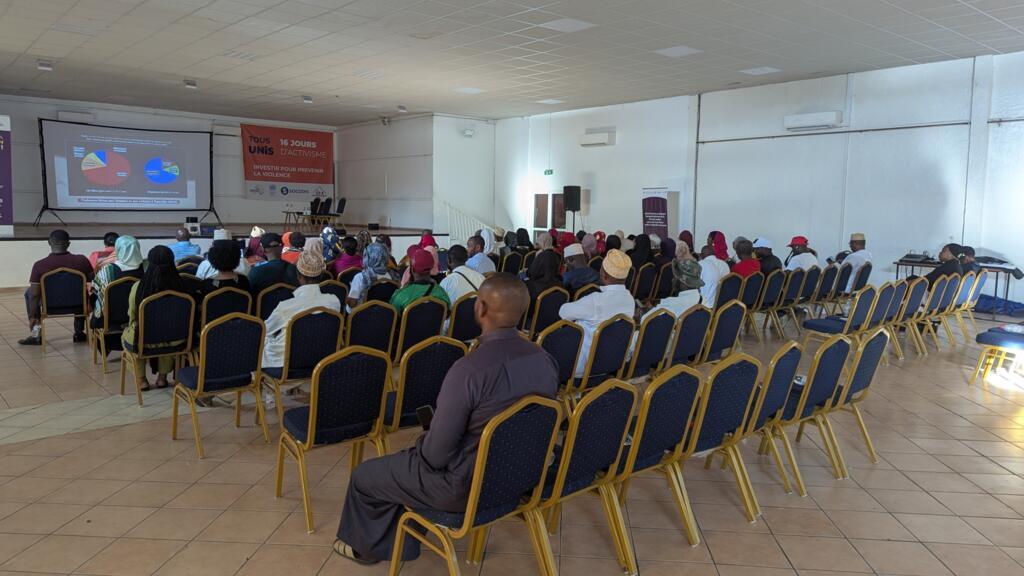
In a landmark event for gender justice in the Indian Ocean region, the association Mvukisho Ye Masiwa (Safeguarding the Archipelago) partnered with African Women Leaders Network Comoros to premiere a groundbreaking documentary on November 28th in Moroni. This powerful film represents the culmination of four years of courageous research and testimony-gathering focused on sexual violence within both the Comorian archipelago communities and the Comorian diaspora in France.
The documentary’s significance extends far beyond its runtime, serving as the first comprehensive effort to document this deeply entrenched social issue in Comorian society. Sexual violence remains one of the most potent taboos in the archipelago, where cultural norms and social stigma have historically silenced survivors and prevented public discourse. The film’s transnational approach is particularly innovative, revealing how patterns of violence and silence persist across geographic boundaries, affecting Comorian women both in their homeland and within immigrant communities in France.
This project represents a critical turning point in several respects. First, it demonstrates the growing strength of civil society organizations in confronting sensitive social issues. Second, it provides validation and recognition for survivors who have previously suffered in isolation. Third, the collaboration between local Comorian organizations and the pan-African Women Leaders Network illustrates the importance of multi-level approaches to addressing gender-based violence.
The four-year development period suggests meticulous ethical considerations in working with survivors, likely involving trauma-informed interviewing techniques and careful community engagement strategies. The screening at the Women’s Shelter of Moroni symbolizes the creation of safe spaces where these difficult conversations can begin to occur publicly.
As Comorian society grapples with this long-overdue conversation, the documentary serves as both a mirror reflecting painful realities and a catalyst for potential policy changes, improved support services, and ultimately, cultural transformation regarding gender-based violence.
Source link