









Chad’s Precarious Balancing Act: Navigating the Spillover Threat from Sudan’s Darfur War
For the nation of Chad, the escalating conflict in neighboring Sudan’s Darfur region represents not a distant crisis, but an immediate and existential threat with deep historical roots. The fall of El-Fasher to the Rapid Support Forces (RSF) in late October has intensified fears of a direct spillover, challenging N’Djamena’s delicate political and military calculations.
A History of Intertwined Destinies
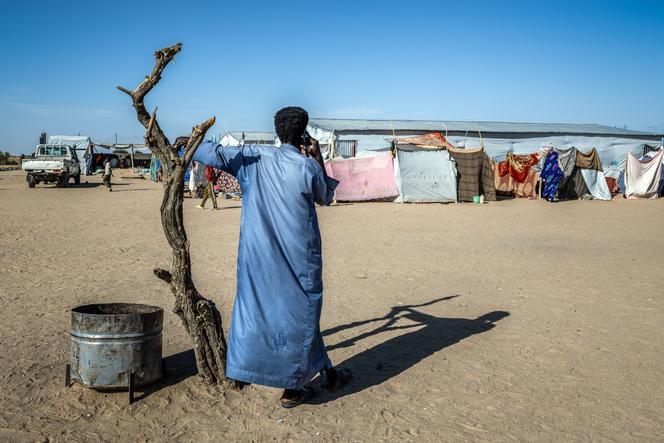
The border between Chad and Sudan’s Darfur is more a political line than a practical separation of peoples and conflicts. For over two decades, since the initial Darfur war began, Chad has served as both a reluctant sanctuary and an active participant in the region’s turmoil. The United Nations High Commissioner for Refugees reports that Chad currently hosts over 1.2 million Sudanese refugees, with a staggering 100,000 arriving since the current conflict erupted in April 2024 alone.
This humanitarian burden is compounded by a complex history of reciprocal interference. Chad has consistently supported armed groups in Sudan according to its strategic interests, while powers in Khartoum have, in turn, sponsored numerous rebellions aimed at N’Djamena. This pattern of cross-border proxy warfare has defined the relationship between the two nations for generations.
The El-Fasher Turning Point and Chad’s Strategic Silence
The RSF’s capture of El-Fasher on October 26, 2024, marked a significant escalation, accompanied by widely documented atrocities. The paramilitary group’s own social media posts have served as evidence of massacres in North Darfur’s capital and surrounding areas. Despite the proximity of these events and their potential to destabilize Chad’s eastern flank, the government in N’Djamena has maintained a notable public silence.
This official reticence reflects the precarious position of Chad’s current leadership. General Mahamat Idriss Déby, who succeeded his father, faces the same regional dynamics that both empowered and threatened his predecessor. The RSF leader, General Mohammed Hamdan Daglo “Hemetti,” shares ethnic ties with powerful constituencies within Chad itself, making any overt condemnation politically dangerous.
Analysis: Why Chad Cannot Afford Neutrality
The current situation presents Chad with a series of impossible choices. Supporting the RSF risks legitimizing a paramilitary force whose expansion threatens regional stability. Opposing them directly could provoke retaliation from a battle-hardened force and ignite internal ethnic tensions.
Historical precedent looms large. The rebellions that brought Idriss Déby to power in 1990 and those that seriously threatened his regime in 2006 and 2008 were largely orchestrated from Sudanese territory. The current government understands that today’s allies can become tomorrow’s sponsors of insurrection.
The international community’s limited response to the Darfur crisis places additional pressure on Chad, which lacks the resources to manage both a massive refugee crisis and potential military confrontation simultaneously. The country’s stability hinges on its ability to navigate these competing threats while maintaining a fragile internal consensus.
As the conflict in Darfur enters this new, more brutal phase, Chad’s strategic calculus becomes increasingly difficult. The nation stands at a crossroads, where the wrong move could unravel decades of careful statecraft and plunge the region into deeper conflict.
This analysis is based on reporting from Le Monde.