








ECOWAS Single Currency at a Crossroads: Leaders Demand Urgent Reforms to Salvage the ECO
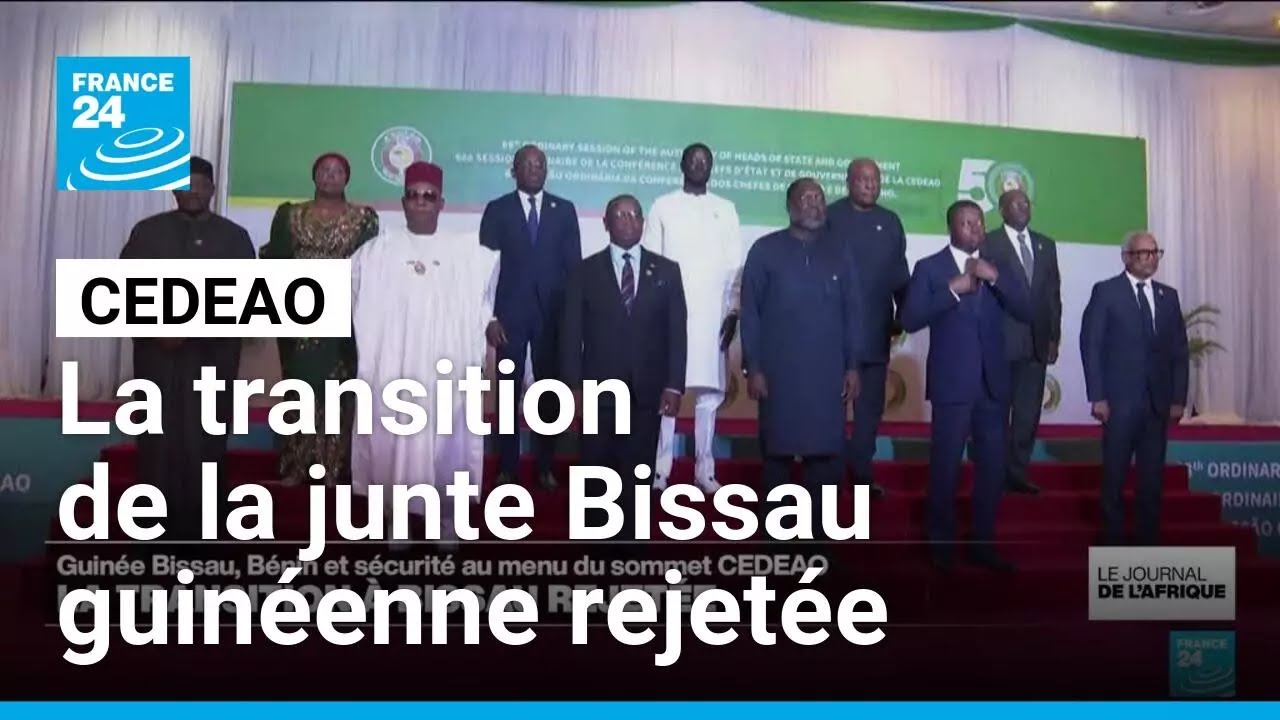
In a move that underscores growing urgency, the Economic Community of West African States (ECOWAS) has issued a stark warning to its member nations. At the recent 68th Ordinary Session of the Conference of Heads of State and Government in Abuja, leaders voiced significant concern over the sluggish progress toward the long-awaited single currency, the ECO. With the launch deadline looming in less than two years, the dream of a unified monetary zone is facing its most critical test yet.
A Timeline Under Pressure: Macroeconomic Convergence Lagging
The core issue, as detailed in the conference’s final communiqué chaired by Sierra Leone’s President Julius Maada Bio, is the failure of most member states to meet the established macroeconomic convergence criteria. These are not arbitrary targets; they are essential stability benchmarks designed to prevent economic shock when currencies merge. They typically include:
- A budget deficit of less than 3% of GDP.
- Annual inflation remaining below 10%.
- Central bank financing of deficits limited to 10% of the previous year’s tax revenue.
- Gross external reserves worth at least three months of imports.
The conference explicitly instructed countries to enact “appropriate economic policies” to achieve these targets. This is a diplomatic but firm call for fiscal discipline, including cutting wasteful expenditures, improving tax collection, and controlling inflation—reforms that are often politically challenging but economically necessary.
Beyond Numbers: The “Sensitive Institutional Commitments”
Perhaps more revealing than the call for fiscal prudence is the leaders’ parallel push for a consensus on “sensitive institutional commitments.” This phrase points to the profound political and sovereignty questions at the heart of the ECO project. Key unresolved issues include:
- The Location and Governance of a Future Central Bank: Where will the regional central bank be headquartered, and how will voting rights and leadership be distributed among member states?
- Monetary Policy Sovereignty: Nations will cede control over interest rates and money supply to a supranational body. Agreeing on a mandate (e.g., inflation-targeting vs. growth-focused) is complex.
- Divergence with the CFA Franc: The planned ECO is intended to replace both the CFA Franc used by the eight UEMOA members and the various independent currencies of other ECOWAS states. Harmonizing these two distinct monetary systems remains a major hurdle.
To break this institutional logjam, the Heads of State have ordered the reactivation of the Presidential Task Force on the single currency and called for “additional efforts” to find compromise. This high-level political intervention is a clear signal that technical committees alone cannot resolve these deeply political questions.
A Glimmer of Economic Hope Amidst the Challenges
Despite the daunting roadblocks, the conference report was not all doom and gloom. Leaders welcomed the resilience of regional economies in 2025, noting accelerated growth, lower inflation, and fiscal consolidation efforts. This positive trend provides a crucial foundation. The leaders urged members to intensify domestic resource mobilization and improve public spending efficiency—reforms that are beneficial for national economies regardless of the ECO timeline.
The Adoption of a Common Accounting Framework: A Silent Step Forward
One concrete, if understated, achievement highlighted was the adoption of a directive establishing a common public accounting framework for ECOWAS. While technical, this is a vital prerequisite for monetary union. Transparent, harmonized accounting allows for accurate comparison of member states’ fiscal health and ensures all parties are “speaking the same financial language.” The Commission’s task to help transpose this into national law will be a critical test of regulatory harmonization.
The Rocky Road to the ECO: A History of Delays
The ECO project is a decades-old vision aimed at boosting intra-regional trade, reducing transaction costs, and deepening economic integration—much like the Euro did for the European Union. However, its history is marked by repeated postponements. Initial launch dates have come and gone, primarily due to the persistent failure of countries to meet the convergence criteria. This latest high-level warning suggests that without unprecedented political will and economic reform in the next 24 months, another delay is inevitable.
The path to the ECO is now clearer than ever: it is a dual track requiring both technical fiscal discipline and bold political compromise. The Abuja conference has sounded the alarm. Whether member states can accelerate reforms, find consensus on sensitive sovereignty issues, and finally turn the vision of a single West African currency into reality remains the region’s most pressing economic question.
Source Analysis: This rewrite expands upon the original news report from APA News by providing essential context on the convergence criteria, unpacking the meaning of “sensitive institutional commitments,” and placing the current urgency within the historical timeline of the ECO’s repeated delays. It transforms a brief communiqué summary into a comprehensive explainer on the state of West African monetary integration.