

Court Ruling Reverses Earlier Order, Permits Revised Panels at President’s House Memorial
A federal appeals court has cleared the way for the Trump administration to replace a slavery memorial at the President’s House in Philadelphia, overturning a lower court’s order that had required the original exhibit to remain in place. The decision, handed down by a three-judge panel of the 3rd U.S. Circuit of Appeals, marks the latest development in a legal and cultural battle over how the nation’s founding history is presented on federally controlled public land.
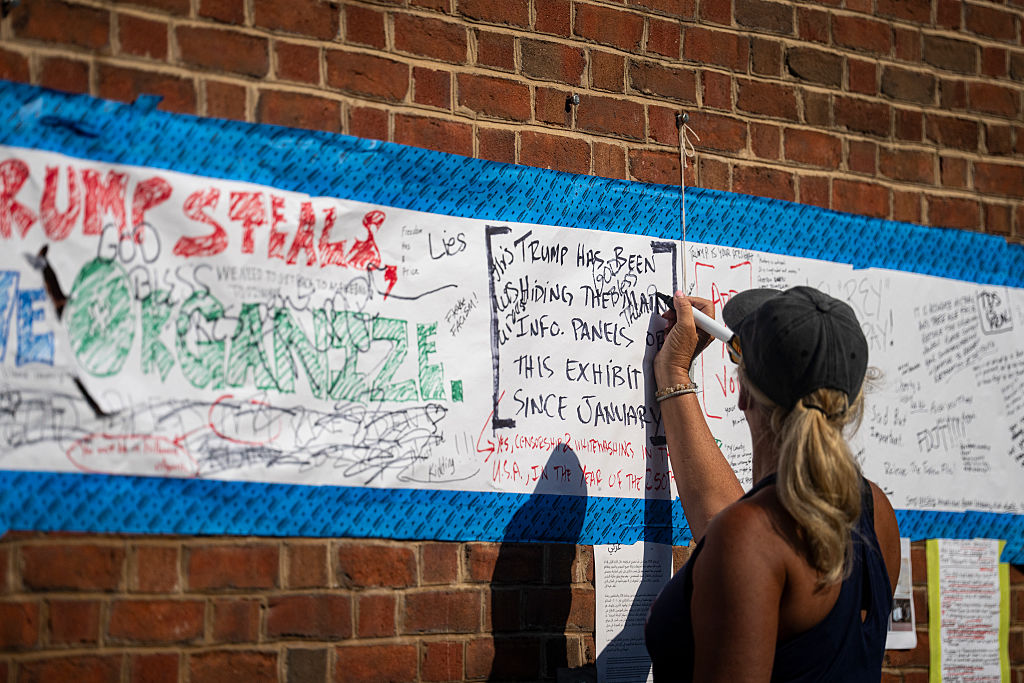
The exhibit, which opened in 2010 at Independence National Historical Park, honored nine enslaved individuals who were held as property by President George Washington at the President’s House. In January, the National Park Service began removing the memorial in compliance with an executive order from President Donald Trump titled “Restoring Truth and Sanity to American History,” according to reporting from the Associated Press. A federal judge ordered the administration to restore the exhibit in February, but the appellate panel reversed that ruling earlier this month, allowing the replacement installation to proceed.
What the New Panels Include — and Omit
The Interior Department told the Associated Press that the replacement panels “are full of historical context and highlight the momentous events that took place in the President’s House and the other sites at Independence National Historical Park.” In a statement, the department said the new panels “acknowledge the evils of slavery, including its injustices and hypocrisies, and, by telling the stories of the nine slaves that Washington kept in the President’s House, remind us of their essential humanity.”
According to a government website with images of the new panels, they will still include information on the enslaved people who lived in the home, as well as details on the abolitionist movement, how the Constitution treated slavery, the end of slavery in Pennsylvania, how Washington and his successor John Adams viewed and treated slavery, and information about the 20th-century Civil Rights Movement. However, the replacement panels do not include some elements from the earlier exhibit, such as a map of slave trade routes and a timeline on slavery. They also avoid critical headlines such as “The Dirty Business of Slavery.”
The three-judge panel praised the plans for the replacement installation, writing that they were “full of historical context,” despite objections from historians and city officials who argued the content appeared whitewashed.
Philadelphia Mayor Condemns Timing of Installation
Philadelphia Mayor Cherelle L. Parker criticized the federal government for conducting the work overnight. “Overnight, under the cover of darkness, the federal government removed panels at the President’s House that told a thorough history of Philadelphia,” Parker said in a statement. “It was allowed to do this by the decision of the federal court, but that it did so at night shows it understands this action is shameful, that it violates community trust.”
The original article, published by a news outlet critical of the administration, characterized the executive order as an effort to prioritize “white feelings over Black historical truth” and described the administration as a “white nationalist regime.” Those characterizations represent the author’s viewpoint, not an objective finding of this report.
Broader Context of Federal History Policy
The dispute over the President’s House exhibit is part of a wider pattern of actions by the Trump administration regarding the presentation of American history on federal property. The administration has vowed to restore all honors, fort names, and monuments to the Confederacy, while also forcing African American history museums to remove exhibits related to slavery and the civil rights movement, according to the original reporting. The administration has also pushed right-wing curricula that whitewash American history to omit anti-Black oppression or frame it as a wrong that America worked tirelessly to right.
No party to the lawsuit accused the park of displaying historically inaccurate information or anything that would constitute what the Trump administration has termed “improper ideology.” The legal challenge centered on whether the administration had the authority to alter the exhibit under the executive order.
What Happens Next
With the appellate ruling now in effect, the Trump administration can proceed with installing the replacement panels. The original exhibit’s supporters — including historians, city officials, and civil rights advocates — have not indicated whether they will seek further legal review, such as an appeal to the full 3rd Circuit or to the U.S. Supreme Court. The question that remains open is whether the legal system will ultimately defer to executive authority over historical interpretation on federal land, or whether future challenges will establish clearer limits on how presidents can reshape public memorials.


Comments