






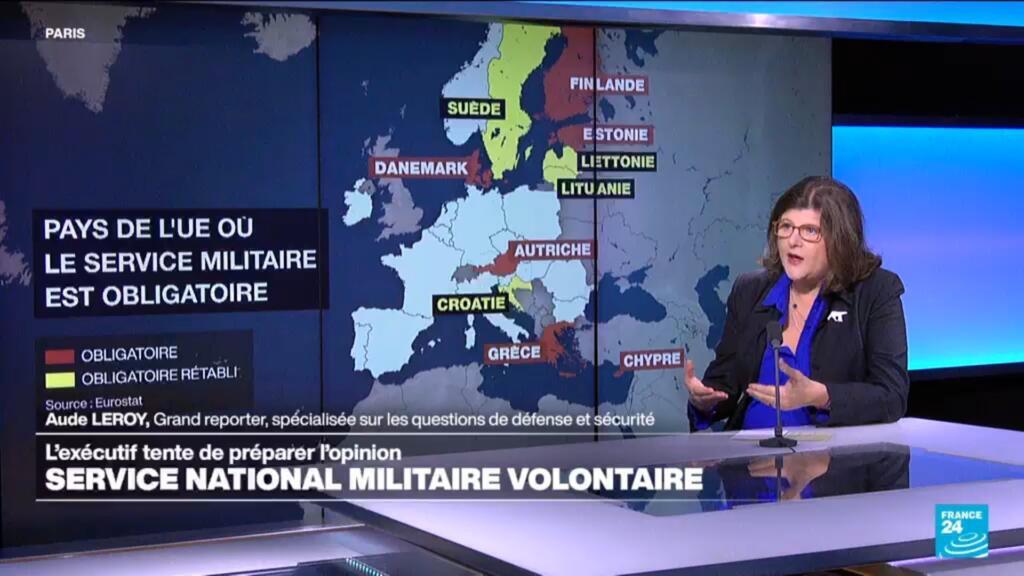
This week, our magazine examines the profound implications of President Emmanuel Macron’s announcement of a voluntary national military service program—a strategic initiative that represents both a symbolic shift in French civil-military relations and a practical response to contemporary security challenges. The program will commence with a pilot cohort of 3,000 young recruits in summer 2026, with the ambitious goal of expanding to 50,000 participants annually by 2035.
To provide expert analysis on this significant policy development, we’re joined by Aude Leroy, senior reporter and specialist in defense and security issues. According to Leroy, “This initiative marks a departure from previous universal service models while addressing critical needs in national resilience and youth development. The phased approach suggests the government is testing both logistical capabilities and public reception before full implementation.”
Strategic Context and Historical Precedents
The voluntary service emerges against a backdrop of evolving European security threats, including hybrid warfare, cybersecurity vulnerabilities, and the need for greater societal resilience. Unlike the universal national service abolished in 1997, this voluntary model reflects contemporary realities while attempting to preserve the civic integration benefits of military training.
Implementation Challenges and Opportunities
The scaling plan—from 3,000 to 50,000 participants over nine years—reveals both ambition and pragmatism. Initial challenges will include:
– Infrastructure development for training facilities
– Integration with existing educational and career pathways
– Ensuring diversity across geographic and socioeconomic backgrounds
– Balancing military readiness with civic education components
Comparative International Models
France’s approach differs significantly from neighboring systems. Germany’s voluntary service focuses heavily on civil protection, while Scandinavian models maintain stronger universal service traditions. The French hybrid model appears designed to build military capacity while strengthening national cohesion.
Public Reception and Political Dimensions
The executive branch faces the delicate task of preparing public opinion for what represents a significant cultural shift. Success will depend on demonstrating tangible benefits to participants—from skills development to educational advantages—while maintaining the program’s national security rationale.
As the year draws to a close, this policy announcement coincides with traditional seasonal celebrations, including the illumination of Strasbourg’s famous Christmas markets—creating a striking contrast between continuity and change in French public life.