






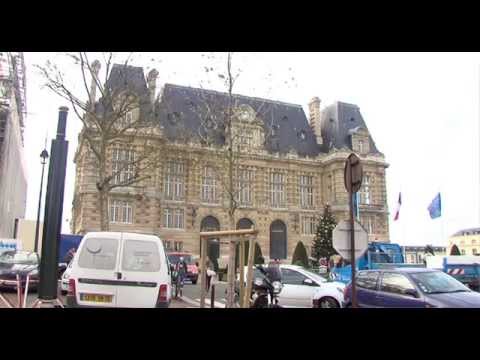
In a significant move with wide-ranging diplomatic and security implications, the Prefecture of Yvelines in France’s Île-de-France region has issued a formal ban on a planned gathering by the Movement for the Autonomy of Kabylia (MAK). The event, scheduled for Sunday, December 14th at the Palais des Congrès in Versailles, was intended for the group to proclaim the independence of Kabylia, a region in northern Algeria. The prefecture’s decision, citing explicit security concerns, is not an isolated administrative act but a pivotal event situated at the complex intersection of French domestic security policy, Franco-Algerian diplomacy, and North African geopolitics.
**Context: A Thaw in Franco-Algerian Relations**
This ban arrives during a delicate period of resumed dialogue between Algiers and Paris. Relations between the two nations had been strained for months, nearing a breakdown over issues including historical memory, visas, and economic disputes. The French government’s decision to prohibit an event organized by a group Algeria officially designates as a terrorist organization is widely interpreted as a diplomatic overture—a tangible gesture to de-escalate tensions and rebuild trust. The swift and widespread expressions of relief on Algerian social media underscore the decision’s symbolic weight in Algeria, where national unity is a sacrosanct principle.
**Understanding the MAK: Objectives and Controversies**
To grasp the ban’s full significance, one must understand the MAK itself. Chaired by former singer and self-proclaimed “President-in-exile” Ferhat Mehenni, the MAK advocates for the secession of the predominantly Berber (Amazigh) region of Kabylia from Algeria. Algeria’s government classified the MAK as a terrorist organization in 2021, accusing it of fomenting violence and instability, a designation that fundamentally shapes France’s legal and security calculus. In response to the ban, the movement has announced an appeal to French courts, setting the stage for a legal battle that will test the boundaries of freedom of assembly versus state security prerogatives in France.
**Algerian Domestic Rejection: A Unified Front**
Contrary to the MAK’s narrative of representing Kabylia, the secessionist project faces profound rejection within Algeria itself, including in its claimed heartland. This opposition is multifaceted:
* **Political Parties:** Major parties with deep roots in Kabylia, such as the Socialist Forces Front (FFS), the Rally for Culture and Democracy (RCD), and the Workers’ Party (PT), have consistently reaffirmed their commitment to a unified Algerian state.
* **Symbolic Condemnation:** Figures like Amrane Aït Hamouda, son of a revered National Liberation War hero, have publicly labeled Ferhat Mehenni a “traitor,” highlighting how the MAK’s project is seen as a betrayal of the shared sacrifice that founded modern Algeria.
* **Local Governance:** In a powerful demonstration of grassroots opposition, the mayors of the Béjaïa province (wilaya) in Kabylia recently assembled to voice unanimous rejection of the MAK and its objectives.
* **Civil Society Voices:** Influential figures like El Hadi Ould Ali, former head of a Berber Cultural Movement (MCB) branch, have condemned the MAK’s “dangerous drift,” distinguishing the legitimate cultural and linguistic rights movement of the Amazigh people from what they view as a destructive separatist agenda.
**The Geopolitical Dimension: Accusations of Foreign Patronage**
A recurring and critical allegation in Algerian discourse is that the MAK’s project “benefits from the support of foreign forces hostile to Algeria.” While rarely specified officially, this points to a deeper geopolitical layer. Algerian authorities and commentators often suspect that regional rivals or external powers may seek to use separatist movements to weaken the Algerian state, destabilize North Africa, and influence the strategic Mediterranean and Sahelian regions. France’s ban, therefore, can also be read as an attempt to distance itself from any perception of harboring or enabling groups seen as instruments of foreign interference against a key partner.
**Conclusion: More Than a Simple Permit Denial**
The Yvelines prefecture’s decision transcends a routine public order measure. It is a diplomatic signal to Algeria, a security judgment on a designated terrorist group, and an intervention in a deeply sensitive national issue for a partner country. The ban reflects the intricate balancing act France must perform: upholding its own laws on freedom of expression and assembly, while managing vital bilateral relationships and addressing legitimate security threats. The forthcoming court appeal by the MAK will be the next chapter, further defining the legal and political landscape surrounding diaspora activism, separatist movements, and the long, complex shadow of history on Franco-Algerian ties.