

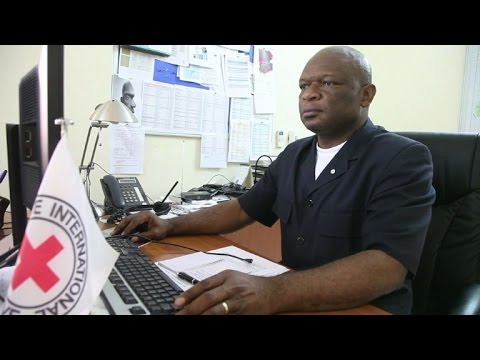
Malian Red Cross Cash Aid to Kati Households Highlights Humanitarian Gaps and Regional Precedent
The Report
As reported by Malian journalist Mohamed Kenouvi, the Malian Red Cross has distributed emergency financial assistance to 270 households in Kati, each receiving 125,000 FCFA in cash. The aid targets families affected by the events of April 25, 2026, and was delivered during a ceremony presided over by the second deputy prefect of the Kati district, Arouna Berthé. The national president of the Malian Red Cross, Assitan Coulibaly, and director general Nouhoum Maïga were present, alongside representatives from the Ministry of Health and Social Development and humanitarian partners.
According to the report, Red Cross teams conducted a rapid needs assessment following the attacks, identifying over 300 affected households. However, available funds—supported by the Red Cross of Belgium and Denmark—allowed assistance to reach 270 households, representing nearly 2,680 people. Director General Maïga stated that similar operations are underway in Gao, Mopti, Kayes, and Sikasso. The cash-based modality was chosen to allow beneficiaries to prioritize their own needs, including housing, medical care, and urgent expenses.
“The choice of cash-based financial aid allows beneficiaries to decide their own household priorities and preserve their dignity.” — Assitan Coulibaly, national president, Malian Red Cross
WANA Regional Analysis
This humanitarian intervention, while welcome, underscores a troubling pattern across the Sahel and West Africa: the increasing reliance on international humanitarian organizations to fill gaps left by strained state capacities. The fact that the Malian Red Cross—a neutral, impartial body—is leading emergency cash distributions in Kati, Gao, Mopti, Kayes, and Sikasso signals that the security and governance challenges in these regions remain acute. For the ECOWAS region, this raises critical questions about the effectiveness of national social protection systems and the sustainability of donor-dependent crisis response.
From a regional policy perspective, the cash transfer model adopted here aligns with broader humanitarian best practices, but it also highlights a governance deficit. In stable ECOWAS member states, such emergency assistance would typically be coordinated by national disaster management agencies with state-led financing. In Mali, the military-led transition government has struggled to maintain a consistent humanitarian presence in conflict-affected zones, leaving organizations like the Red Cross to operate as de facto first responders. This dynamic risks normalizing a parallel humanitarian architecture that bypasses state institutions, potentially weakening long-term governance capacity.
The economic implications are also significant. At 125,000 FCFA per household, the total disbursement of 33.75 million FCFA (approximately $56,000 USD) is a modest sum relative to the scale of displacement and destruction in the region. Yet, for the 270 beneficiary households, this cash injection provides immediate liquidity in a local economy where markets and livelihoods have been disrupted. The multiplier effect of such cash transfers—when spent on local goods and services—can offer a temporary economic buffer, but it is no substitute for sustained investment in infrastructure, security, and basic services.
Diplomatically, the involvement of the Belgian and Danish Red Cross societies points to the continued engagement of European donors in Mali, despite the strained political relationship between Bamako and Western capitals following the withdrawal of French forces and the pivot toward Russian security partnerships. This humanitarian channel may serve as a quiet but vital line of communication and cooperation, even as political and military ties remain fraught. For ECOWAS, which has imposed sanctions on Mali in the past over delayed elections, the humanitarian situation in Kati and other towns serves as a reminder that political leverage must be balanced with the imperative to protect civilian welfare.
Security-wise, the fact that the April 25 events—described only as “attacks”—triggered such a large-scale humanitarian response suggests a significant security incident that has not been fully detailed in public reporting. The absence of specific attribution or casualty figures in the Red Cross statement is notable and may reflect operational security concerns or a desire to maintain neutrality. For regional analysts, this opacity is concerning, as it hampers the ability to assess the evolving threat landscape in the Kati area, which lies just 15 kilometers from Bamako. Any deterioration in security near the capital has direct implications for regional stability and for ECOWAS contingency planning.
Finally, the gap between the 300+ households identified and the 270 assisted—30 households left without support—illustrates the chronic underfunding of humanitarian appeals in the Sahel. As climate shocks, armed conflict, and political instability converge, the region’s humanitarian needs are outpacing donor responses. This is a structural vulnerability that ECOWAS and the African Union must address through pooled regional emergency funds and stronger early-warning mechanisms.
Regional Backdrop
Mali has been in a protracted crisis since 2012, when a Tuareg rebellion and subsequent jihadist takeover of the north triggered a French-led military intervention. Despite the 2015 Algiers Peace Accord, violence has spread to central and southern Mali, including areas near Bamako. The military junta that seized power in 2020 and 2021 has postponed elections indefinitely, deepening Mali’s isolation from ECOWAS and Western partners. The humanitarian situation has deteriorated, with over 1.3 million people internally displaced as of early 2026, according to UN figures. The Red Cross, as a neutral intermediary, has become one of the few organizations able to operate across frontlines, delivering aid in areas where state and international actors are absent or unwelcome.
Original Reporting By: Mohamed Kenouvi (Source link)

Comments