

Mali’s 3.3 Billion FCFA Drainage Project: A Test of Urban Resilience in the Sahel
The Report
As reported by Bamada.net (Ladji Djiga Sidibé), the Malian Council of Ministers, chaired by Transition President General Assimi Goïta and Prime Minister General Abdoulaye Maïga, convened on Wednesday, 13 May 2026, at the Koulouba Presidential Palace. A key outcome was the official launch of the national program for cleaning drains and gutters in Bamako, aimed at flood prevention for the 2026 season.
Minister of Environment, Sanitation, and Sustainable Development, Doumbia Mariam Tangara, announced the commencement of works under the 2026 Bamako Urban Resilience Project. The objectives include preventing urban flood risks, improving rainwater flow, enhancing neighborhood sanitation, and protecting public and private infrastructure.
The program targets the cleaning of 348,517 linear meters of collectors and gutters in Bamako alone, with a total budget of 3,334,067,480 FCFA. Nationally, an additional 421,280 linear meters will be cleaned in the regions, backed by 972,398,000 FCFA.
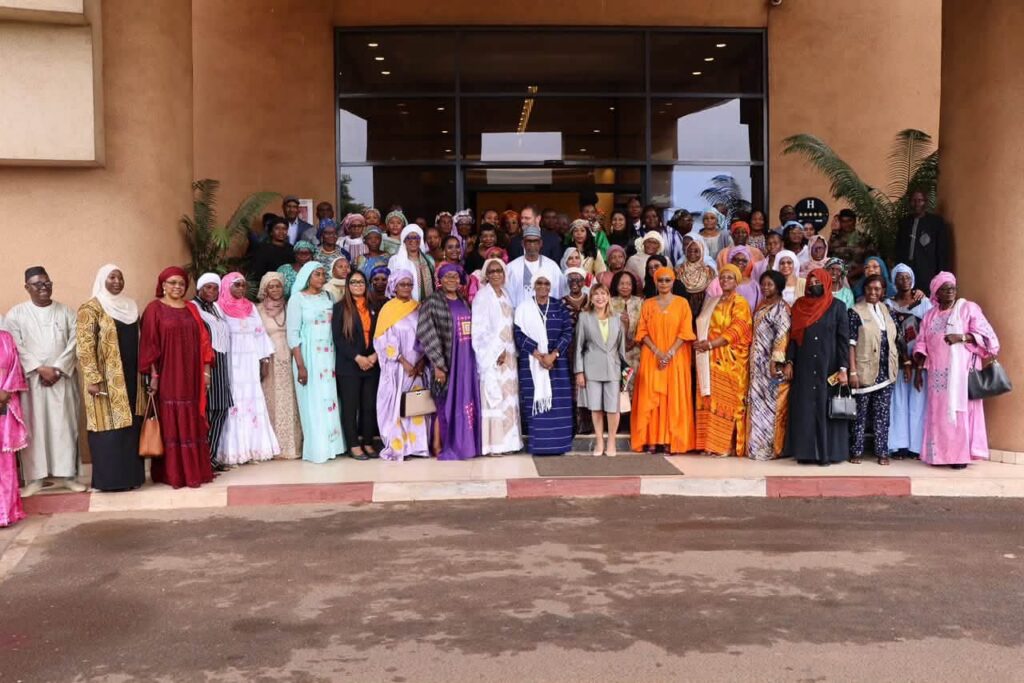
The official launch ceremony took place on Thursday, 14 May 2026, at the Chaba field in Lafiabougou, Bamako, attended by government officials, technical services, local authorities, and traditional leaders. The government emphasized a proactive strategy involving regular maintenance, modernization of drainage systems, and inter-ministerial coordination. A parallel public awareness campaign will target residents, merchants, and community leaders to discourage the use of drains as dumping grounds.
Bamako, Palais de Koulouba – Conseil des Ministres du 13 mai 2026
WANA Regional Analysis
Against the backdrop of a rapidly urbanizing Sahel, where climate change is intensifying seasonal rainfall unpredictability, this 3.3 billion FCFA investment is more than a routine maintenance operation. It represents a critical stress test for the Transition government’s capacity to deliver tangible public goods beyond security and political consolidation. For the ECOWAS region, the success or failure of this program carries significant implications.
First, the scale of the investment is notable. At over 3.3 billion FCFA for Bamako alone, this is one of the largest single urban drainage allocations in recent West African history. It signals a shift from reactive disaster management—where governments scramble for emergency funds after floods—to a preventive, budgeted approach. However, the real test lies in execution. Similar programs in the region, such as in Abidjan or Dakar, have historically been undermined by corruption, poor contractor oversight, and the rapid re-clogging of drains due to unregulated waste disposal.
Second, the program’s framing within the “Bamako Urban Resilience Project” aligns with a broader trend across the Sahel. Cities like Ouagadougou, Niamey, and Bamako are increasingly vulnerable to flash floods due to a combination of unplanned construction in floodplains, inadequate drainage, and solid waste mismanagement. The Malian government’s explicit linkage of this project to climate resilience is a strategic move to attract further financing from international climate funds and development partners, such as the World Bank and the African Development Bank, which prioritize such projects.
Third, the political context cannot be ignored. The Transition government, led by General Goïta, faces immense pressure to demonstrate governance effectiveness. Flooding in Bamako has historically been a source of public anger and a trigger for protests. By personally associating the presidency with this program, the government is staking its political capital on a visible, tangible outcome. The inclusion of traditional and religious leaders at the launch ceremony is a deliberate effort to build community ownership and mitigate the risk of the program being perceived as a top-down, foreign-funded initiative.
Finally, the program’s long-term sustainability is questionable without a parallel crackdown on the informal waste economy. The call for “eco-citizen behavior” is a necessary but insufficient step. Across West Africa, the most effective flood prevention programs have been those that combine drainage cleaning with robust waste collection services, recycling incentives, and strict enforcement of anti-dumping laws. Without addressing the root cause—the lack of affordable, regular waste collection in Bamako’s densely populated neighborhoods—the 3.3 billion FCFA investment risks being washed away by the next rainy season.
The broader implications for the ECOWAS region suggest that Mali’s experiment will be closely watched. If successful, it could provide a replicable model for urban resilience in fragile, transitional states. If it falters, it will reinforce the cynical view that large infrastructure budgets in the Sahel are more about political optics than lasting change.
Original Reporting By: Bamada.net

1 comment