











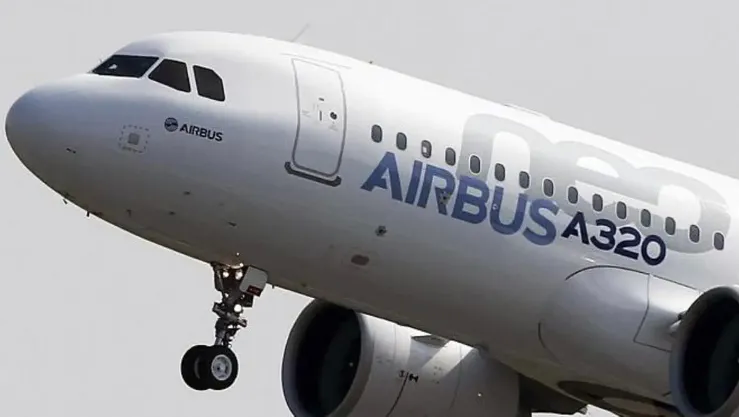
A routine software update intended to make flying safer has instead triggered one of the most significant operational disruptions in modern aviation history. Airlines worldwide are scrambling to address a software defect affecting approximately 6,000 Airbus A320 family aircraft, a process that has thrown global travel into chaos during what is typically the year’s busiest travel weekend. This event is more than a simple technical glitch; it is a stark illustration of the profound interconnectedness and vulnerability of our global air transport system.
The scale of this recall is unprecedented. With the global A320 fleet numbering around 11,000 aircraft, this directive impacts more than half of all A320s in service. The disruption is felt most acutely in Asia, where the A320 is the backbone of short-haul aviation. In countries like China and India, which rely heavily on this single-aisle workhorse for domestic and regional connectivity, the logistical challenge is immense. The recall, mandated by an Airbus directive, requires specific software and technical updates before these aircraft can be legally returned to service.
But what exactly is the problem? The defect lies in the software that controls the aircraft’s primary flight controls: the elevators and ailerons. To understand the gravity, consider this: elevators control the aircraft’s pitch (nose up and down), while ailerons control its roll (banking left and right). These are not secondary systems; they are fundamental to the very act of flying. While the specific failure mode has not been detailed publicly, a fault in this software could, in a worst-case scenario, lead to uncommanded control inputs, posing a significant safety risk. This is why aviation authorities like the European Union Aviation Safety Agency (EASA) and the U.S. Federal Aviation Administration (FAA) have taken the extraordinary step of grounding affected planes until the update is applied.
The European Aviation Safety Agency’s warning of “short-term disruption” is a masterclass in understatement. For an airline, taking a single aircraft out of service for a few hours requires rescheduling crews, reassigning gates, and rebooking passengers. Multiplying that by thousands of aircraft simultaneously, across 350 different airlines, creates a domino effect of delays and cancellations that can take days, or even weeks, to fully resolve. The timing during a peak travel period exacerbates the problem, stranding passengers and overwhelming customer service systems.
This event marks one of the largest single-model recalls in Airbus’s 55-year history, rivaling the grounding of the Boeing 737 MAX. However, the nature of the problem is distinctly different. Unlike the hardware and sensor issues that plagued the MAX, this A320 situation stems from a software flaw—a reminder that in today’s “fly-by-wire” aircraft, where pilots’ commands are interpreted by computers, code is as critical as physical machinery. It highlights a new frontier of aviation safety, where a single line of flawed code can have a global impact, and the industry’s challenge is not just maintaining physical assets but managing complex, interconnected digital systems.
For the traveling public, this incident underscores the importance of patience and preparedness. It also serves as a powerful, if inconvenient, demonstration of the global aviation safety net in action. Regulators and manufacturers identified a potential risk and acted swiftly and decisively to mitigate it before it could lead to an accident, prioritizing safety over convenience—a principle that remains the non-negotiable foundation of air travel.