
Nigeria’s Political Realignment: Fayemi’s Admission Signals Deeper Fractures in APC and the Rise of a New Electoral Force
The Report
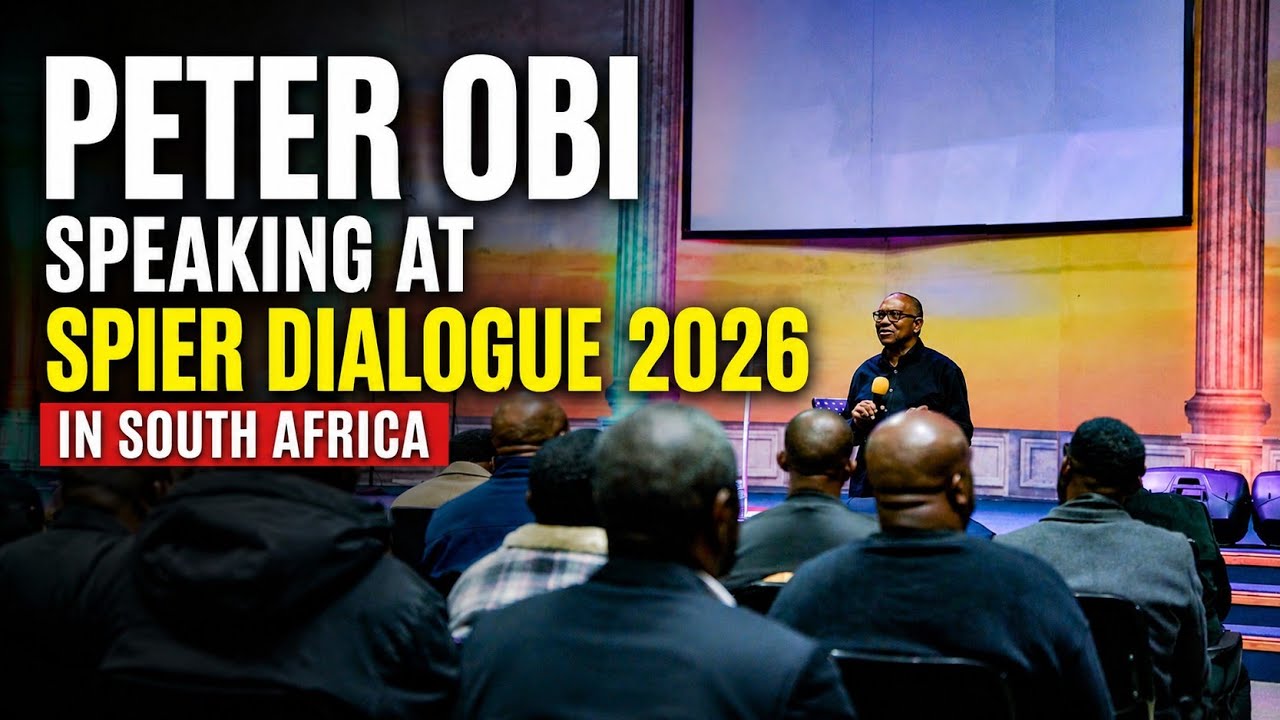
As reported by State Affairs in an interview with host Edmund Obilo, former Ekiti State Governor Kayode Fayemi acknowledged his role in helping President Bola Tinubu secure victory in the 2023 general elections. Fayemi, a prominent figure within the All Progressives Congress (APC), described the emergence of Labour Party candidate Peter Obi as a “political phenomenon” that upended traditional power calculations in Nigeria. He further admitted that the APC has drifted from its founding ideals, warning that Nigeria cannot sustain a “winner-takes-all” political culture that excludes millions from governance. Fayemi called for inclusive politics, transparent primary elections, and a restructuring of the Nigerian federation.
“I helped Tinubu to Become President, but the APC has Lost its Bearing, and Peter Obi is a Phenomenon.”
WANA Regional Analysis
Fayemi’s candid remarks, while focused on Nigeria’s internal dynamics, carry significant implications for the broader West African political landscape. The admission from a senior APC insider that the ruling party has lost its ideological compass is not merely a domestic concern—it signals a potential shift in the stability of Nigeria’s political architecture, which has long served as a bellwether for democratic trends in the ECOWAS region.
From a regional governance perspective, the acknowledgment of a “winner-takes-all” culture resonates across West Africa, where many democracies struggle with political exclusion and post-election violence. Fayemi’s call for restructuring and transparent primaries echoes similar demands in Ghana, Senegal, and Côte d’Ivoire, where opposition parties and civil society groups have long argued that centralized, winner-takes-all systems fuel instability and undermine democratic consolidation. If Nigeria—the region’s largest economy and most populous nation—moves toward more inclusive governance models, it could set a precedent that influences constitutional reforms and electoral practices across ECOWAS member states.
The characterization of Peter Obi as a “phenomenon” is particularly noteworthy for regional analysts. Obi’s 2023 campaign drew significant support from young, urban, and digitally connected voters, a demographic that is rapidly growing across West Africa. His ability to disrupt the two-party dominance of the APC and the Peoples Democratic Party (PDP) suggests that traditional political loyalties are eroding, not just in Nigeria but potentially in other West African nations where youth populations are demanding accountability and economic opportunity. This trend could embolden third-party movements in countries like Ghana, where the New Patriotic Party (NPP) and National Democratic Congress (NDC) have long alternated power, or in Liberia, where the political landscape is similarly polarized.
From an ECOWAS institutional perspective, Fayemi’s critique of the APC’s internal decay raises questions about the health of political parties as vehicles for democratic representation. ECOWAS has historically focused on electoral integrity and conflict prevention, but the internal governance of political parties—often opaque and elite-driven—remains a blind spot. If a senior figure like Fayemi publicly acknowledges that his party has lost its way, it may prompt regional bodies to consider party internal democracy as a critical component of democratic resilience.
Economically, the implications are equally significant. Political uncertainty in Nigeria—whether from internal party fractures or the rise of disruptive candidates—can deter foreign investment and complicate regional trade under the African Continental Free Trade Area (AfCFTA). Investors in West Africa closely watch Nigerian political signals; any perception of instability or policy incoherence could slow capital flows into the region. Fayemi’s call for restructuring also touches on the perennial debate over resource allocation and fiscal federalism, which directly affects how revenues from oil, mining, and agriculture are shared among Nigeria’s states and, by extension, how regional economic integration is managed.
Against this backdrop, Fayemi’s interview is more than a personal reflection—it is a window into the evolving power dynamics of Africa’s most consequential democracy. For West African policymakers, the message is clear: the old political certainties are fading, and new forces—driven by youth, digital mobilization, and demands for inclusion—are reshaping the electoral landscape. How Nigeria navigates this transition will have profound consequences for the stability and democratic trajectory of the entire ECOWAS region.
Regional Backdrop
Nigeria’s 2023 election was closely watched across West Africa as a test of democratic resilience in a region that has seen a resurgence of military coups in Mali, Burkina Faso, and Niger. The election was largely peaceful but marred by logistical challenges and allegations of irregularities. Peter Obi’s strong performance—winning in key urban centers and states outside his traditional southeastern base—challenged the ethnic and regional voting patterns that have long defined Nigerian politics. His appeal among young voters mirrored similar movements in Senegal, where opposition figures have harnessed digital platforms to mobilize support, and in Ghana, where the #FixTheCountry movement has pressed for governance reforms. Fayemi’s acknowledgment of Obi’s impact thus places Nigeria’s political evolution within a broader regional trend of generational and ideological change.
Original Reporting By:
State Affairs

Comments