








Salli Richardson-Whitfield Honored as Black Women Film Network’s Woman of the Year: A Testament to Resilience and Sisterhood in Hollywood
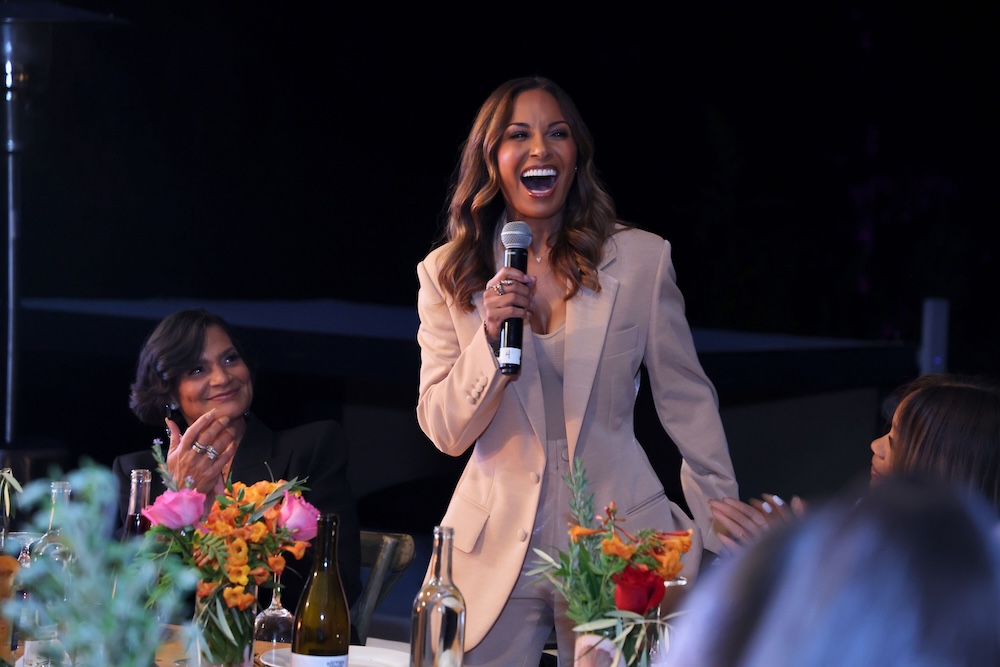
In an industry where emotional armor often becomes second nature, Salli Richardson-Whitfield maintains a reputation for composure that borders on legendary. The accomplished director and producer jokes that she didn’t shed a tear while giving birth to her two children—a testament to her characteristic resilience. Yet even the most steadfast among us have moments that pierce through professional detachment, and for Richardson-Whitfield, that moment arrived as she stood before her peers accepting the Black Women Film Network’s “Woman of the Year” award.
A Night of Recognition and Reflection
The atmosphere at Casa Locé, a Black-owned winery nestled in Ojai, California’s Santa Barbara region, crackled with electricity that had little to do with the fine wines being poured. Here, amid the rustic elegance of the venue, some of Hollywood’s most influential Black women executives gathered not merely to celebrate an individual, but to reaffirm their collective commitment to transforming an industry that has historically marginalized their voices.
Richardson-Whitfield’s voice wavered with uncharacteristic emotion as she addressed the intimate gathering. “It’s no secret that this industry is not easy,” she acknowledged, her words resonating with every woman in the room. “It tests your patience, your faith, and sometimes, honestly, your sense of self, and how we have to play a bunch of gymnastics to get out what we want to happen. But we keep showing up.”
Her speech transformed from personal acceptance to collective manifesto as she continued: “We keep finding ways to push through to open doors and continue to open and open. I really think I’m leaving something for the next generation… I will carry this award with me as a reminder to keep earning it, to keep growing, and to keep leading with grace.”
The Power of Sisterhood in Hollywood
The evening’s significance extended far beyond a single award ceremony. In attendance were powerhouse executives including BET’s Connie Orlando and Amazon Music’s Phylicia Fant—women who have navigated the treacherous waters of entertainment corporate culture and emerged as leaders. Their presence underscored what Richardson-Whitfield described as the “sisterhood” that defines the Black women’s experience in Hollywood.
This gathering served as a powerful reminder of the Black Women Film Network’s nearly three-decade legacy of building careers through scholarships, mentorship programs, and professional conferences. In an industry where representation behind the camera remains stubbornly low, organizations like BWFN provide the scaffolding that allows Black women to ascend to positions of creative influence.
The event, sponsored by Vanzil Burke of Burke Entertainment, functioned as a crucial fundraiser for the organization. Like many groups dedicated to uplifting people of color in the entertainment industry, BWFN faces significant challenges in the current political climate, making such gatherings both celebration and necessity.
From Actress to A-List Director: The Richardson-Whitfield Evolution
Richardson-Whitfield’s journey exemplifies the career trajectory that BWFN strives to facilitate for Black women in film. Beginning her career as an actress, she might have comfortably remained in front of the camera. But a pivotal collaboration with Ava DuVernay, who cast her in I Will Follow, sparked a transformation. DuVernay recognized Richardson-Whitfield’s potential beyond performing and encouraged her to explore the director’s chair.
That encouragement ignited a remarkable second act in Richardson-Whitfield’s career. Over the past decade, she has emerged as one of Hollywood’s most sought-after directors, shattering barriers with the precision of someone who understands that representation requires not just presence, but excellence.
Her groundbreaking achievements include becoming the first Black woman to receive an Emmy nomination for directing a drama series for her work on Winning Time, HBO’s captivating chronicle of the Showtime Lakers. Currently, she serves as executive producer and director on HBO’s acclaimed period series The Gilded Age, while also directing episodes of the Mark Ruffalo-starring series Task. Her directing credits now span countless productions, each adding to a legacy that redefines what’s possible for Black women in Hollywood.
Intentional Leadership and Creating Space
During the award ceremony, BET Executive Vice President Connie Orlando captured the essence of Richardson-Whitfield’s impact with eloquent precision. “When I think of Salli, the word that comes to mind is intentional,” Orlando reflected. “She is fiercely intentional about using her power to create space. She’s the personification of lifting as we come, and we appreciate that. The sets that she’s on—they’re not just sets, they are incubators for the next generation of Black women in film.”
This concept of intentional space-making formed the evening’s central theme. In an industry where Black women constitute a startlingly small percentage of directors and executives, the deliberate cultivation of talent becomes revolutionary. Richardson-Whitfield’s sets have become known not just for their creative excellence, but for their function as training grounds where emerging Black female talent can learn, grow, and eventually lead.
The Ripple Effect of Mentorship
Throughout the evening, speaker after speaker testified to how Black Women Film Network had fundamentally altered their career trajectories. Whether through scholarships that made education accessible or mentorship that provided navigation tools for Hollywood’s opaque power structures, BWFN has consistently served as both compass and catalyst.
This multiplier effect—where one woman’s success creates pathways for countless others—represents the organization’s core philosophy. Richardson-Whitfield herself embodies this principle, having transitioned from mentee to mentor while maintaining the humility that characterizes true leadership.
As the entertainment industry grapples with questions about diversity, equity, and inclusion in the face of political headwinds, organizations like BWFN demonstrate that sustainable change requires more than temporary initiatives. It demands the creation of ecosystems where talent can be identified, nurtured, and elevated through structured support systems that understand the unique challenges facing Black women.
A Celebration with Purpose
The evening culminated with a performance by singer Major, but the music served as backdrop to the real work being done—the forging of connections, the sharing of resources, the strengthening of resolve. This was no ordinary awards ceremony; it was a strategic gathering of women who understand that their collective power far exceeds their individual accomplishments.
In honoring Richardson-Whitfield, the Black Women Film Network did more than celebrate one woman’s achievements. They showcased a blueprint for how Black women can not only survive but thrive in Hollywood, transforming the industry from within while pulling up the next generation behind them.
As guests departed into the California night, Richardson-Whitfield’s words lingered in the air, serving as both inspiration and charge: “We keep showing up.” In those four simple words, she captured the relentless perseverance that defines Black women’s journey through Hollywood—a journey that organizations like BWFN ensure does not have to be traveled alone.
The path forward remains challenging, but with leaders like Richardson-Whitfield lighting the way and organizations like Black Women Film Network building the infrastructure, the landscape of Hollywood continues to evolve, one opened door at a time.
Source: Original article on Ebony.com