









Sudan’s New SDG 2,000 Banknote Reveals a Central Bank at Odds With Itself, Analysts Say
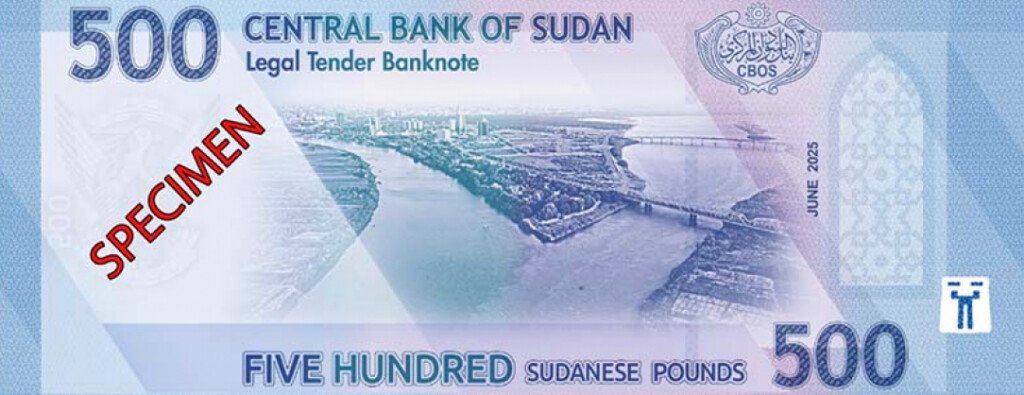
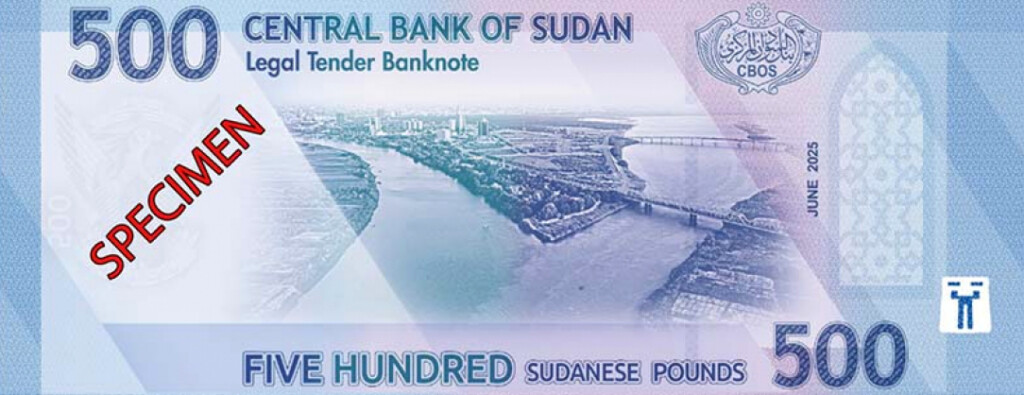
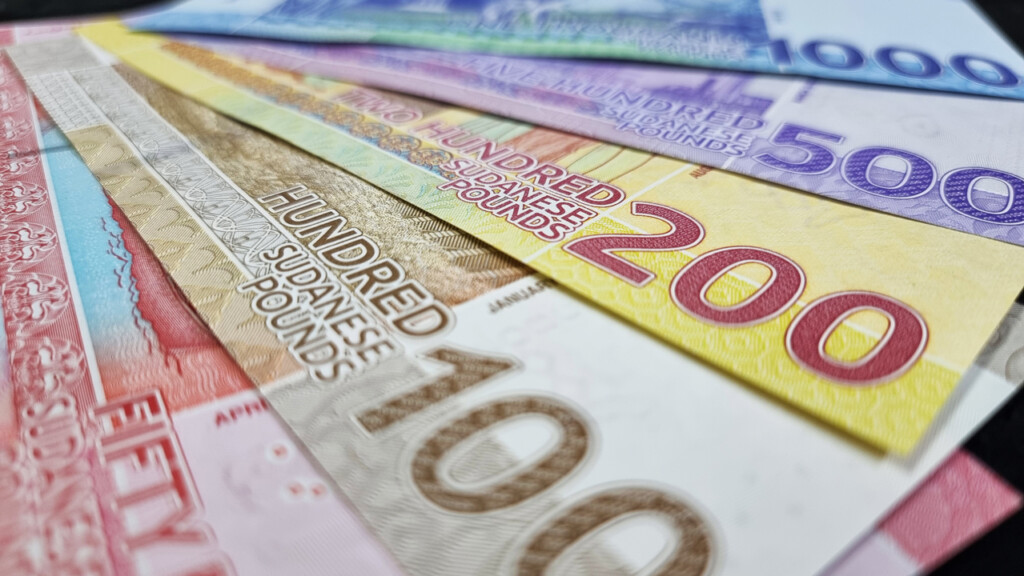
The Central Bank of Sudan’s (CBoS) announcement of a new, high-value SDG 2,000 banknote—the first of its denomination—alongside a redesigned SDG 500 note, has been met with sharp criticism from financial experts who describe the move as emblematic of a “dual and contradictory monetary policy.”
A Policy of Contradiction
In a statement, the central bank defended its decision, citing the 2002 Central Bank of Sudan Law and subsequent amendments. The CBoS claimed the new notes are part of a framework to protect the national currency, stabilize its exchange rate, and foster economic stability.
However, financial analyst Ahmed Ben Omar, in an interview with Radio Dabanga, presented a starkly different interpretation. He argues the decision reveals a fundamental conflict within the bank’s strategy.
“The decision reflects a dual and contradictory monetary policy,” Ben Omar explained. “It points to monetary expansion, represented by increased currency printing to cover government obligations and finance the current deficit. This is directly offset by administrative tightening through the bank’s attempts to control the parallel market and restrict cash circulation outside the banking system.”
This approach, he stresses, creates a tug-of-war between the objective of applying liquidity pressure and the goal of controlling the exchange rate, a challenge made worse by the absence of real money market tools like open market operations.
Fueling Inflation and Eroding Confidence
Ben Omar predicts the practical effect of introducing a larger denomination will be a significant increase in the speed of cash circulation. The ease of dealing with larger notes, he says, will inevitably lead to higher prices in the short term.
“Any new monetary issuance that is not linked to real production or foreign reserves means an increase in the monetary mass, which in turn leads to negative pressure on the value of the Sudanese pound…”
Perhaps more dangerously, the analyst warns that the decision raises the public’s inflation expectations. “These expectations in themselves feed inflation later,” he told Radio Dabanga, “making the move more of an expansionary signal than a real monetary reform.”
The impact on the Sudanese pound’s value is expected to be direct and negative. Ben Omar states that any new money not backed by production or reserves increases the monetary supply, putting downward pressure on the currency. “With the central bank abandoning its policy of buying gold as a means of curbing excess liquidity, this monetary expansion becomes sterile, further exacerbating its negative impact on the exchange rate,” he added.
A Glimmer of Hope, contingent on Strict Control
Despite the bleak outlook, Ben Omar outlined a potential path for a positive outcome, though he emphasized it is heavily conditional. If the Central Bank can successfully and effectively control the proceeds from key exports like gold, sesame, and livestock, and channel them through official banking channels, the story could change.
This, he notes, could boost foreign reserves and support the pound’s stability by providing much-needed foreign currency within the formal banking system. However, the success of this scenario hinges on “strict discipline in implementation.”
“Any leakage of proceeds outside the banking system will make monetary policy lose its effectiveness,” Ben Omar asserted, “and keep the pound under constant pressure in the parallel market.”
An Economy on the Brink
The controversial currency issuance occurs against a backdrop of profound economic devastation. Earlier analysis cited by Radio Dabanga from Dr Ibrahim El Badawi, a former Minister of Finance, pegged the war’s devastating losses to Sudan’s infrastructure at a staggering $200 billion. In the first year of the conflict alone, 40 per cent of the nation’s GDP was destroyed.
The data reflects a broader economic downturn. The World Bank reported that Sudan’s economy contracted by an additional 13.5% in 2024, following a shrinkage of about a third the previous year. Extreme poverty is now expected to affect 71% of the population, a dramatic surge from 33% in 2022.
Unemployment has skyrocketed in tandem, rising from 32% in 2022 to 47% in 2024 due to widespread business closures and a collapse in stable job opportunities. The World Bank cautioned that even with a swift resolution to the conflict and significant reforms, Sudan’s economy is unlikely to return to its pre-war GDP level before 2031.
Ben Omar described the market as fundamentally “fragile,” reacting more strongly to military events than to economic data. While the central bank’s policies have somewhat absorbed internal speculation, the market remains highly vulnerable to shocks directly linked to military operations.
In this climate of fragility and contradiction, the new SDG 2,000 note enters circulation—not just as a piece of currency, but as a symbol of the profound economic challenges facing Sudan.