




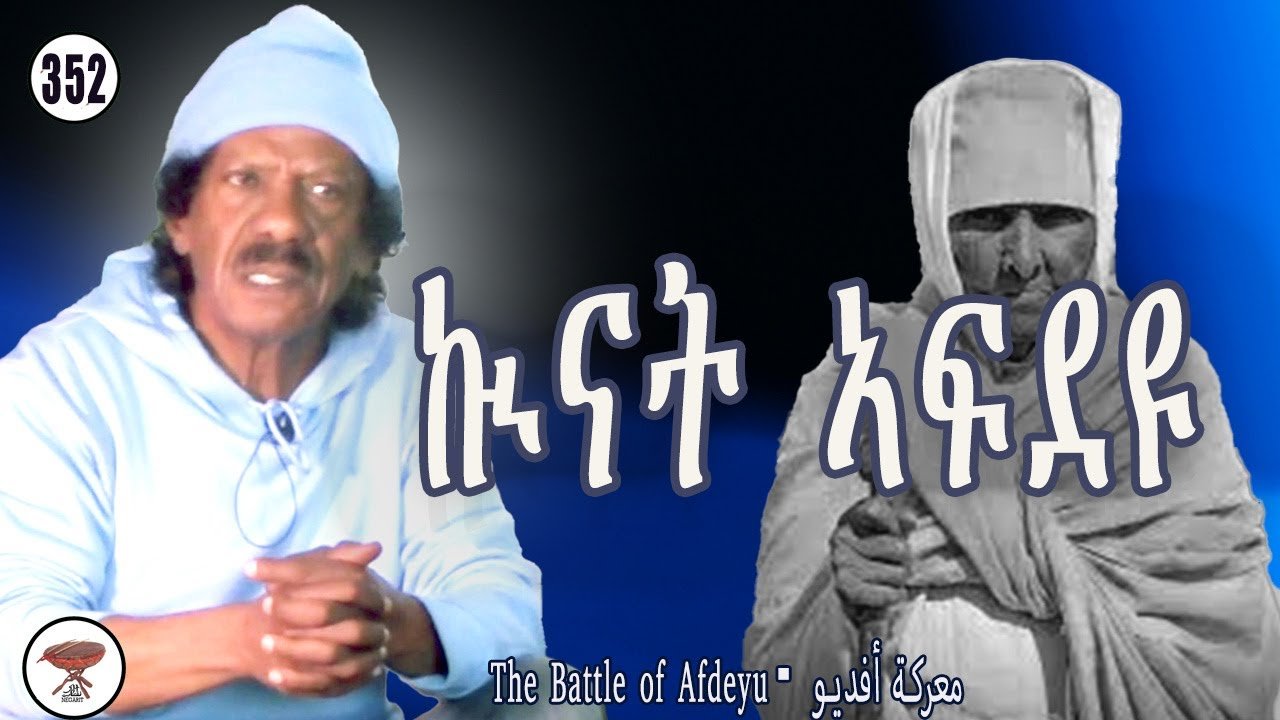
The Battle of Afdeyu: A Frontline Account of Eritrea’s Struggle
The night carried a heavy sense of foreboding. A meeting with commanders Petros Solomon and Ali Sayed Abdella had just confirmed my deepest fears: the much-anticipated dialogue to unite the rival Eritrean Liberation Front (ELF) and People’s Liberation Forces (PLF) had collapsed. The revelation was a devastating blow to the cause. We returned to our base in Weki, the weight of the failed unity talks hanging over us.
An Interrupted Breakfast and the Sound of War
The following morning, the relative calm of a tea breakfast was shattered by the unmistakable sound of battle. The intense crackle of automatic gunfire and the concussive blast of mortar rockets erupted nearby. We rushed toward the noise, toward the asphalt road connecting Keren and Asmara—a tarmac we had cynically nicknamed the “Bar Lev Line,” after the ceasefire barrier from the Six-Day War. It was a stark dividing line, with the ELF positioned to the east and the PLF to the west.
The Ambush at Afdeyu
The conflict had been ignited further north. PLF forces had been shelling the Ethiopian garrison in Afabet. In response, a relief force was dispatched from the Ethiopian Second Division in Asmara. This convoy walked straight into a meticulously laid trap. Near the villages of Afdeyu and Shemanegus, the two Eritrean forces hammered the convoy from both sides, unleashing a fierce, day-long battle. We rushed to the scene to witness the clash.
My role felt less like that of a fighter and more like a frustrated babysitter for two foreign journalists, Nicholas and Jerom. Nicholas, with his television camera, moved perilously close to the front lines. I lost sight of him, my attention fixed on the volatile Jerom, who had grown irritable since meeting a French-speaking fighter. When I insisted he stay near me for safety, he shouted defiantly, “You are not my commander!”
A Commanding View and a Commander’s Warning
We approached Afdeyu, a settlement perched atop a commanding hill. As we crossed a ravine and an open field, mortar bombs fell dangerously close. My frustration with Jerom boiled over. “I am responsible for your safety,” I told him firmly. “Be careful—don’t run around aimlessly.” He muttered an angry curse in French, to which I retorted in Italian, “Figlio di cane!” (Son of a dog!). He quieted down, perhaps finally sensing the gravity of our situation.
We climbed to the summit, where a commander was seated on a low wall with a panoramic view of the battlefield. He was not pleased with our intrusion. When Jerom tried to film, the commander stopped him, pointing out that his camera lacked a telephoto lens for good shots. He then directed Jerom to a position further down the hill. The commander gestured for me to join him behind the wall as bullets rained down around us. It was then I realized this was Dr. Eyob Gebrelul, a senior leader. We crouched together as fighter jets roared overhead, bombing positions on both sides of the road.
A Wound and a Forced Retreat
During one bombing run, I scrambled for cover and felt something slice through my pants like a blade. A small cut just above my kneecap bled slightly, but it seemed a minor inconvenience. Hours later, however, a tingling pain began, and my leg started to swell. By afternoon, the swelling was so severe my pants could no longer contain it. Dr. Eyob took one look and ordered a fighter to take me to the medics.
I protested; withdrawing from a fight was considered shameful. He smiled and offered a sobering perspective: “You will have more battles; worry about the bullet, which could be poisoned and may cause gangrene.” The word ‘gangrene’ struck fear in me. I didn’t want a small wound to cost me my leg.
Limping in pain, I half-walked, half-slid down the hill. In the gorge below, I caught a glimpse of Jerom, safely positioned behind rocks. At least he was safe. I then met Mohammed Said Barih, a member of the PLF leadership I had known since boyhood. His arm was bandaged, and he was clearly in pain. We joined other wounded fighters and were taken to an overflowing clinic in Zagir.
Recovery and Partisan Tensions
The clinic was a world of pain, blood, and frustration, where fighters mostly cursed the wounds that kept them from their comrades. I properly introduced myself to the late Mohammed Said Barih, who exclaimed in recognition, “You are that little kid?” I wish I had remained that kid, but those days were long gone.
For the most part, the atmosphere lightened with laughter and jokes, though a few cadres were fond of lecturing on ideology. Tensions surfaced when some learned I was from the ELF. One rude fighter persistently pestered me for being “Amma,” a derogatory term for an ELF member. It was a stark reminder that even in a shared struggle, partisan divisions ran deep.
A Parting of Ways and a Solitary Return
After my wound healed, I limped back to Weki to find Nicholas and Jerom. Jerom was transformed, his earlier arrogance replaced by a triumphant glee. “Unlike the useless weeks with the ELF, we saw action with the PLF on our second day; c’est merveilleux (it’s marvelous),” he declared. He had become more partisan than the partisans themselves. Nicholas informed me they had decided to return home through PLF-controlled areas, crossing into Sudan via Kerora. I felt as if they were defecting.
That afternoon, I headed west alone, limping painfully back toward the “Bar Lev Line.” The area was calm, the recent battle now a memory. Below the village of Afdeyu, exhausted, I stopped to rest and met a nun by the roadside. We sat in silence until an ELF fighter I knew, T’amerat, walked past. We exchanged brief pleasantries before he disappeared behind the hills. Years later, he would be imprisoned, his whereabouts still unknown. I hope he is well.
As I got up to leave, the nun also rose. She took my hand and insisted I take her walking staff. I refused, but she would not be swayed. “I am close to home,” she said, “and I am not limping like you.” Her profound kindness stayed with me, making the walk to Meqerka more comfortable.
There, I met my commander, Hamid Mahmoud. After I reported on my trip, he looked at me and joked, “You left with four heads, and now you return with only your own.” In the midst of war, I was simply glad my head was still intact.
Full credit to the original publisher: Awate.com – https://awate.com/the-battle-of-afdeyu/