










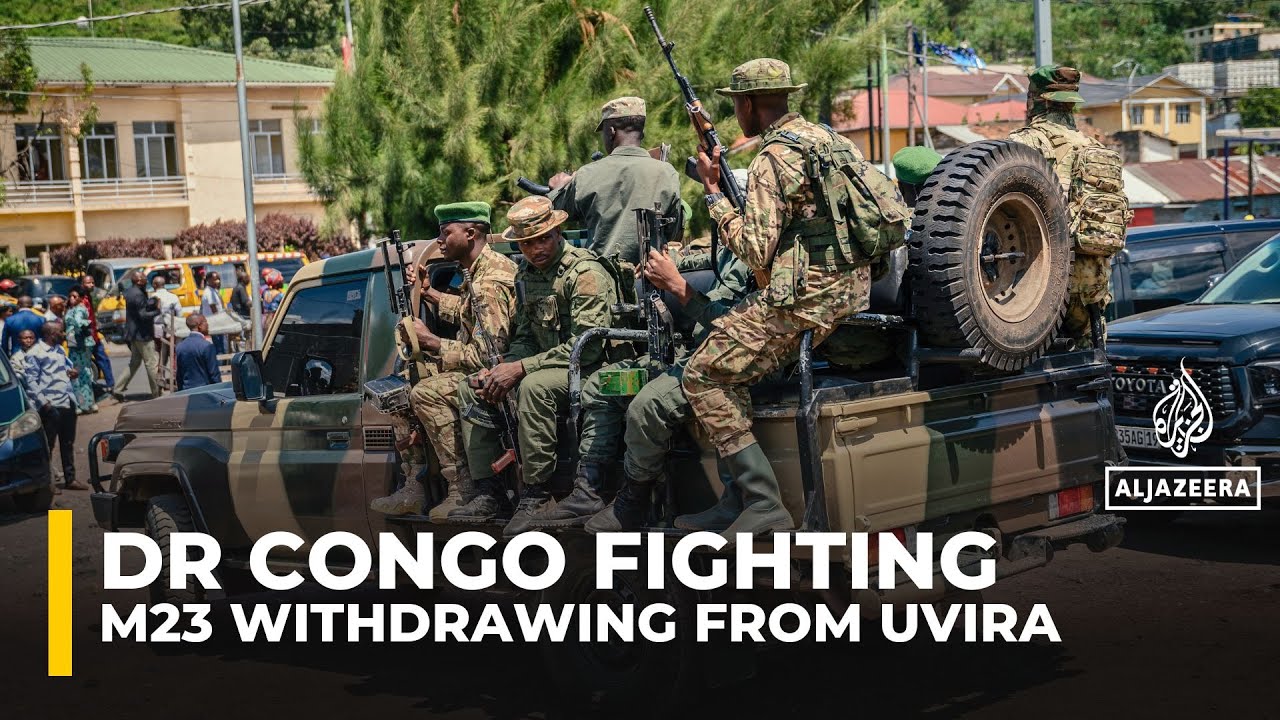
The capture of Uvira by the M23 rebel group is not merely another military setback; it is a geopolitical earthquake that shatters the fragile facade of recent diplomacy and exposes the accelerating unraveling of state authority in the Democratic Republic of the Congo. This event signals a dangerous new phase where the threat of national fragmentation and a wider regional war has moved from theoretical to imminent.
On December 10, 2025, M23 fighters, operating with overt support from the Rwandan army, completed their capture of Uvira. This strategic city, home to several hundred thousand people, sits on the northern shores of Lake Tanganyika, forming a critical border nexus with Burundi. The timing was a deliberate and profound humiliation for the international community: the offensive began on December 1 and culminated just six days after a high-profile peace agreement was signed in Washington on December 4 between Congolese President Félix Tshisekedi and Rwandan President Paul Kagame. U.S. President Donald Trump’s characterization of the deal as a “great miracle” now rings hollow, revealing the vast chasm between diplomatic ceremony and ground-level realities.
A Lightning Offensive Despite the Washington Agreement
This seizure is the latest move in a methodical, chess-like campaign of territorial consolidation. Following the captures of Goma (January 2025) and Bukavu (February 2025), the M23 now controls most urban centers in the eastern Kivu provinces. With Uvira, they have effectively severed a major supply route for the Congolese army and its allies, while establishing a direct line of pressure on Burundi. As Burundian diplomacy starkly put it, the event is a “slap in the face” to the United States and its mediation efforts. More critically, it demonstrates the group’s transition from a militia to a quasi-state actor, capable of administering captured territory and projecting power across borders.
The UN’s stark warning, delivered by Under-Secretary-General Jean-Pierre Lacroix on December 12, framed the crisis in existential terms: “recent developments pose a serious risk of the gradual fragmentation of the Democratic Republic of the Congo.” This fragmentation is not merely about lines on a map. It is evidenced by the establishment of “parallel administrations” by M23, which collect taxes, provide (or deny) services, and enforce their own rule of law, directly eroding the social contract between the Congolese state and its citizens. Lacroix’s warning that this “revives the specter of a regional conflagration with incalculable consequences” is rooted in the conflict’s sudden and dramatic militarization.
The battle for Uvira showcased a shocking military disparity. UN experts allege the involvement of 6,000 to 7,000 Rwandan soldiers alongside M23, equipped with advanced technology like drones and precision-guided artillery. They faced a coalition of the Congolese army (FARDC), approximately 18,000 Burundian soldiers, and the Wazalendo (Patriots) militias. Reports of “humiliating defeats” for Burundian forces highlight a critical shift: the conflict has escalated from a proxy war to a near-direct interstate confrontation. The superior Rwandan firepower isn’t just winning battles; it is reshaping the regional balance of power in real-time.
A Concerning Regional Dimension
The capture of Uvira fundamentally alters the conflict’s geography and stakes. The city lies a mere 20 kilometers across Lake Tanganyika from Bujumbura, Burundi’s economic capital. This proximity transforms a Congolese internal conflict into a direct national security threat for Burundi, which has historically tense relations with Rwanda. Burundi’s immediate closure of the border and declaration of border areas as “military zones” is a defensive panic response. A key strategic objective of the Uvira offensive, as analyzed by security officials, was to cut the logistical lines for Burundian troops supporting Kinshasa, thereby isolating the Congolese government from one of its few regional allies. Evidence suggests this tactic is already working, with a significant contingent of Burundian forces reportedly withdrawing.
U.S. accusations before the Security Council removed any remaining ambiguity: “Rwanda was intimately involved in the planning and execution of the war in eastern DRC.” The alleged deployment of Rwandan surface-to-air missiles in the Kivus represents a significant escalation, threatening air support for UN or regional forces. This level of involvement suggests Rwanda’s aims extend beyond securing its western border or supporting a Tutsi-led rebellion; it points to a strategy of creating a buffer zone or a permanently destabilized eastern Congo that is amenable to Kigali’s economic and security interests.
Mineral Wealth at the Heart of the Conflict
To understand why this cycle of violence is so intractable, one must look beneath the military headlines. Eastern Congo is a paradox of immense wealth and profound suffering. Its soil is rich with gold, coltan, cobalt, and tin—minerals critical to the global electronics and green energy industries. This resource curse fuels the conflict in two ways: it provides armed groups with revenue to buy weapons and loyalty, and it creates incentives for neighboring states and international actors to manipulate the instability for economic gain. The community tensions, often framed in ethnic terms, are deeply exacerbated by decades of displacement, predation by armed groups, and the absence of a legitimate state authority to provide justice or security.
European diplomatic fears that M23 may push south toward Katanga are particularly alarming. Katanga is the mineral-rich engine of Congo’s formal economy. Capturing or destabilizing this region would not only be a symbolic death knell for Congolese unity but would also strangle the state’s primary source of tax revenue, crippling its ability to function altogether. The conflict is thus a battle for the very financial viability of the Congolese state.
The tragedy is underscored by the recent flurry of diplomatic activity that now appears utterly disconnected from reality. The Doha framework agreement (November 15), the joint ceasefire mechanism (October), and the Washington deal (December 4) created a paper trail of peace but failed to create a single fact of peace on the ground. As Lacroix noted, the situation “undeniably illustrate[s] the gap that exists between diplomatic efforts and the reality experienced by civilian populations.” Each violated agreement further erodes trust in any political process, convincing all parties that ultimate victory will be determined by the gun, not the pen.
A Worsening Humanitarian Catastrophe
Behind the geopolitical maneuvering lies a catastrophic human cost. UNICEF reports over 500,000 people displaced in South Kivu since December 1, with more than 40,000 fleeing into Burundi in just 96 hours. These numbers are not statistics; they represent a massive, rapid-onset humanitarian disaster. They add to the existing 5.3 million internally displaced people and 24 million facing food insecurity in the DRC—one of the world’s largest and most neglected crises. The humanitarian system is buckling under the strain, with the response plan only 22% funded and key access routes like Goma airport closed. The world is failing to address the consequences of a conflict it seems unable to prevent.
Faced with this accelerating collapse, UN officials and the Congolese government have issued desperate calls for the Security Council to move beyond statements. Congolese Foreign Minister Thérèse Wagner’s demands are specific and severe: targeted sanctions on Rwandan and M23 leadership, a mineral embargo to cut off conflict financing, and the revocation of Rwanda’s role in peacekeeping. Her ultimatum—”Either the international order accepts being openly flouted, or this Council assumes its responsibilities“—highlights the core dilemma. The fall of Uvira is a test case for a multilateral system that has consistently treated the DRC crisis as a manageable, peripheral conflict. The M23’s advance proves it is neither. The map of Congo is being redrawn by force, and the time for consequential action is rapidly running out.