








In a move that signals a potential seismic shift in U.S. monetary policy, President Donald Trump announced he has selected his nominee for the next Chair of the Federal Reserve. The declaration, made to reporters aboard Air Force One, underscores Trump’s persistent campaign to steer the historically independent central bank toward a more aggressive policy of interest rate cuts. [[PEAI_MEDIA_X]] This decision is not merely a personnel change; it represents a critical inflection point in the relationship between the White House and the Fed, with profound implications for markets, inflation, and the very credibility of America’s financial institutions.
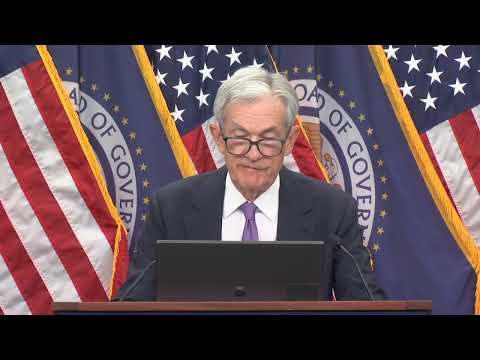
“I know who I am going to pick, yeah,” Trump stated, withholding the name but leaving little doubt about his expectations. “We’ll be announcing it.” His comments crystallize a years-long public feud with current Chair Jerome Powell, whom Trump has repeatedly criticized for what he perceives as insufficiently rapid rate reductions. The subtext is clear: the President seeks a chairperson whose primary allegiance is to the administration’s economic and political goals, particularly stimulating growth through cheaper credit in the lead-up to the next election.
According to sources familiar with the process, the leading candidate is Kevin Hassett, the Director of the White House National Economic Council and Trump’s chief economic adviser. Hassett’s potential nomination is the clearest embodiment of Trump’s desire for a Fed leader who is philosophically aligned and personally loyal. While Hassett demurred on CBS’s Face the Nation, calling reports a “rumor,” his subsequent remarks were telling. He framed the market’s positive reaction—noting lower Treasury yields—as a public good, stating the President would pick someone to deliver “cheaper car loans and easier access to mortgages.” This direct linkage of Fed policy to specific consumer benefits is a marked departure from the central bank’s traditional focus on broader mandates of price stability and maximum employment.
The core tension here is between central bank independence and political influence. For decades, a bipartisan consensus held that the Fed must operate free from short-term political pressure to make tough, often unpopular, decisions to curb inflation. Trump’s approach, favoring a chair seen as a “team player,” challenges this orthodoxy. Analysts warn that a Hassett-led Fed might struggle to unify the diverse Federal Open Market Committee (FOMC), where other governors prize their independence. Furthermore, his proximity to the President could make the institution more vulnerable to perceived or actual pressure, potentially unsettling long-term investors who value policy predictability above all else.
[[PEAI_MEDIA_X]] The market’s immediate reaction—a brief dip in the 10-year Treasury yield below 4%—validates both the significance of the choice and its dovish interpretation. However, this short-term gain may mask longer-term risks. Historically, when markets perceive central bank independence as compromised, it can lead to a “inflation premium,” where investors demand higher yields on government debt to compensate for the perceived risk of politically-driven money printing. Hassett’s highlighting of the market’s positive response is a strategic, albeit tacit, rebuttal to these very concerns.
The list of other finalists, including Fed Governors Christopher Waller and Michelle Bowman, former Governor Kevin Warsh, and BlackRock’s Rick Rieder, reveals a search for candidates who might balance technical credibility with a willingness to accommodate the administration’s views. The process, overseen by Treasury Secretary Scott Bessent (whom Trump has also floated for the role), could conclude with an announcement before the Christmas holiday.
Whoever is chosen will face a daunting confirmation process in the Senate, where questions about their commitment to Fed independence will be paramount. If the nominee is an external candidate like Hassett, they would require confirmation both for the Chair role and for a full 14-year term as a Fed Governor, beginning in February. This dual hurdle adds a layer of political complexity to the appointment.
Ultimately, Trump’s impending nomination is more than a news item; it is a stress test for the institutional safeguards of American economic policy. The choice will answer a fundamental question: Will the next Fed chair act as a technocratic guardian of long-term economic stability, or as an implementer of the sitting President’s preferred financial conditions? The answer will resonate through global markets for years to come.
© 2025 Bloomberg | Adapted and expanded with expert analysis.
Follow Moneyweb’s in-depth finance and business news on WhatsApp here.