
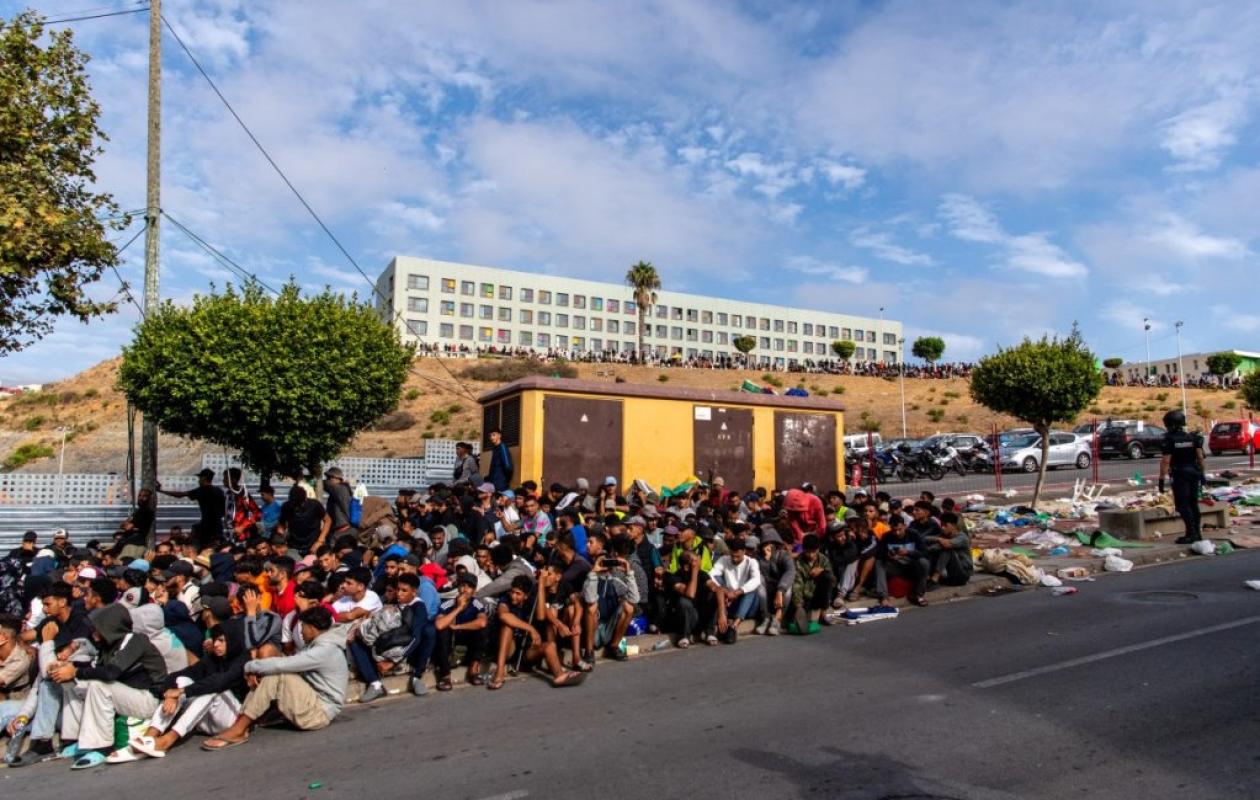






Spain asked three EU agencies to help process migrants remaining in Ceuta after a late July mass border crossing.
The request, reported by Spanish media, is directed at Frontex, the EU border agency; Europol, the police agency; and the European Union Agency for Asylum (EUAA).
The stated goal is for these external agents to reinforce the existing system for sorting and processing the individual files of migrants still in Ceuta in an irregular situation.
The EUAA’s role would include providing interpreters and conducting interviews alongside Spanish officials.
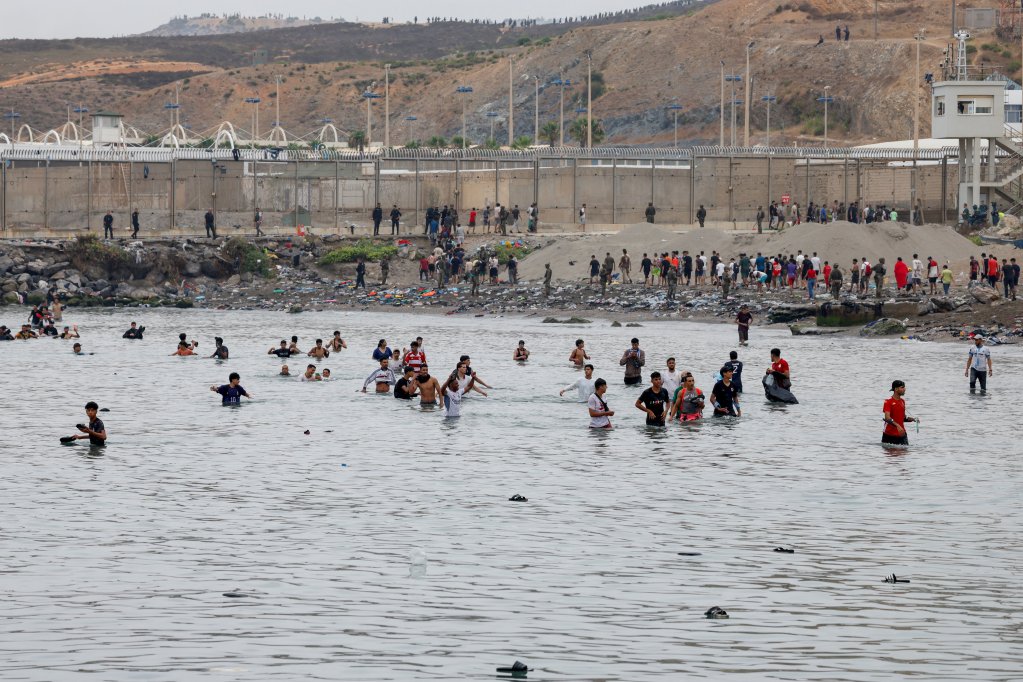
According to the Spanish government, approximately 5,000 migrants remain in the enclave, including around 1,200 unaccompanied minors. Local authorities in Ceuta, however, put the figure higher, at 10,000.
The request comes a month after an estimated 72,000 people entered Ceuta on July 30 and 31. Prime Minister Pedro Sánchez has faced criticism for his handling of the influx.
On Friday, August 28, the Assembly of Ceuta unanimously urged the central government to act “immediately and without further delay,” describing the city as being in an “extreme situation, on the brink of collapse.”
“Ceuta has lost its way of life and its serenity. We have little time left to avoid catastrophe,” said Juan Vivas, the president of Ceuta.

On the same day, Spain’s interior minister announced a set of “exceptional” border reinforcement measures.
These include extending the jetties at Tarajal and Benzú, installing a permanent buoy system at sea, deploying surveillance drones, and using light intervention boats and underwater vehicles.
Earlier in the week, the government announced the creation of a “unified command” in Ceuta to coordinate the work of different administrations and speed up the identification of migrants.
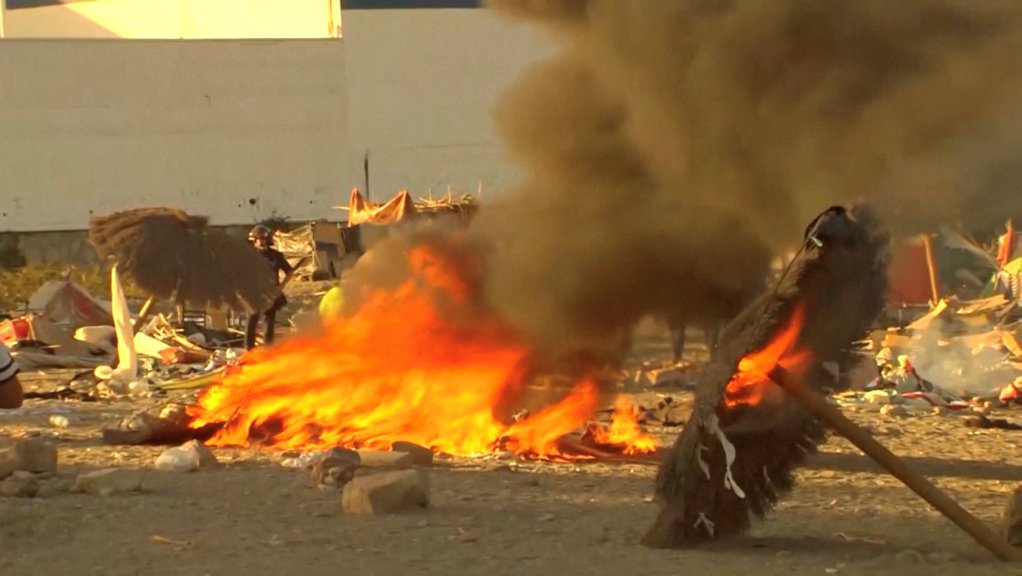
For nearly a week, residents of Ceuta have held daily demonstrations demanding the return of the migrants. Some protests have turned violent, with clashes reported with police and migrants’ belongings burned.
According to the Spanish newspaper El País, police have also intervened to prevent several attempted lynchings of migrants by residents.
On Monday, August 31, Sánchez said Spanish services were continuing to investigate the causes of the sudden influx. Speaking on the radio station Cadena Ser, he pointed to a disinformation campaign.
“After July 30 and 31, there was a spread of rumors and disinformation, from social networks linked to both Russia and Israel, and to a far-right international that always uses migration not only to attack Spain, but also to attack Europe and divide it,” the Prime Minister said.
Sánchez added that the spread of disinformation by Russia or Israel was not due to concern over migration in Spain or Europe, but rather because of Spain’s political positions regarding the “genocide in Gaza” and “Putin’s invasion of Ukraine.”
His remarks drew a sharp response from Israeli Foreign Minister Gideon Saar, who denounced on X what he called a “shameless lie” by the Spanish Prime Minister.
Sánchez also absolved Morocco of any responsibility for the crisis, stating that no intelligence service with which Spain usually collaborates has raised any doubt about the participation of the Moroccan authorities.
He noted that the CNI (National Intelligence Center) and the national police shared situation reports, but that no information allowed the government to measure the scale of the crisis before it occurred.
Source: Ivoirematin