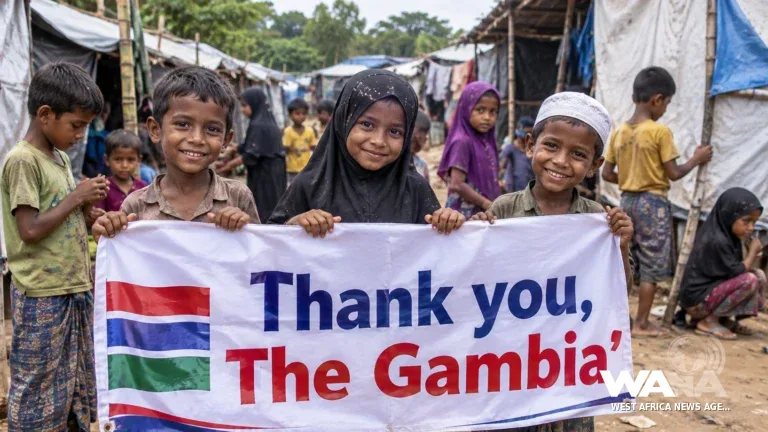
The ICJ's landmark 9–6 ruling found Myanmar committed genocide against the Rohingya in 2017, establishing intent through evidence of ~10,000 civilian murders, systematic rape, birth restrictions.
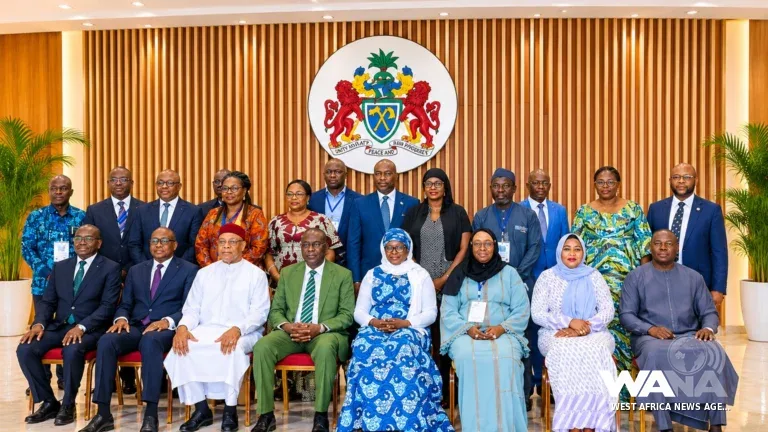
The Gambia leveraged its MOWCA chairmanship to push transport ministers toward concrete financing decisions, with operationalizing the Abuja-based Regional Maritime Development Bank as the centerpiece of a broader agenda covering.
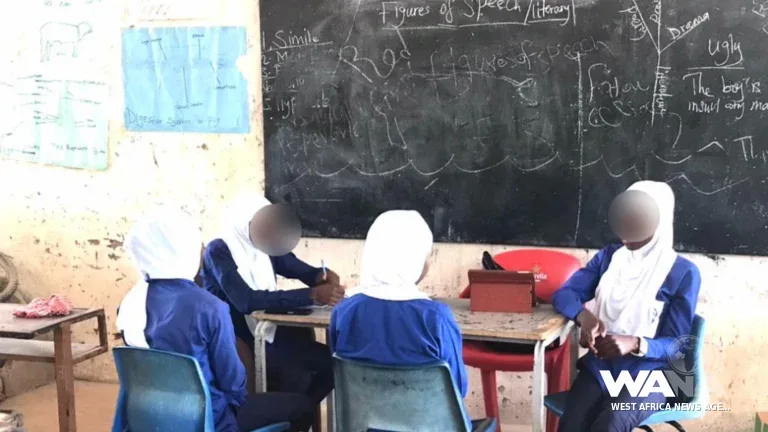
The 2026 budget introduces two targeted measures: eliminating import duty and VAT on sanitary pads to lower retail prices and improve menstrual hygiene access for schoolgirls, and strictly enforcing annual land rent payments from January 1, 2026, whereby lease documents used as collateral will be voided for non-payment, with banks obligated to verify client compliance. The sanitary pad policy includes periodic government reviews but lacks specified timelines, effective dates, or revenue impact estimates, while the land rent enforcement carries lease nullification consequences without defined penalties, grace periods, or notification procedures. These measures address distinct constituencies—households purchasing sanitary products and leaseholders with bank-held collateral—with no indicated fiscal linkage or quantified revenue trade-offs between the forgone tax revenue and expected rent collection. The announcement leaves critical implementation details unspecified, including current tax rates, expected price reductions, enforcement mechanisms, and whether affected parties will receive advance notice before punitive actions take effect.
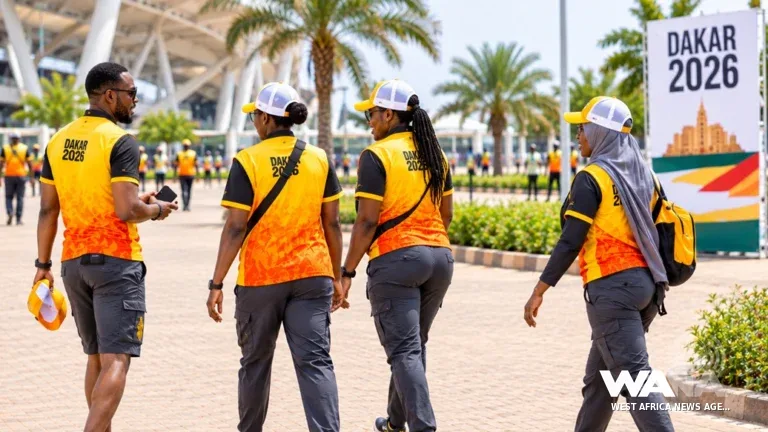
Nahoussa Robert of Liberia and Cheick Benga of The Gambia, both ECOWAS youth volunteers at the Dakar 2026 Youth Olympic Games, have described representing their region and working alongside young people from other member states. Their deployment is part of an ECOWAS partnership with Senegal's national Olympic committee covering twenty-four volunteers.
A delegation of the ECOWAS Parliamentary Oversight Committee has completed a five-day visit to The Gambia to assess ECOMIG's operations and progress towards transferring security responsibilities to national forces. Led by Senator Edwin Melvin Snowe Jr, the delegation visited ECOMIG Force Headquarters and NIGCOY Camp and engaged stakeholders on security sector reform and transition arrangements. Its findings are expected to inform recommendations on the mission's effectiveness and the conditions for a sustainable transfer of responsibilities.
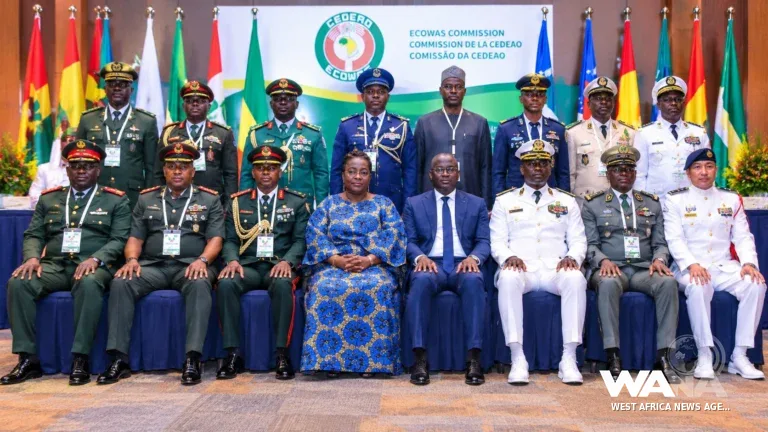
Madam Namizata Sangare, Head of Mission and Special Representative of the ECOWAS Commission, made her first visit to the ECOMIG Force Headquarters in Bakau, The Gambia, on 27 October 2026. She was received by Force Commander Col Aliou Tine, and discussions covered ECOMIG's mandate, its collaboration with Gambian authorities and security forces, and the challenges facing its personnel.
ECOMIG and the Gambian Defence and Security Forces launched a week-long breast cancer awareness campaign at the Gambia School of Nursing and Midwifery in Banjul, opening with a route march and a ceremony featuring a keynote address and self-examination demonstrations. Activities are scheduled to continue through 22 October with screenings in Yundum, Barra and Kanfenda.
ECOWAS Commissioner Dehpue Yenpea Zuo met Gambian finance, central bank and trade officials in Banjul to discuss trade barriers, food security and stalled decisions holding up the planned 2027 launch of the ECO single currency. The Commission says 50 to 60 percent of food consumed in the bloc is imported.
The ECOWAS Regional Electricity Access Project has opened a five-day Lessons and Result Note mission in Banjul, The Gambia, running from October 12 to 16, 2026, ahead of the project's scheduled closure on December 31. The mission, organised by the World Bank, brings together the ECOWAS Directorate of Energy and Mines, the regional coordination unit, The Gambia's project implementation unit and the World Bank to review implementation progress and capture lessons. ECOWAS-REAP, the first project under the Regional Electricity Access Programme, is backed by US$225 million in concessional financing from the World Bank's International Development Association and covers The Gambia, Guinea Bissau and Mali.