

US-Burkina Faso Relations: A Strategic Recalibration Amidst Sahelian Turmoil
The Report
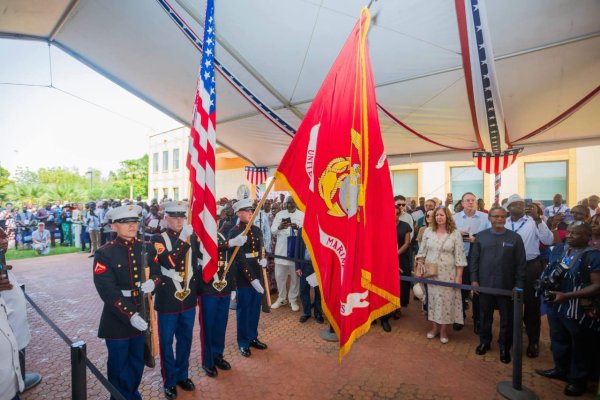
As reported by Lefaso.net journalist Anita Mireille Zongo, the United States Embassy in Ouagadougou hosted a celebration on 26 June 2026, marking the 250th anniversary of American independence and the 66th year of continuous US-Burkina Faso partnership. The event, which included a trade fair showcasing American businesses and products, featured remarks from US Ambassador Joann Lockard and Burkina Faso’s Minister of Foreign Affairs, Karamoko Jean Marie Traoré.
Ambassador Lockard emphasized the enduring nature of the bilateral relationship, stating that the US respects Burkina Faso’s sovereignty and its right to define its own economic orientation. She announced the creation of a new American Chamber of Commerce (AmCham) in Burkina Faso, led by Karim Lankouandé, aimed at reducing trade barriers and fostering business ties. Minister Traoré welcomed the initiative, expressing hope that a forthcoming joint working group session would open a new chapter in the partnership.
“Les États-Unis respectent la souveraineté du Burkina Faso ainsi que son droit à définir sa propre orientation économique.” — Ambassador Joann Lockard
WANA Regional Analysis
This carefully choreographed diplomatic event signals more than a routine anniversary. It represents a strategic recalibration by Washington in its engagement with a Sahelian state that has, under the military-led government of Captain Ibrahim Traoré, pivoted away from traditional Western alliances toward partnerships with Russia, Turkey, and other non-Western powers. The US message—explicitly acknowledging Burkina Faso’s sovereign right to choose its economic path—is a notable departure from the more conditional language often employed by Western donors in the region.
From an ECOWAS perspective, this development carries significant weight. Burkina Faso, along with Mali and Niger, has formed the Alliance of Sahel States (AES), a bloc that has strained relations with the regional bloc. The US decision to deepen economic ties with Ouagadougou, rather than isolate it, could be interpreted as a pragmatic hedge against the complete erosion of Western influence in the central Sahel. It also provides Burkina Faso with a potential counterweight to its growing dependence on Russian security assistance, offering an alternative avenue for private-sector-led development.
The creation of an AmCham is particularly noteworthy. It suggests that Washington is shifting its engagement model from government-to-government aid to private-sector-driven investment. This approach aligns with broader US foreign policy trends in Africa, as seen with the Prosper Africa initiative. For Burkina Faso, which faces severe economic challenges exacerbated by insecurity and displacement, increased American private investment could provide much-needed capital, technology transfer, and market access—especially in sectors like mining, agriculture, and renewable energy.
However, the diplomatic subtext is equally important. Ambassador Lockard’s reference to the Mossi proverb about teeth biting the tongue but never separating is a thinly veiled acknowledgment of past and present disagreements. The US has been critical of the Traoré government’s human rights record, its expulsion of French forces, and its reported use of Russian mercenaries. By publicly reaffirming respect for Burkina Faso’s sovereignty, Washington is effectively signaling that it is willing to compartmentalize these differences in favor of maintaining a diplomatic and economic foothold.
For the broader West African region, this engagement model could serve as a template. If successful, it may encourage other AES states—Mali and Niger—to explore similar private-sector-focused partnerships with the US, potentially creating a new dynamic in the Sahel where economic cooperation coexists with political divergence. Conversely, it could deepen the rift between AES states and ECOWAS, as the former gain greater economic autonomy outside the bloc’s traditional frameworks.
From a security standpoint, the US emphasis on economic partnership does not directly address the immediate threat of jihadist insurgency. However, by supporting economic stability and job creation, Washington may be betting that long-term resilience is a more effective counterterrorism strategy than direct military intervention. This approach mirrors the “whole-of-society” doctrine increasingly favored by US Africa Command.
Regional Backdrop
Burkina Faso’s relationship with the United States has fluctuated over six decades. During the Cold War, US aid was often tied to anti-communist alignment. In the post-9/11 era, security cooperation intensified through the Trans-Saharan Counterterrorism Partnership. The 2014 popular uprising that ousted President Blaise Compaoré led to a brief period of democratic consolidation, during which US support expanded. However, the 2022 military coup and subsequent shift in foreign policy created a new, more complex chapter.
The Traoré government’s expulsion of French forces and its embrace of Russian military advisors—often framed as a reassertion of sovereignty—placed it at odds with both Paris and Washington. Yet, unlike France, which has largely withdrawn from the Sahel, the US has maintained a more flexible posture, preserving diplomatic channels and limited security cooperation. This latest economic initiative suggests that Washington is now seeking to rebuild influence through commerce rather than coercion.
Original Reporting By:
Lefaso.net

Comments