




Rising debt repayments consume health budgets in Africa’s poorest nations, while out-of-pocket costs push 150 million into poverty annually, the UN ECA warned.
The statement came at the opening of the 76th session of the WHO Regional Committee for Africa, held at the Adwa Museum under the theme “Roots and Wings – Heritage Meets Digital Health.”
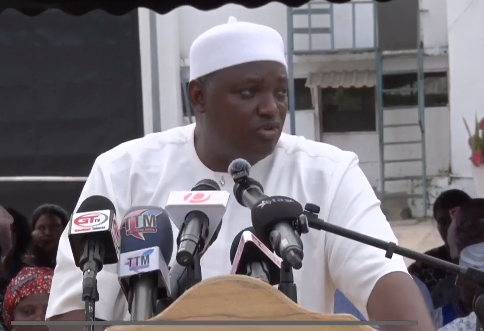
Speaking on behalf of ECA Executive Secretary Claver Gatete, Chief of Staff Aboubakri Diaw told health ministers that the continent’s health sector faces more than just a financing gap.
“It also suffers from a lack of trust; yet trust, unlike capital, cannot be borrowed. It must be built,” he said.
The session was opened by Ethiopian President Taye Atske Selassie, with African Union Commission Chairperson Mahmoud Ali Youssouf, WHO Director-General Dr. Tedros Adhanom Ghebreyesus, and Dr. Mohamed Yakub Janabi, WHO Regional Director for Africa, in attendance.
To illustrate the stakes, Diaw described the case of “Amina,” a small businesswoman whose family delays care due to cost fears, only to face bills that force them to sell equipment and lay off staff.
“What began as one person’s illness became a financial crisis for a household… and, if this scenario repeats for millions of families, a macroeconomic problem,” he said.
He cited three converging factors: external health aid down by nearly 30%, debt service now exceeding health spending in lower-middle-income countries, and out-of-pocket spending averaging 35% of health expenditure regionally—above the 20% threshold set by WHO.
He also noted that national strategies with uncertain costs and timelines make financing harder to secure.
The ECA is urging ministers to adopt three changes. First, health ministries should present finance ministries with a costed investment case linked to productivity and growth, rather than a simple request.
Second, countries should replace fragmented plans with a single, politically endorsed national health financing compact that includes health, finance, planning, revenue, debt, insurance, and private-sector actors.
“Injecting more money into a fragmented system can only increase fragmentation,” Diaw said, while “investing in a credible national compact can finance transformation.” Third, governments should tailor financing instruments to their initial fiscal situation.
Early data from countries adopting ECA recommendations show health receives only 5 to 9% of budgets, while out-of-pocket spending can reach 64% of health expenditure.
This work falls under the ECA’s African Initiative for Health Financing Transformation, launched in Tangier in April 2026.
Diaw also urged governments to treat digital health as financing infrastructure, noting that fewer than one-third of health systems in low-income countries can track spending in real time and digitally.
He called this gap “one of the fastest efficiency gains to close and make available to any public treasury.” He cited Ethiopia’s digital health initiative, led by Prime Minister Abiy Ahmed—the AU champion for AI and digital health—as a model for tracing every birr or franc from budget to patient, turning digital health from a mere “project” into a true “financial revolution.”
Diaw said success would be measured not by declarations but by the ability of people like Amina to access care quickly without losing their livelihoods. “Health is not what we spend when Africa develops.
Health is the engine of Africa’s growth.” The ECA said it stands ready to help turn this ambition into concrete, financed, and measurable actions.
Source: Actualité