









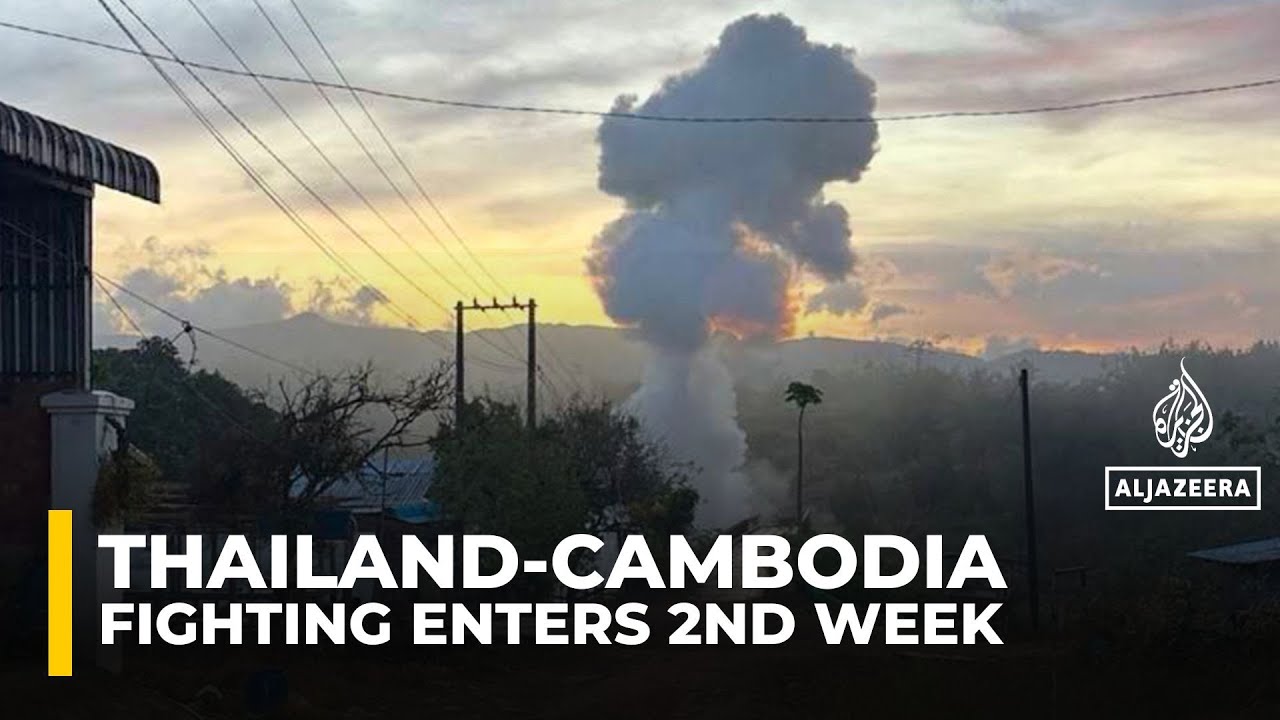
A long-simmering border dispute between Thailand and Cambodia erupted into renewed violence this weekend, with the Thai government confirming the deaths of four of its soldiers in clashes on Saturday. The incident, occurring near the ancient Preah Vihear temple—a UNESCO World Heritage site and a persistent flashpoint—underscores the fragility of relations between the two Southeast Asian neighbors.
In a striking diplomatic development, the Thai Prime Minister explicitly denied a claim made by U.S. President Donald Trump, who had publicly stated that a ceasefire had been agreed upon to end the fighting. This public contradiction highlights the complex geopolitical landscape, where external perceptions and announcements can clash with on-the-ground realities and bilateral diplomatic channels. The Thai denial suggests that either communications were misinterpreted or that local military actions were proceeding independently of high-level political statements, a critical nuance for understanding international conflict reporting.
The conflict’s roots are deep, centering on a 4.6-square-kilometer area surrounding the 11th-century Preah Vihear temple. While the International Court of Justice awarded the temple itself to Cambodia in 1962, the adjacent territory has remained contested. This is not merely a border squabble; it is a potent mix of historical grievance, national pride, and strategic positioning. The area holds symbolic weight for both nations, making concessions politically perilous for any government.
For readers analyzing international conflicts, this episode serves as a case study in several key areas:
1. **The Fog of War and Information:** The immediate contradiction between the U.S. presidential claim and the Thai government’s account demonstrates how information in active conflict zones can be unreliable. It underscores the importance of corroborating reports from multiple primary sources before accepting any narrative as fact.
2. **Local vs. Global Narratives:** A major power’s declaration of a ‘truce’ may reflect diplomatic aspirations or a particular framing, but it does not automatically translate to calm on the front lines. Local historical animosities and tactical military objectives often override external diplomatic pressures.
3. **The Economic and Human Cost:** Beyond the tragic loss of life, such clashes disrupt local communities, threaten a culturally significant site, and destabilize a region crucial for trade and tourism. The economic repercussions for border provinces in both countries can be severe and lasting.
This latest flare-up is a sobering reminder that territorial disputes fueled by history and nationalism are not easily resolved by external pronouncements. The denial of the truce claim by Bangkok indicates that the path to de-escalation will require direct, and likely fraught, negotiation between the two kingdoms themselves, independent of third-party assertions. The situation remains volatile, with the potential for further escalation hinging on the next moves of both militaries and the resilience of diplomatic backchannels.