EU’s Education Investment in Northern Nigeria Signals Broader Regional Strategy for Stability and Development
The Report
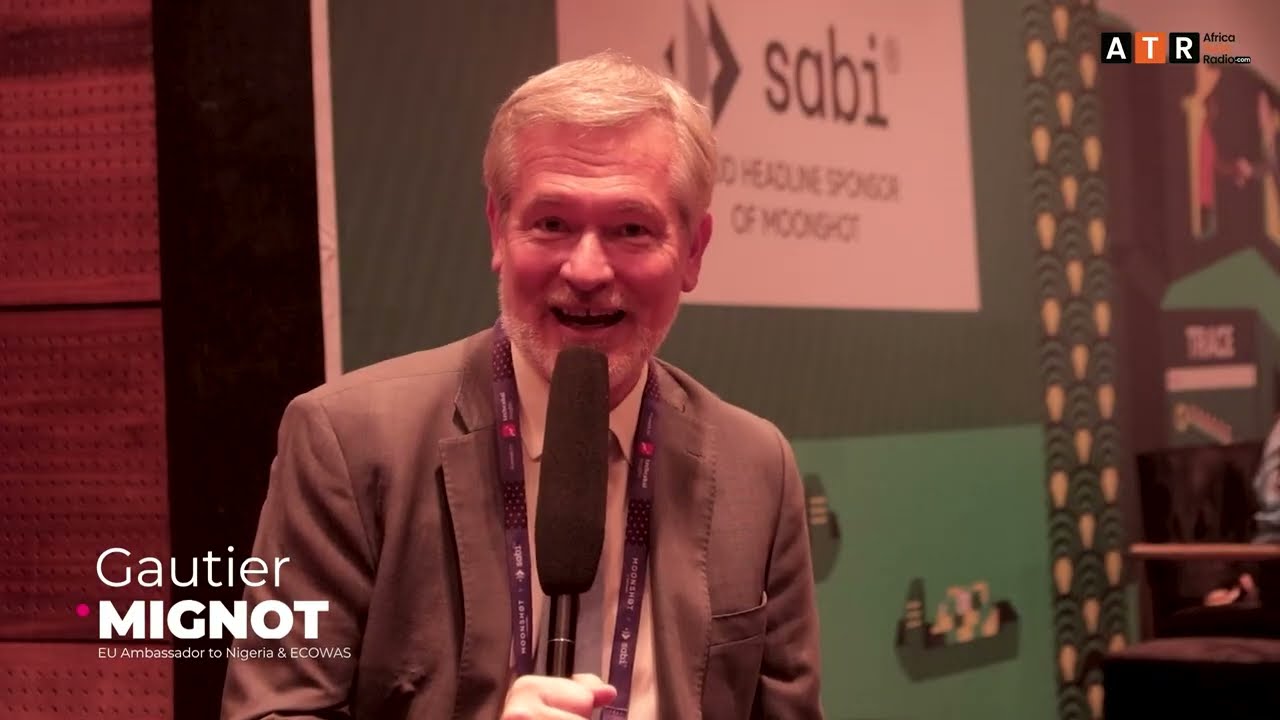
As reported by Leadership News, the European Union (EU) has reaffirmed that education remains a top priority in Nigeria, particularly in addressing the crisis of out-of-school children and expanding access to quality learning. EU Ambassador to Nigeria and ECOWAS, Gautier Mignot, made the remarks during a visit to the Tsangayar Ma’ahad Gwani Dan Birni Qur’anic Centre in Kano, as part of a tour of EU-supported education interventions under the Education and Youth Empowerment Programme in Northwest Nigeria (EYEPINN), implemented by UNICEF and other partners.
Ambassador Mignot stated that the EU is committed to supporting Nigeria’s development through strategic investment in education, with a focus on integrating out-of-school children into formal learning systems. He noted that the intervention at the Qur’anic centre combines Islamic education with basic literacy, mathematics, and language studies. The EU is also supporting Technical and Vocational Education and Training (TVET) programmes to equip young people with practical skills. UNICEF Representative in Nigeria, Wafaa Saeed, said the programme aims to reach approximately 1.2 million children across several states, developing sustainable education models that can be replicated by the Nigerian government.
“Education is one of our top priorities to help out-of-school children integrate into schools in Nigeria,” Mignot said.
“We are looking at models that the government of Nigeria and the people of Nigeria can replicate. We are supporting government efforts,” Saeed said.
WANA Regional Analysis
The EU’s renewed emphasis on education in Northwest Nigeria carries significant implications that extend far beyond the classroom. From a regional security perspective, the Northwest has become a flashpoint for banditry, kidnapping, and insurgent recruitment, with out-of-school children and unemployed youth representing a vulnerable demographic. By targeting this population with integrated learning and vocational training, the EU is effectively investing in a long-term counter-radicalisation and stability strategy. This approach aligns with broader ECOWAS frameworks that recognise education as a pillar of conflict prevention and human security.
Against this backdrop, the EU’s partnership with UNICEF and the Nigerian government signals a shift toward locally adaptable models. The integration of Qur’anic education with standard curricula is a culturally sensitive approach that could serve as a template for other Sahelian states facing similar challenges—such as Mali, Burkina Faso, and Niger—where traditional and formal education systems often operate in parallel. If successful, this model could be replicated across the region, offering a pathway to reduce the estimated 20 million out-of-school children in West Africa.
From an economic standpoint, the TVET component addresses a critical gap in the region’s labour market. West Africa’s youth bulge, combined with high unemployment, poses a direct threat to governance stability. By equipping young people with practical skills, the EU is not only fostering self-reliance but also reducing the pool of potential recruits for non-state armed groups. This investment in human capital is likely to yield dividends in terms of reduced migration pressure and improved regional trade productivity.
Diplomatically, the EU’s continued engagement in Nigeria and the broader ECOWAS region reinforces its role as a development partner distinct from security-focused actors. While the EU has maintained a presence in counter-terrorism and peacekeeping support, this education initiative underscores a commitment to addressing root causes of instability. It also provides the EU with a platform to advocate for governance reforms, particularly in education financing and policy implementation, which remain inconsistent across West African states.
The broader implications for ECOWAS suggest that education investment must be coupled with political will and fiscal accountability. Nigeria’s education budget has historically fallen short of UNESCO’s recommended 15-20% of national expenditure. Without sustained domestic commitment, even well-funded external programmes risk becoming isolated successes rather than systemic transformations. The EU’s emphasis on replicable models is a tacit acknowledgment of this challenge.
Regional Backdrop
Northwest Nigeria has experienced a surge in insecurity over the past decade, with armed groups exploiting weak governance, poverty, and lack of educational opportunities. The region has one of the highest rates of out-of-school children in the country, with girls disproportionately affected. Historically, West African governments have struggled to integrate traditional Islamic education systems into national curricula, often leading to parallel systems that leave many children without certified qualifications. The EU-UNICEF intervention represents a pragmatic attempt to bridge this divide, recognising that cultural and religious contexts must be accommodated for education reforms to gain community acceptance.
Original Reporting By:
Leadership News

Comments