


Mali-Canada Business Council: A Strategic Pivot for Sahelian Economic Diplomacy
The Report
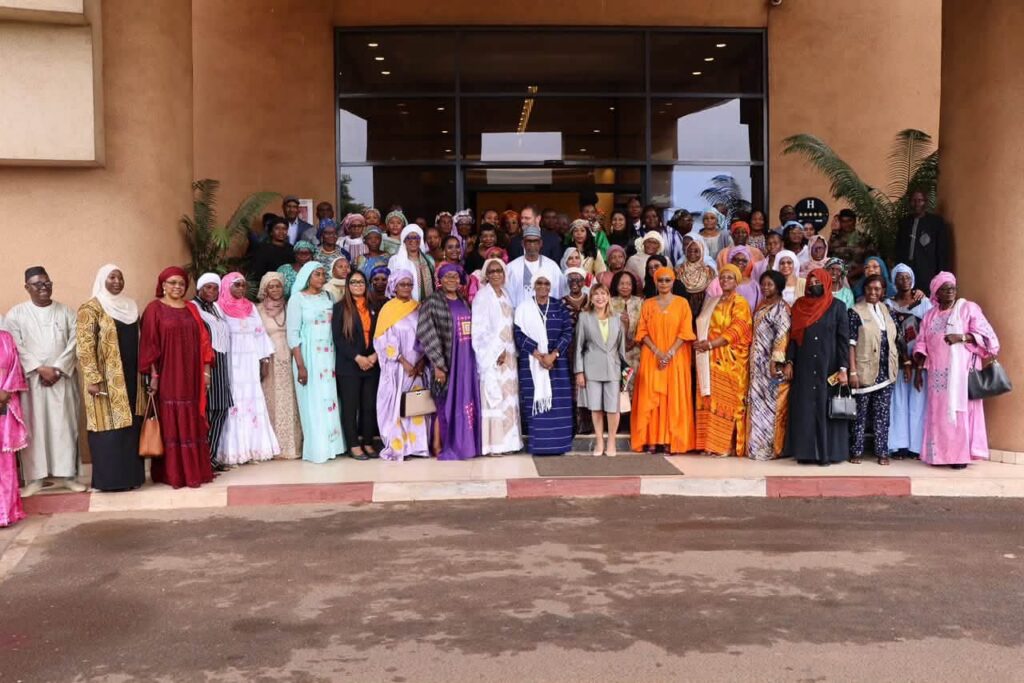
As reported by Maliweb.net, the Mali-Canada Business Council (CAMC) was officially launched on Thursday, May 14, 2026, at the Radisson Collection Hotel in Bamako. The event was presided over by Mossa Ag Attaher, Mali’s Minister of Malians Abroad and African Integration, and attended by Lee-Anne Hermann, Chargé d’Affaires at the Canadian Embassy in Mali, alongside numerous Malian and Canadian business operators. The CAMC is chaired by Amadou Moustapha Diop, leading a bureau composed of members from both countries.
“With the creation of this Business Council, we are crossing a new threshold by providing our cooperation with a structuring, dynamic, and operational tool,” declared Amadou Moustapha Diop.
The Council aims to become a platform for economic opportunities, fostering networking, trade, and concrete projects in sectors such as responsible mining, green technologies, sustainable agriculture, and technical training. Lee-Anne Hermann emphasized that the initiative marks “an important step in strengthening economic relations” and highlighted the strategic role of the Malian diaspora in Canada as an economic bridge. Minister Mossa Ag Attaher contextualized the launch within a long history of bilateral cooperation, referencing the 1988 framework agreement with Canada World Youth and Canadian support for Mali’s public financial management reforms, including the PAMORI project.
WANA Regional Analysis
Against the backdrop of Mali’s deepening pivot away from traditional Western partners—notably France—and its consolidation within the Alliance of Sahel States (AES), the establishment of the CAMC represents a calibrated and pragmatic recalibration of economic diplomacy. This is not a wholesale rejection of Western engagement; rather, it is a selective, transactional approach that prioritizes investment and technical expertise over political conditionality.
The broader implications for the ECOWAS region and the Sahel are significant. For Bamako, the CAMC serves multiple strategic objectives:
- Diversification of Economic Partnerships: By actively courting Canadian capital and technology, Mali reduces its historical over-reliance on French economic channels, particularly in the critical mining sector where Canadian firms like Barrick Gold, B2Gold, and Allied Gold already have a substantial footprint.
- Leveraging the Diaspora: The explicit focus on the Malian diaspora in Canada as a “bridge” is a sophisticated move. It taps into a pool of skilled professionals and potential investors who possess both cultural fluency and access to Canadian markets and financial networks.
- Signaling Stability to Investors: The launch of a formal business council, with the blessing of both the Malian government and the Canadian Embassy, sends a signal to international markets that despite political turbulence, Mali remains open for business and is actively creating structured channels for foreign direct investment.
For Canada, the engagement is equally strategic. Ottawa is positioning itself as a reliable, less politically encumbered partner in a region where French influence is waning and Russian influence is rising. By focusing on “responsible mining,” “green technologies,” and “sustainable agriculture,” Canada is attempting to differentiate its offer from that of other powers, emphasizing governance and sustainability standards. The mention of the Canadian model inspiring Mali’s Auditor General’s office is a subtle but clear signal of a values-based approach to cooperation, even as the Malian junta faces criticism over democratic backsliding.
However, the success of the CAMC will hinge on several factors. The security situation in central and northern Mali remains a critical risk for any large-scale investment. Furthermore, the ability of the Malian government to provide a stable regulatory and fiscal environment—beyond the launch ceremony—will be the true test. The CAMC is a promising framework, but it is not a guarantee of investment. It is a vessel; the content will be determined by the political will and economic realities of both partners in the months and years ahead.
Original Reporting By: Maliweb.net

Comments