

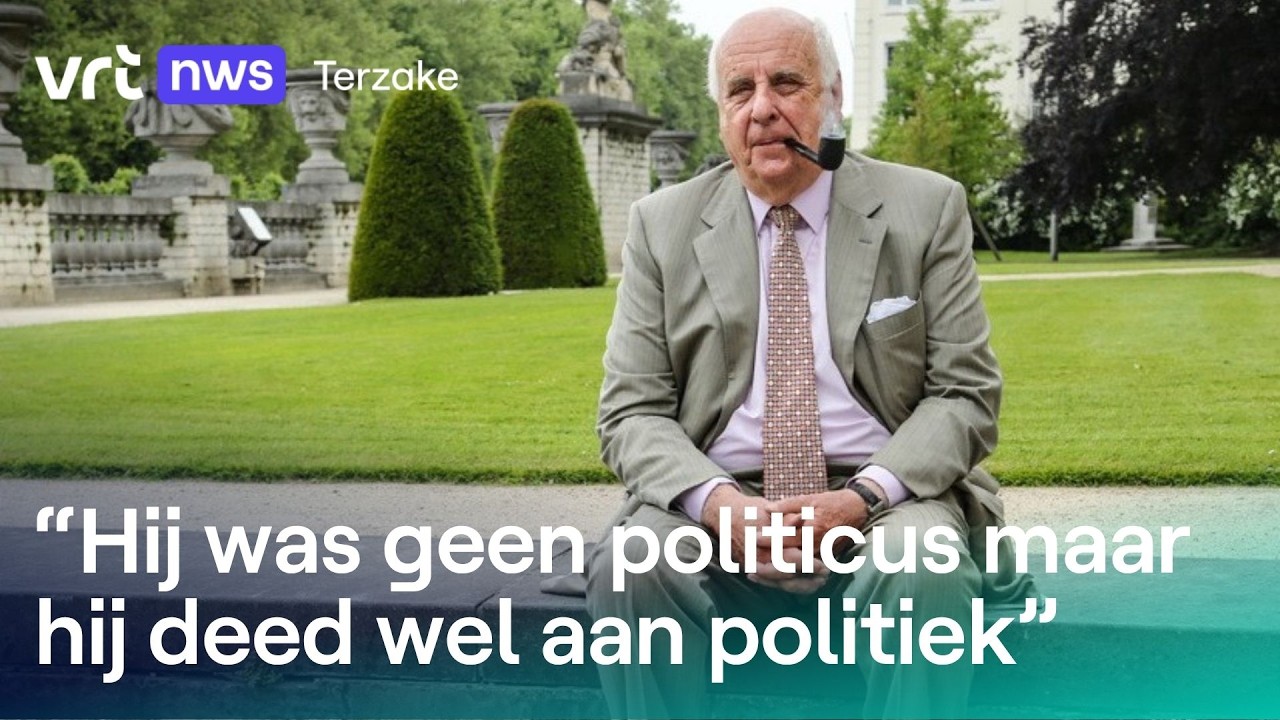
The Death of Étienne Davignon: A Colonial Echo Lingers Over Brussels and Kinshasa
The Report
As reported by Euronews, former European Commissioner and Belgian diplomat Étienne Davignon has died at the age of 93. His family announced the passing on Monday. Davignon, a towering figure in European industrial policy and a former vice-president of the European Commission, was recently implicated in a Belgian judicial investigation into the 1961 assassination of Patrice Lumumba, the first democratically elected Prime Minister of the Democratic Republic of Congo.
The report details Davignon’s long career: diplomat, first president of the International Energy Agency, and a key architect of European steel restructuring. However, the article focuses on his legacy’s darkest chapter. In March, Belgian authorities placed him under formal investigation for “participation in war crimes” related to the decisions that led to Lumumba’s murder. A 1960 telex attributed to Davignon, then a young diplomat, stated: “The primary problem appears to be to remove Lumumba.”
“The primary problem appears to be to remove Lumumba.” — Telex attributed to Étienne Davignon, September 1960, as cited in the Belgian parliamentary inquiry.
Davignon was suspected of playing an active role in transferring Lumumba to the secessionist state of Katanga, where he was executed by separatists aided by Belgian mercenaries. His body was dissolved in acid. Davignon had appealed his indictment, and no criminal trial for the assassination has ever been held.
WANA Regional Analysis
Against this backdrop, the death of Étienne Davignon closes a chapter not merely in Belgian diplomatic history, but in the long, unresolved ledger of colonial accountability in West and Central Africa. For the ECOWAS region, the Lumumba assassination is not a distant tragedy; it is a foundational trauma that shaped the political DNA of post-independence Africa. The murder of a democratically elected leader, with the complicity of former colonial powers and local elites, set a precedent for the instability, coups, and foreign interference that have plagued the continent for decades.
The broader implications for West Africa are stark. The failure to prosecute Davignon—despite a parliamentary inquiry, a truth commission, and a formal criminal investigation—reinforces a perception of impunity for colonial-era crimes. This resonates deeply in countries like Côte d’Ivoire, Ghana, and Nigeria, where debates over reparations, the return of looted artifacts, and the rewriting of colonial history are intensifying. The legal principle of universal jurisdiction, which Belgium itself has championed in other contexts, appears to have found its limit when the accused is a pillar of the European establishment.
Furthermore, Davignon’s career as a commissioner overseeing the decline of European steel and the sale of Belgian corporate “crown jewels” to foreign interests offers a parallel narrative. For West African analysts, this mirrors the structural adjustment programs and privatization waves that stripped state assets across the region in the 1980s and 1990s. The same networks of power that facilitated the extraction of Congolese resources in 1961 were later instrumental in the financialization of European industry. The death of Davignon, therefore, is not merely an obituary for a man, but a reminder of the enduring architecture of power that links colonial violence to contemporary economic dependency.
As the Democratic Republic of Congo continues to grapple with armed conflict in its eastern provinces—fueled by the same mineral wealth that Lumumba sought to nationalize—the absence of justice for his murder remains a festering wound. For West Africa, the lesson is clear: until the region’s own historical reckonings are complete, the ghosts of 1961 will continue to haunt the present.
Original Reporting By: Euronews

Comments